
Where Sharks Live
Sharks can be found in coastal waters, including shallow bays, lagoons, and areas near shore; around coral reefs, where warm, clear waters support diverse marine life; and in seagrass meadows and mangrove forests, which provide sheltered, productive environments for many young sharks. Some species live along the continental shelf and slope, while others spend much of their lives in the open ocean, traveling great distances through deep water. Sharks also inhabit the deep sea, including dark waters far below the surface and areas near the seafloor. A few species regularly enter estuaries and brackish waters, where rivers meet the sea, and some, such as bull sharks, can even travel into freshwater rivers. From tropical reefs to cold, deep oceans, sharks have adapted to live in almost every major marine environment.
SHARK MENU
Coral Reefs
Coral reefs are complex underwater ecosystems built by colonies of tiny coral animals. Most occur in warm, shallow, clear tropical and subtropical waters where sunlight can reach the reef. Their caves, ledges, channels, and open areas create many different places for marine animals to live.
A variety of sharks use coral reef habitats. Some spend much of their lives around reefs, while others move between reefs and surrounding coastal or open waters. Sharks found around coral reefs include whitetip reef sharks, blacktip reef sharks, grey reef sharks, Caribbean reef sharks, nurse sharks, lemon sharks, zebra sharks, and several species of wobbegong.
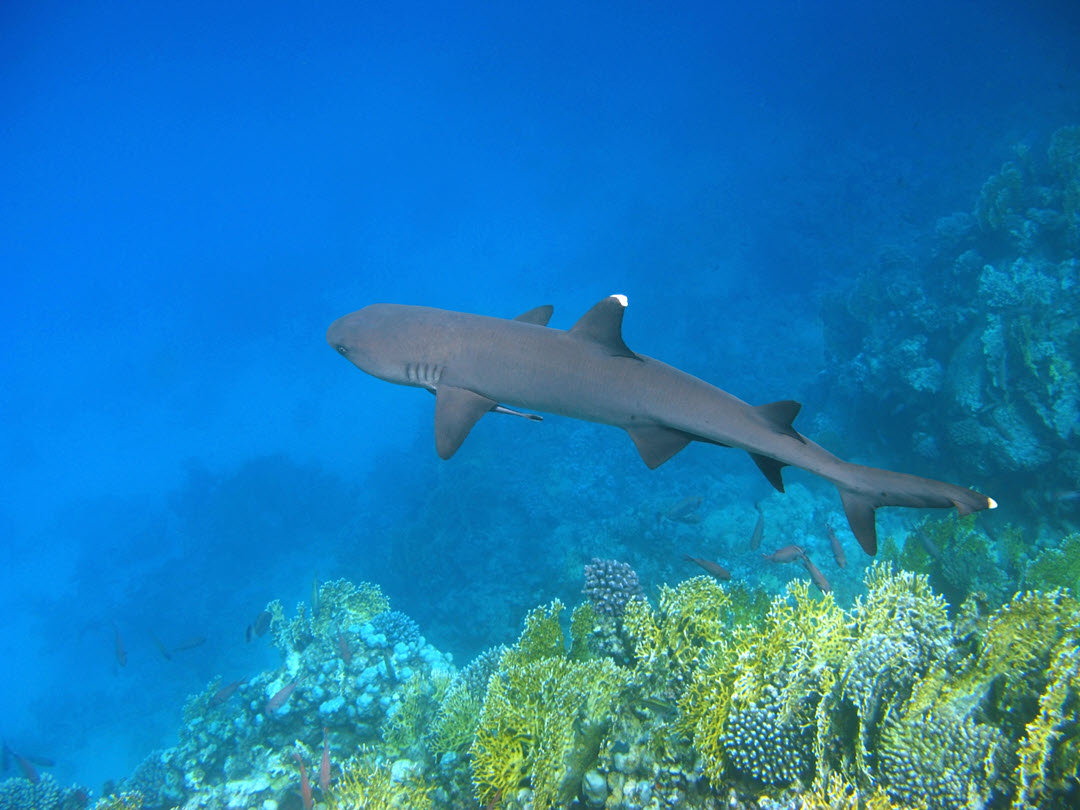
Whitetip Reef Shark swimming through a coral reef.
Kelp Forests
Kelp forests grow in cool, nutrient-rich coastal waters. Giant kelp and other large brown algae can form dense underwater forests that extend from the seafloor toward the surface. These habitats provide food and shelter for fishes, marine mammals, invertebrates, and many other animals.
Sharks that enter or live around kelp forests are generally species associated with temperate coastal waters. Depending on the region, they can include leopard sharks, sevengill sharks, horn sharks, swell sharks, soupfin sharks, and great white sharks. Some move through the kelp itself, while others are more commonly found along its edges or in nearby coastal waters.
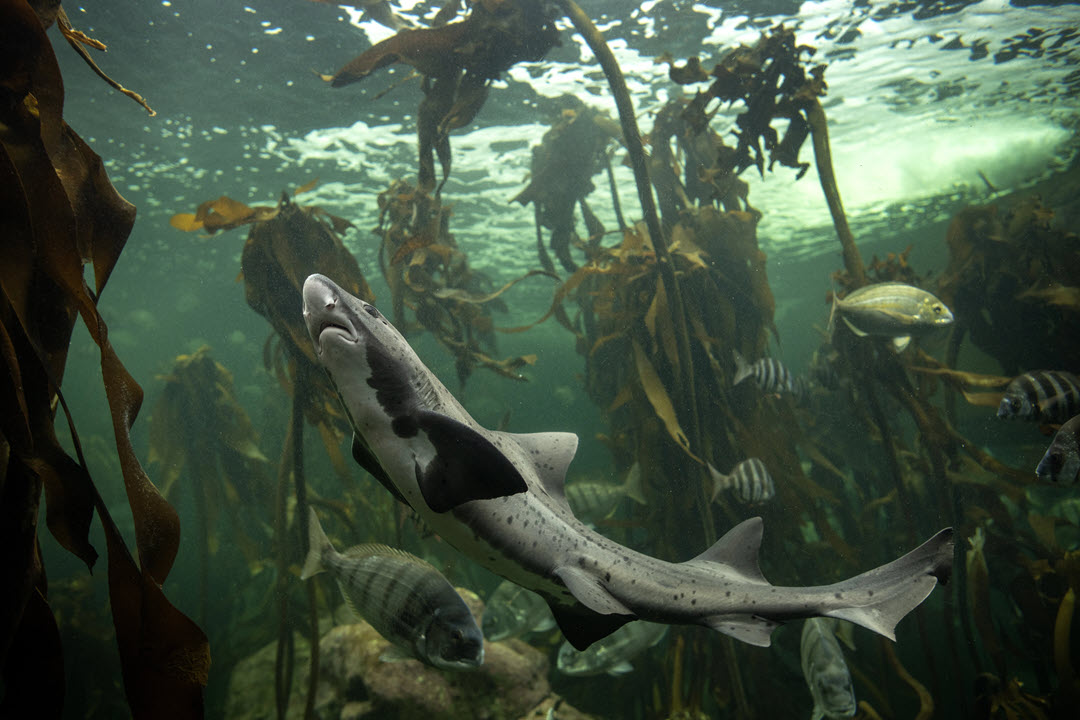
Sharptooth Houndshark in a Kelp Forest
Coastal Waters
Coastal waters extend from the shoreline across relatively shallow areas of the continental shelf. They include bays, lagoons, beaches, rocky coasts, estuaries, and other environments influenced by the nearby land.
These productive waters provide feeding, breeding, and nursery areas for many shark species. Some sharks spend most of their lives near coasts, while others use coastal habitats during particular stages of their lives or at certain times of year.
Sharks commonly associated with coastal waters include bull sharks, lemon sharks, blacktip sharks, bonnetheads, sand tiger sharks, sandbar sharks, leopard sharks, tiger sharks, and many hammerhead sharks.
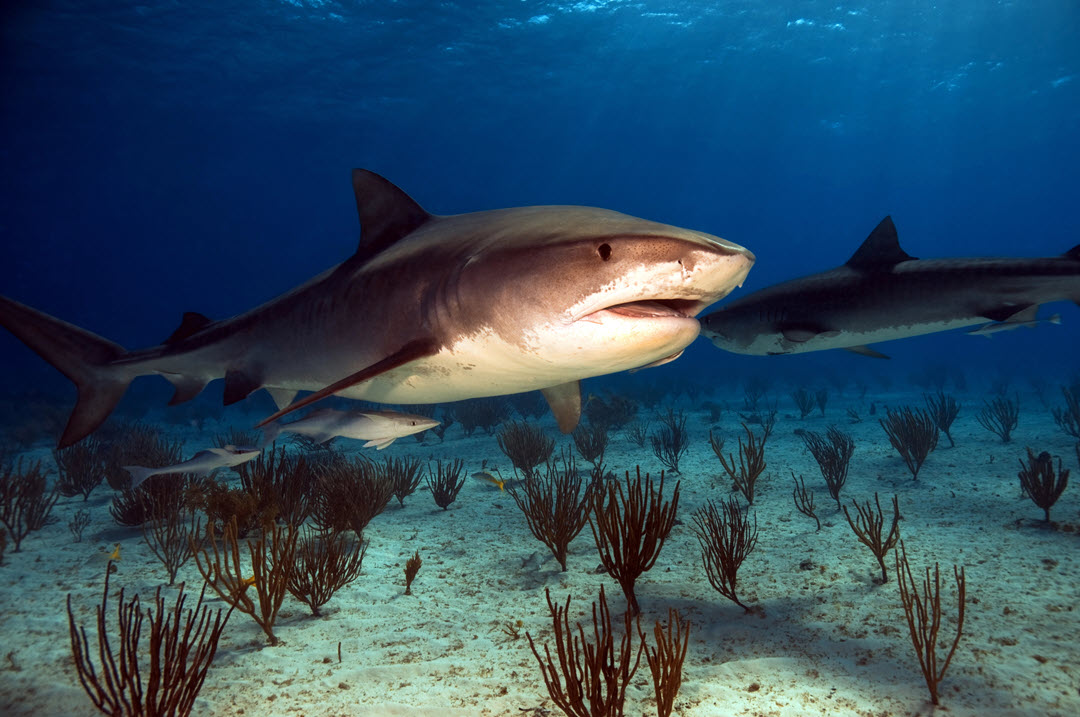
A tiger shark in the Bahamas.
Estuaries and Mangroves
Estuaries form where rivers meet the sea, creating environments where fresh water mixes with salt water. In tropical and subtropical regions, mangrove forests often grow along protected shorelines and estuaries. Their submerged roots create sheltered areas filled with fishes and other marine life.
Shallow estuaries, lagoons, and mangrove habitats can be particularly important as nursery areas for young sharks. These environments may provide abundant food and some protection from larger animals found farther offshore.
Sharks using estuaries and mangrove environments include lemon sharks, bull sharks, blacktip sharks, bonnetheads, and several other coastal species. The exact shark community varies greatly depending on the region.
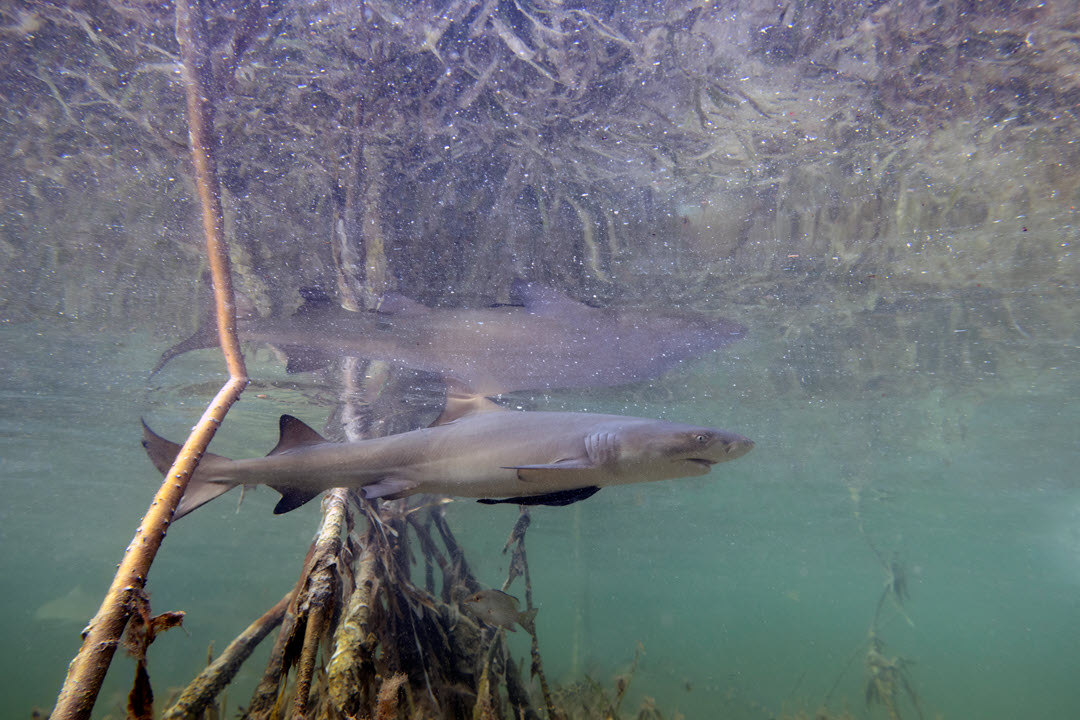
Young lemon shark swimming through a mangrove in the Bahamas.
Sandy and Muddy Seafloors
Large areas of the continental shelf are covered by sand, mud, or mixtures of sediments. Although these habitats may appear relatively bare compared with coral reefs or kelp forests, they support worms, mollusks, crustaceans, fishes, rays, and many other animals.
Some sharks are particularly well adapted to life on or close to the bottom. Angel sharks can partially bury themselves in sediment, while other bottom-associated sharks rest, search for food, or move across sandy and muddy areas.
Sharks associated with these habitats include angel sharks, horn sharks, bullhead sharks, nurse sharks, bamboo sharks, catsharks, and some wobbegongs.
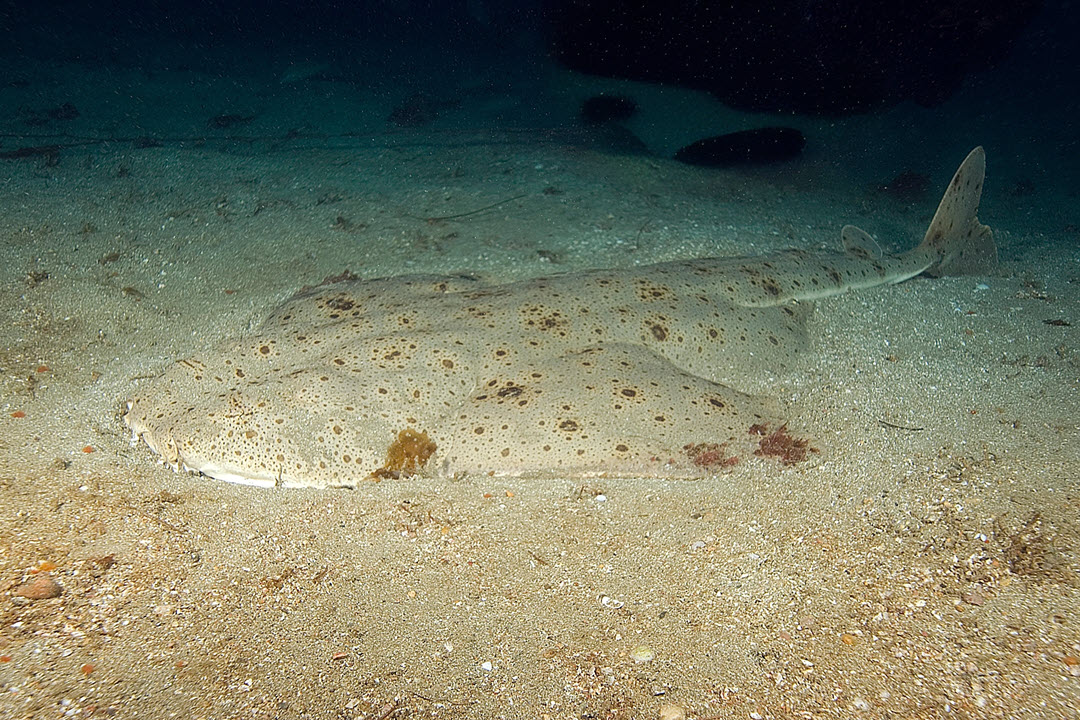
Angel shark resting on the seafloor.
Seagrass Meadows
Seagrasses are flowering plants that grow underwater in shallow coastal seas. They can form extensive meadows across sandy and muddy seafloors, providing food and shelter for fishes, sea turtles, crustaceans, and many other marine animals.
Seagrass habitats are also used by a number of sharks. Some species search for food within the meadows, while others travel through them as part of a larger coastal habitat. Shallow seagrass areas can also provide habitat for juvenile sharks.
Sharks found in and around seagrass habitats include lemon sharks, bonnetheads, blacktip sharks, nurse sharks, and several other small and medium-sized coastal sharks.
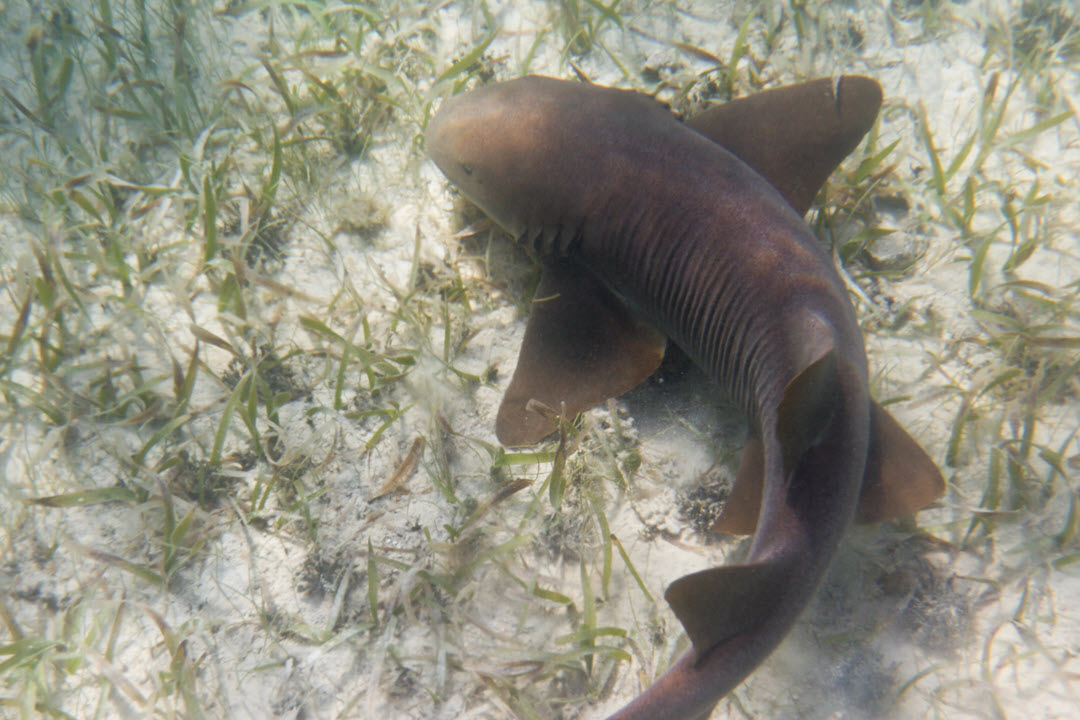
Nurse shark swimming in seagrass.
Open Ocean
Beyond the continental shelf lies the vast open ocean, or pelagic zone. There may be no nearby seafloor, reef, or coastline. Animals living here are surrounded by open water and may travel enormous distances in search of food, suitable water temperatures, or breeding areas.
Sharks adapted to this environment are often strong, efficient swimmers. Many are highly migratory and can cross entire ocean basins. Some remain in open water for much of their lives, while others regularly move between offshore and coastal habitats.
Open-ocean sharks include blue sharks, oceanic whitetip sharks, great white sharks, shortfin makos, longfin makos, silky sharks, whale sharks, basking sharks, and several species of thresher shark.
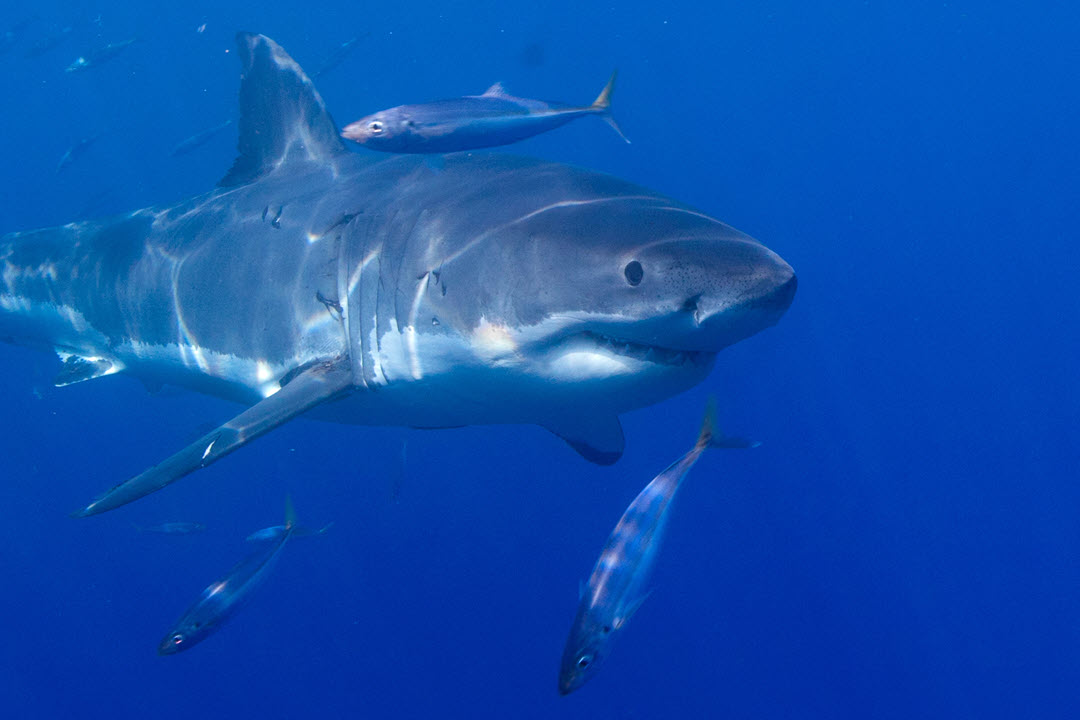
Great White Shark
Deep Sea
The deep sea begins below the sunlit surface layers of the ocean and extends into some of the deepest marine environments on Earth. As depth increases, sunlight disappears, temperatures generally fall, and pressure becomes enormous.
Many sharks have adapted to life in these dark environments. Some have large eyes or highly developed sensory systems. Others, including many lanternsharks, produce light through bioluminescence. Deep-sea sharks are often difficult to study, and scientists still know relatively little about the lives of many species.
Deep-water habitats are home to lanternsharks, gulper sharks, sleeper sharks, Portuguese dogfish, frilled sharks, sixgill sharks, cookiecutter sharks, goblin sharks, and many catsharks.
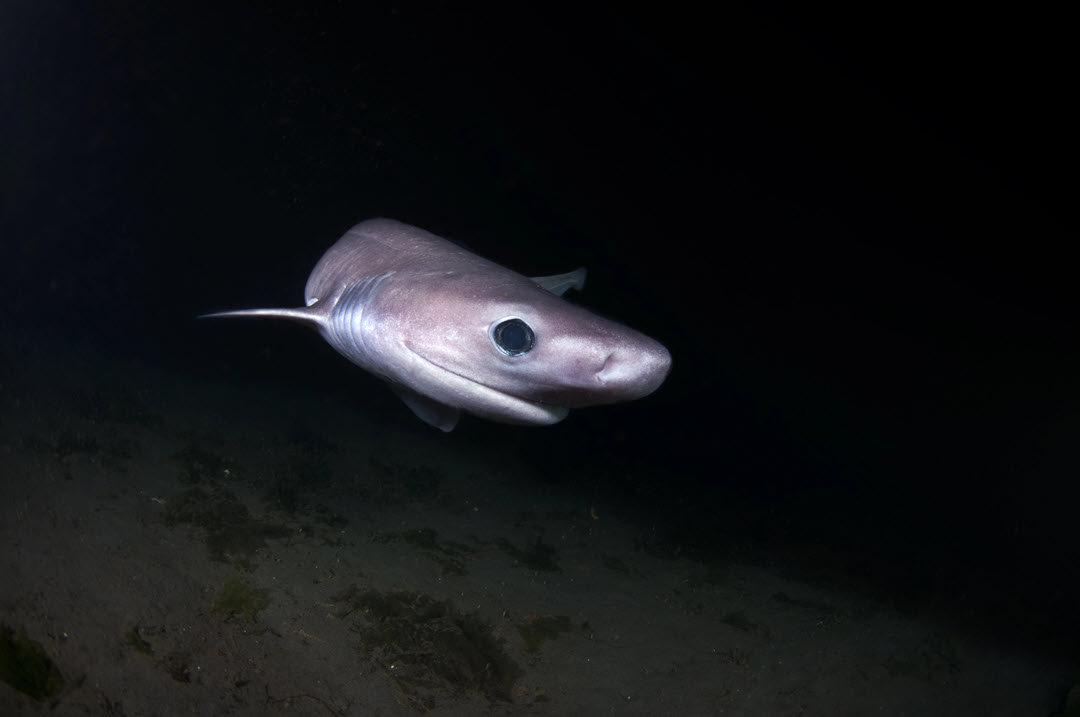
Young bluntnose sixgill shark
Cold and Polar Waters
Some sharks live in cold temperate, subpolar, and polar seas. These environments can have very low water temperatures and dramatic seasonal changes in daylight, sea ice, and biological productivity.
Sharks living in cold waters have physiological and behavioral adaptations that allow them to function at low temperatures. Some remain in cold regions throughout the year, while others migrate through them seasonally.
Cold-water sharks include the Greenland shark, Pacific sleeper shark, spiny dogfish, porbeagle, salmon shark, and several deep-water dogfish and catsharks.
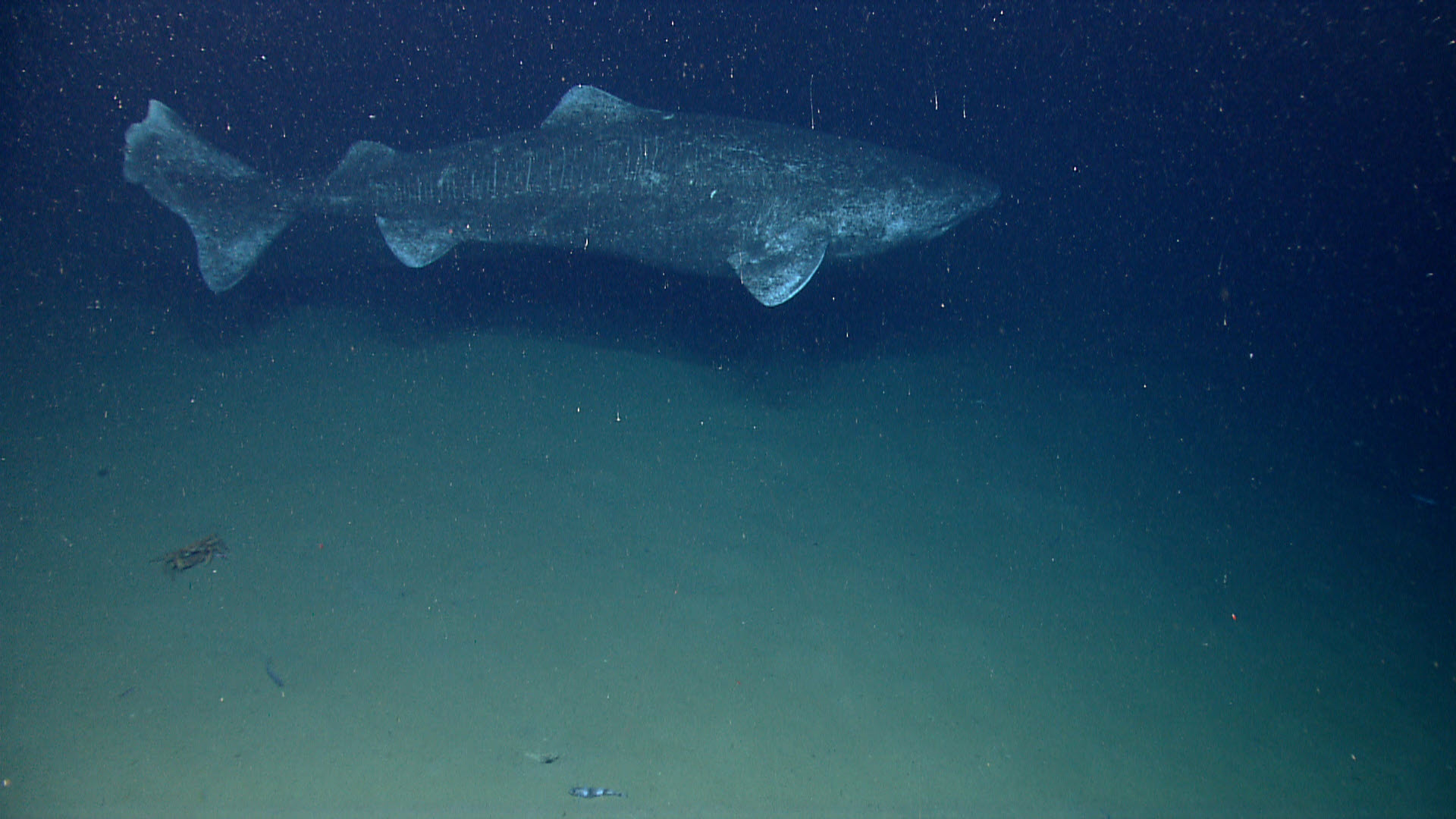
Greenland Shark | NOAA
Freshwater and Rivers
Sharks are primarily marine animals, but a small number can enter or live in freshwater. Moving between seawater and freshwater requires the body to regulate salt and water very differently, something most shark species cannot do for extended periods.
The bull shark is the best-known example. It can travel far upstream in rivers and move between freshwater and marine environments. Several species of river sharks in the genus Glyphis are also associated with rivers, estuaries, and coastal waters in parts of Asia and Australia.
Freshwater habitats are therefore unusual for sharks. The overwhelming majority of shark species live entirely in marine environments.
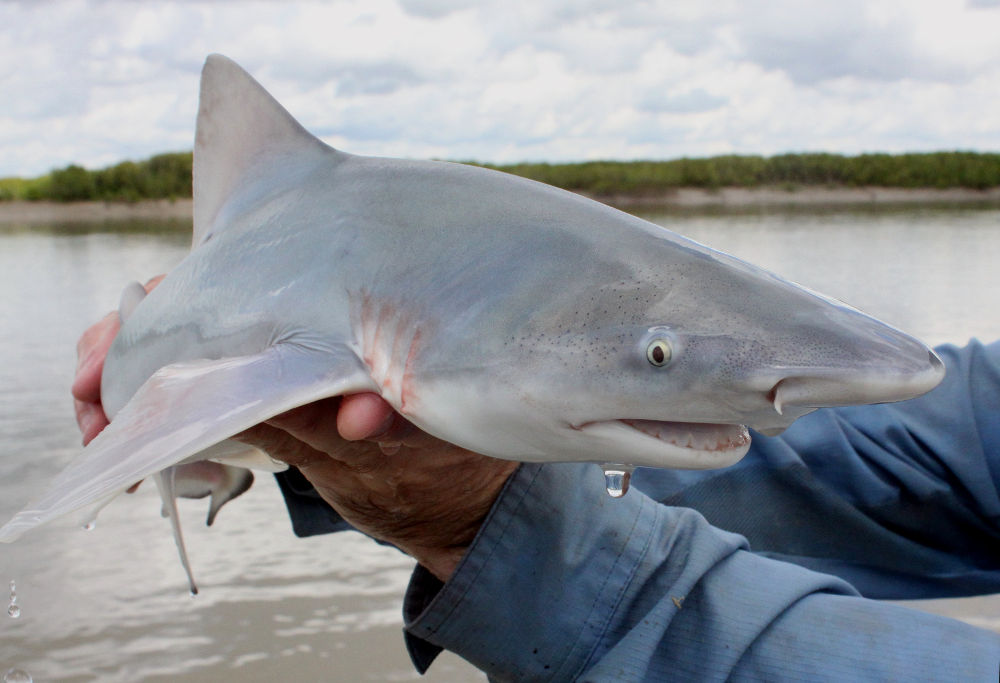
Northern River Shark (Glyphis garricki)
Northern River Shark being handled during a research tagging project. Photo: Peter M. Kyne, Charles Darwin University