
Word Origin
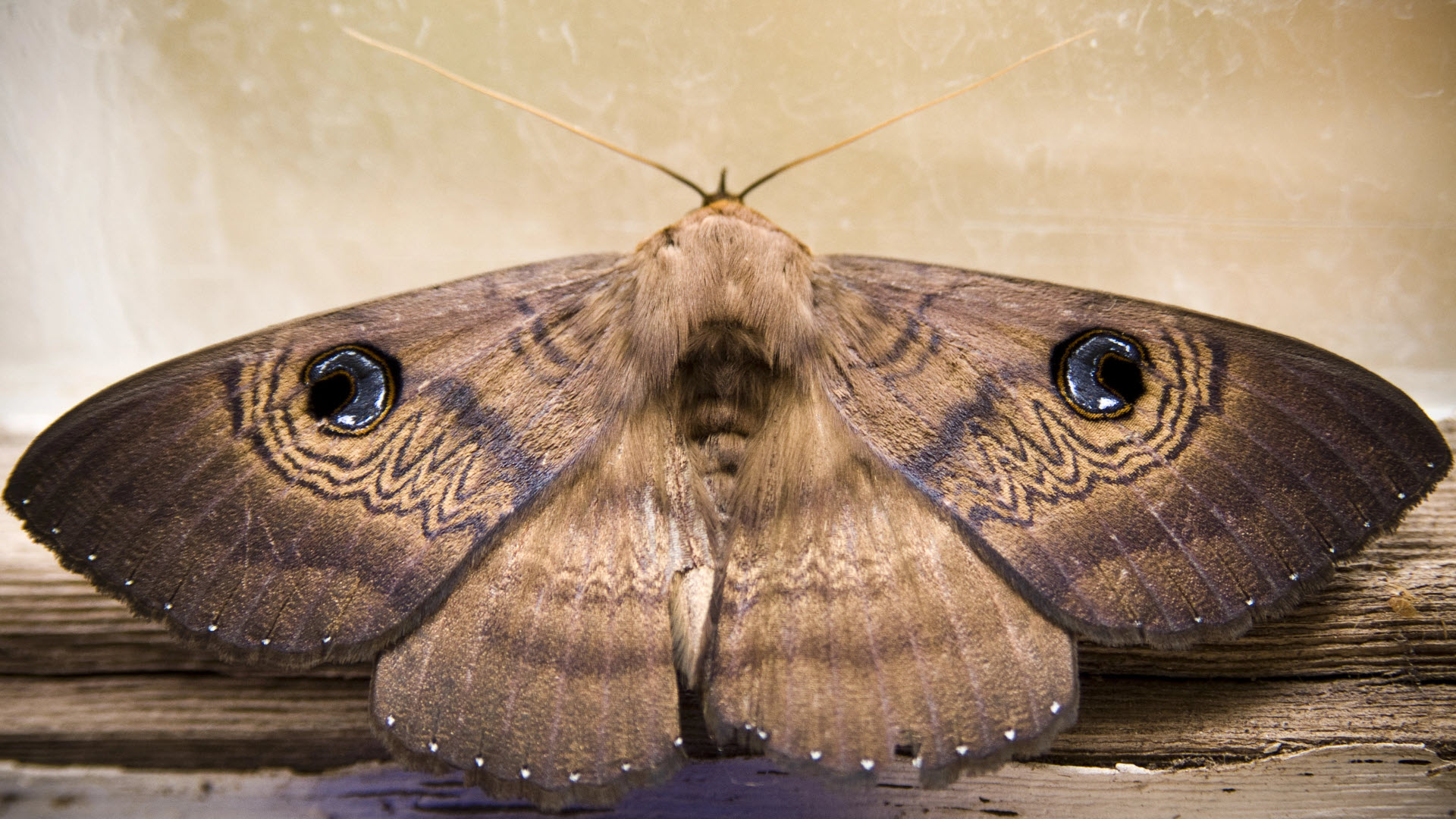
The word insect comes from the Latin insectum, meaning “cut into” or “segmented.” This refers to the way an insect’s body is divided into distinct sections.
This description reflects one of the most noticeable features of insects—their bodies are clearly separated into parts, unlike many other small animals. The name has remained consistent over time, emphasizing structure as a defining trait.
Today, the word is used broadly in everyday language, though scientifically it refers specifically to animals within a defined biological class.
Scientific Name
Insects belong to the class Insecta, which is part of the phylum Arthropoda.
Class
Insecta
Species
There are over 1,000,000 known species of insects worldwide, making them the most diverse group of animals on Earth. Here is a breakout of the estimated number of species of some of the major insect groups:
- Beetles (Order: Coleoptera) – 400,000 species
- Butterflies & moths (Order: Lepidoptera) – 180,000 species
- Flies (Order: Diptera) – 160,000 species
- Bees, wasps & ants (Order: Hymenoptera) – 150,000 species
- True bugs (Order: Hemiptera) – 80,000 species
- Grasshoppers & crickets (Order: Orthoptera) – 20,000 species
- Dragonflies & damselflies (Order: Odonata) – 6,000 species
Scientists estimate that millions more insect species remain undiscovered, particularly in tropical regions, where biodiversity is highest.
Conservation Status
Insects do not have a single conservation status because they include millions of species with widely varying conditions. Some species are extremely common and adaptable, while others are declining or at risk due to environmental changes.
In recent years, scientists have raised concerns about widespread declines in insect populations in certain regions. Habitat loss, pesticide use, climate change, pollution, and light disruption can all affect insect survival and reproduction.
Because insects are often small and less visible than larger animals, changes in their populations may go unnoticed at first. However, these shifts can have significant ecological consequences, especially in systems where insects play essential roles.
At the same time, many insect species continue to thrive, particularly those that can adapt to human-altered environments. The overall picture is complex, with both resilience and vulnerability present across different groups.
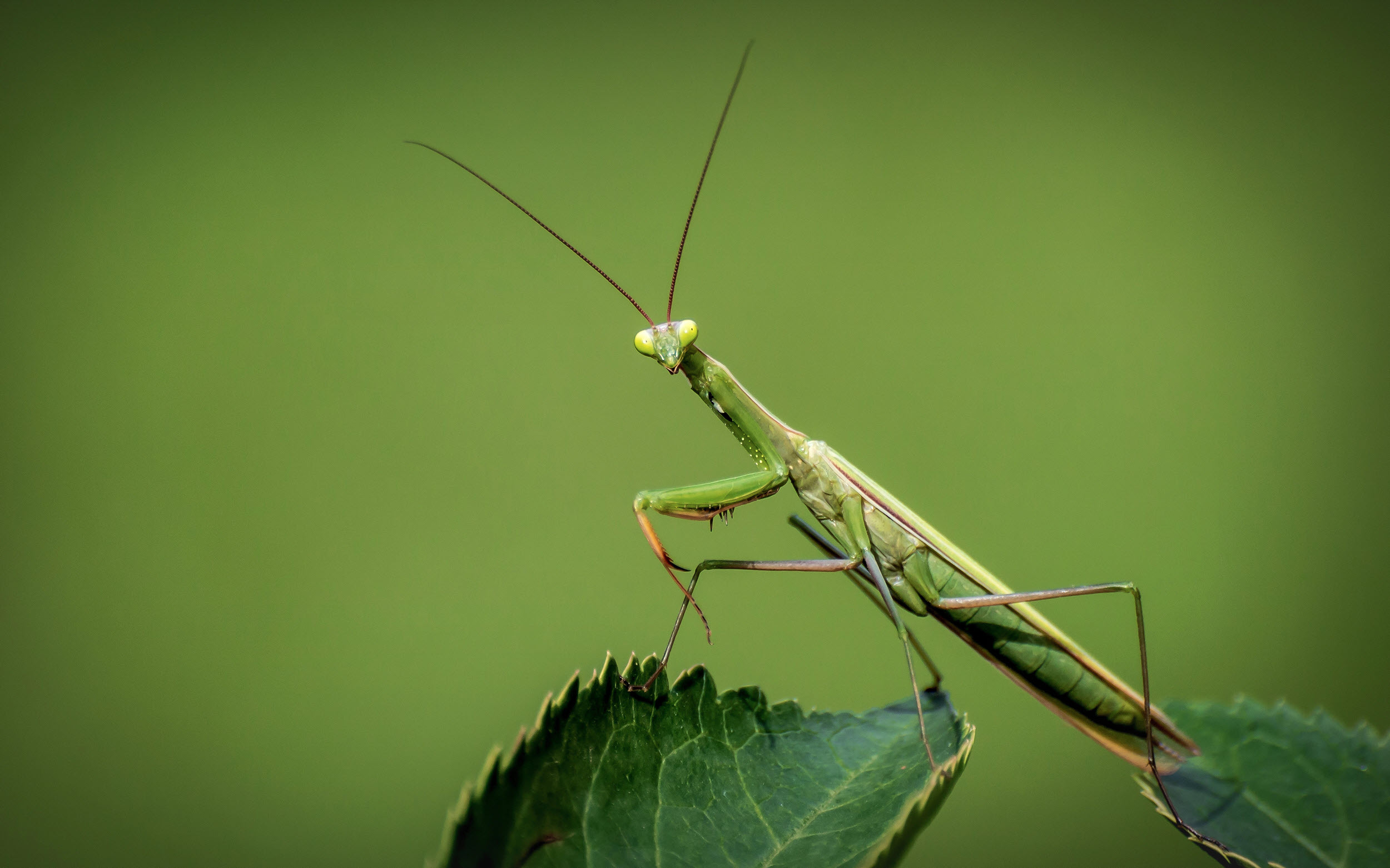
Image: European mantis
Interesting Insect Facts
- Insects are the most diverse group of animals on Earth.
- They make up more than half of all known living species.
- All insects have six legs, regardless of size or shape.
- Many insects undergo metamorphosis, changing form as they grow.
- Some insects can fly, while others are wingless.
- Ants and termites live in highly organized social colonies.
- Certain insects can carry many times their own body weight.
- Insects communicate using chemicals, sound, movement, or light.
Types of Insects
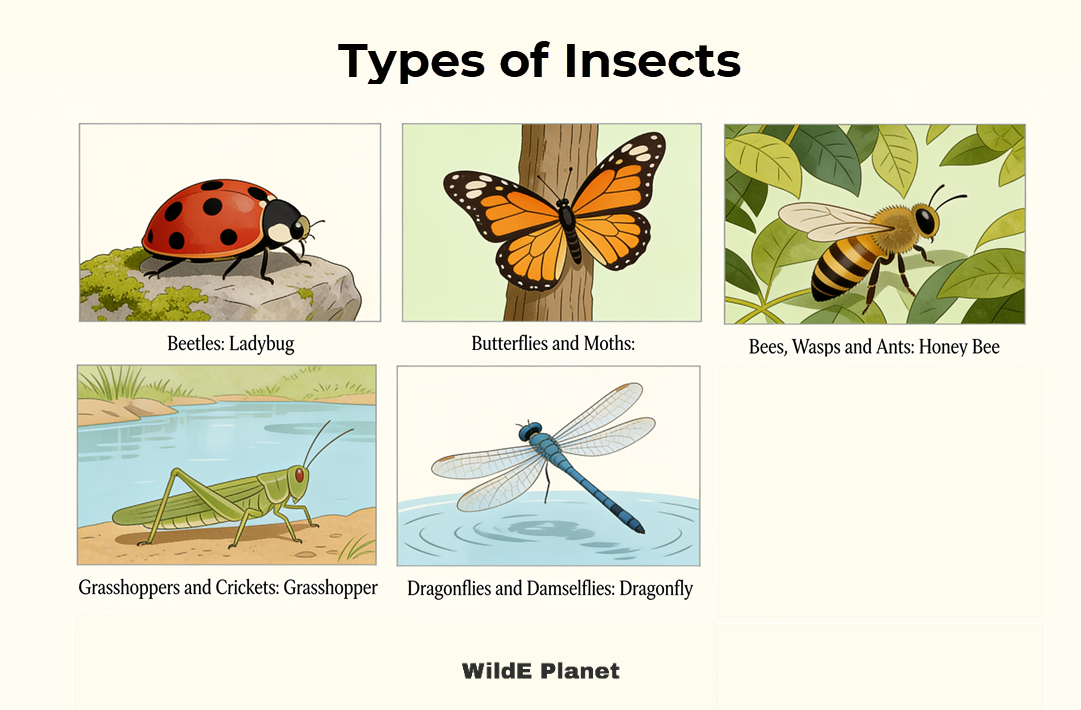
Insects are the largest and most diverse group of animals on Earth. They have six legs, three body segments, and usually one or two pairs of wings. Scientists divide insects into several major groups based on their body structure, life cycle, and behavior.
1. Beetles
Beetles are the largest group of insects, with hundreds of thousands of known species. They have hard outer wing covers called elytra that protect their delicate flying wings underneath. Examples: Ladybug, Stag Beetle, Rhinoceros Beetle
2. Butterflies and Moths
Butterflies and moths are known for their colorful, scaled wings and remarkable life cycle, which includes a caterpillar stage before transforming into an adult. Many species play an important role in pollination. Examples: Monarch Butterfly, Luna Moth
3. Bees, Wasps, and Ants
These insects are among the most important pollinators and social animals on Earth. Many live in organized colonies where individuals work together to gather food, care for young, and defend the nest. Examples: Honey Bee, Yellowjacket Wasp, Carpenter Ant
4. Grasshoppers and Crickets
Grasshoppers and crickets are powerful jumping insects with long hind legs. They are commonly found in grasslands, forests, and gardens, where they feed on plants and become an important food source for many other animals. Examples: Grasshopper, Field Cricket, Katydid
5. Dragonflies and Damselflies
Dragonflies and damselflies are among the oldest flying insects, with ancestors that lived over 300 million years ago. They are agile predators that help control mosquito and other insect populations around ponds, lakes, rivers, and wetlands. Examples: Dragonfly, Damselfly
Did You Know? Scientists have identified more than one million species of insects, making them the largest group of animals on Earth. Beetles alone account for nearly one in every four known animal species, and insects play essential roles as pollinators, decomposers, and food for countless other animals.
Insect History
Insects have a long evolutionary history that stretches back hundreds of millions of years. Early insect ancestors appeared long before dinosaurs and have survived major changes in Earth’s climate and environment.
One of the key developments in insect evolution was the ability to fly. Insects were the first animals to develop powered flight, which allowed them to spread into new habitats, escape predators, and access new food sources.
Another important trait is metamorphosis. Many insects change dramatically between life stages, such as from larva to adult. This allows different stages of life to use different resources, reducing competition within the same species.
Over time, insects diversified into an enormous number of forms. Their success is often linked to their small size, rapid reproduction, and ability to adapt quickly to changing conditions.
Insect Characteristics
Insects are so common that they are often overlooked, yet they represent one of the most successful groups of animals in the natural world. They can be found in forests, deserts, wetlands, grasslands, and even urban environments.
Part of what makes insects remarkable is their variety. They come in many shapes, sizes, and colors, from tiny, nearly invisible species to large, highly visible ones. Despite these differences, they share a common body structure that defines the group.
Insects have adapted to a wide range of ecological roles. Some are pollinators, some are decomposers, some are predators, and others feed on plants or organic material. This range of functions allows them to occupy nearly every available niche.
Because of their numbers and diversity, insects are a constant presence in most ecosystems, even when they are not immediately seen.
Appearance - What Insects Look like
Insects share a basic body plan that includes three main sections: the head, thorax, and abdomen. This structure is one of the defining features of the group.
The head typically contains the eyes, antennae, and mouthparts. The thorax supports the legs and, in many species, the wings. The abdomen houses internal organs and is often flexible or segmented.
All insects have six legs attached to the thorax. Many also have one or two pairs of wings, though some species are wingless. Their outer covering, called an exoskeleton, provides protection and support.
Common physical features include:
- Three-part body (head, thorax, abdomen)
- Six legs
- Antennae for sensing the environment
- Compound eyes in many species
- Exoskeleton made of a tough outer material
- Wings in many, but not all, species
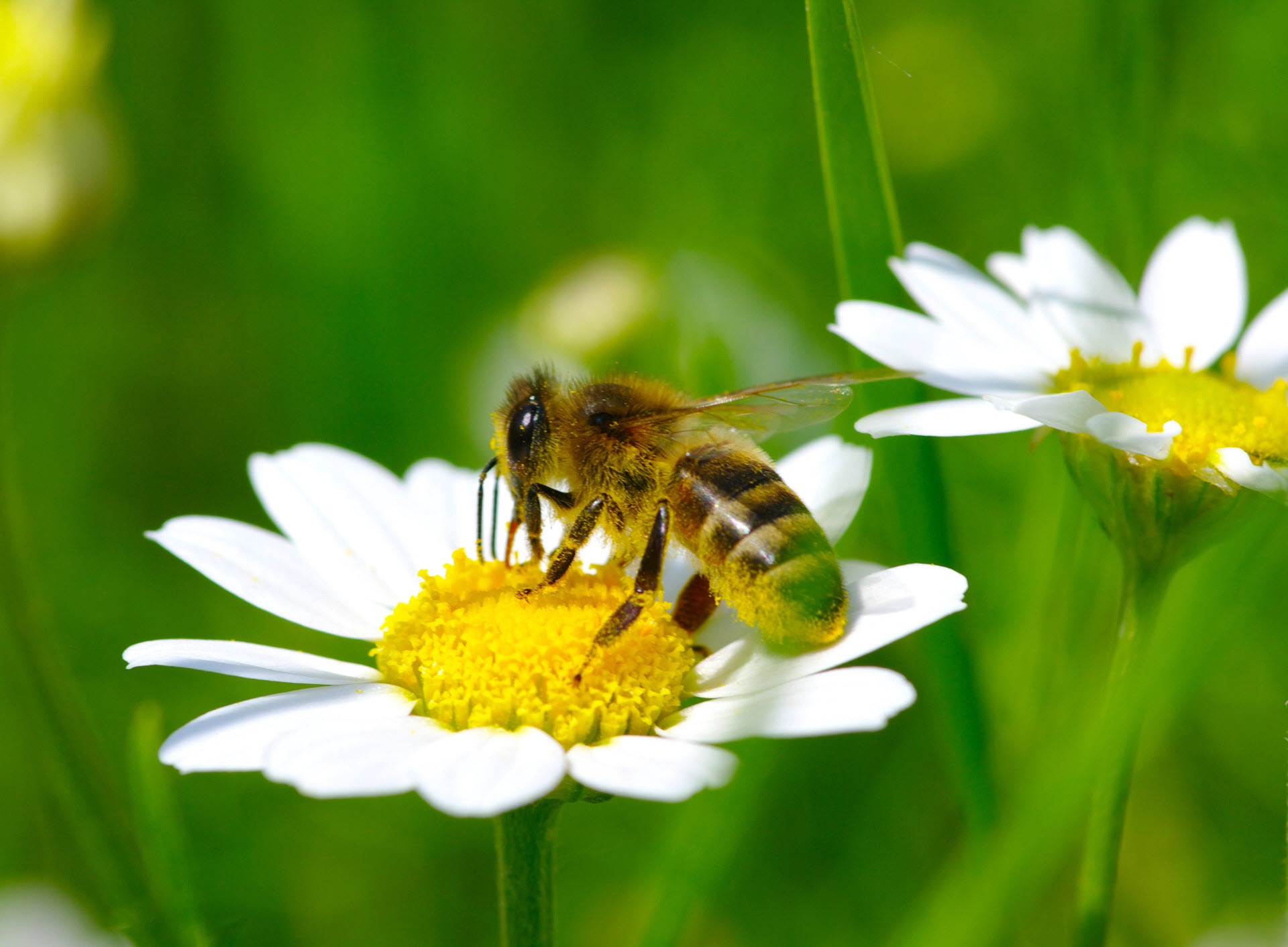
Image: A bee collecting pollen.
Habitat
Insects live in nearly every habitat on Earth, from tropical rainforests to dry deserts and from freshwater systems to high mountain regions.
They can be found in soil, on plants, under rocks, in water, and in the air. Some species are highly specialized and live only in specific environments, while others are extremely adaptable and can thrive in a wide range of conditions.
Insects are especially abundant in warm environments where food and moisture are available. However, some species are adapted to cold climates and can survive freezing temperatures.
Their ability to occupy so many habitats is one reason insects are so widespread and numerous.
Behavior
Insect behavior varies widely depending on the species. Some insects live alone and have simple daily routines focused on feeding and reproduction, while others live in highly organized groups.
Social insects, such as ants, bees, and termites, form colonies with specialized roles. Individuals within these groups may perform different tasks, including foraging, defense, or caring for young.
Many insects respond quickly to environmental cues such as light, temperature, and chemical signals. Some are active during the day, while others are primarily nocturnal.
Common behaviors include:
- Foraging for food
- Mating and reproduction
- Building nests or colonies
- Communication through chemicals or movement
- Migration in some species
- Defense through camouflage, mimicry, or escape
What Insects Eat
Insects have a wide range of diets, and their feeding habits often reflect their role in the ecosystem.
Some insects feed on plants, including leaves, stems, nectar, or seeds. Others are predators that hunt smaller animals. Some act as scavengers or decomposers, breaking down organic material.
There are also parasitic insects that live on or inside other organisms. This variety in diet allows insects to fill many ecological roles.
Typical insect diets include:
- Plant material
- Nectar and pollen
- Other insects or small animals
- Decaying organic matter
- Blood in some species
- Fungi or microorganisms
The Life Cycle of an Insect
Many insects undergo metamorphosis, which means they change form as they develop. This process can occur in different ways depending on the species.
In complete metamorphosis, insects pass through four stages: egg, larva, pupa, and adult. Each stage looks and behaves differently. In incomplete metamorphosis, the young resemble smaller versions of the adult and gradually develop over time.
Reproduction rates can be high, and some species produce large numbers of offspring. This helps insects maintain populations even when many individuals are lost to predators or environmental changes.
The life cycle is often closely tied to environmental conditions such as temperature, food availability, and season.
Where to See Insects in the Wild
Insects are found almost everywhere, though they are not always noticed. You might see them in gardens, forests, fields, near water, or even inside buildings.
Some are active during the day and are easy to observe, while others are more active at night or remain hidden.
You might notice insects:
- On plants and flowers
- In soil or under rocks
- Near lights at night
- Around water sources
- In forests and grasslands
- In homes and urban areas
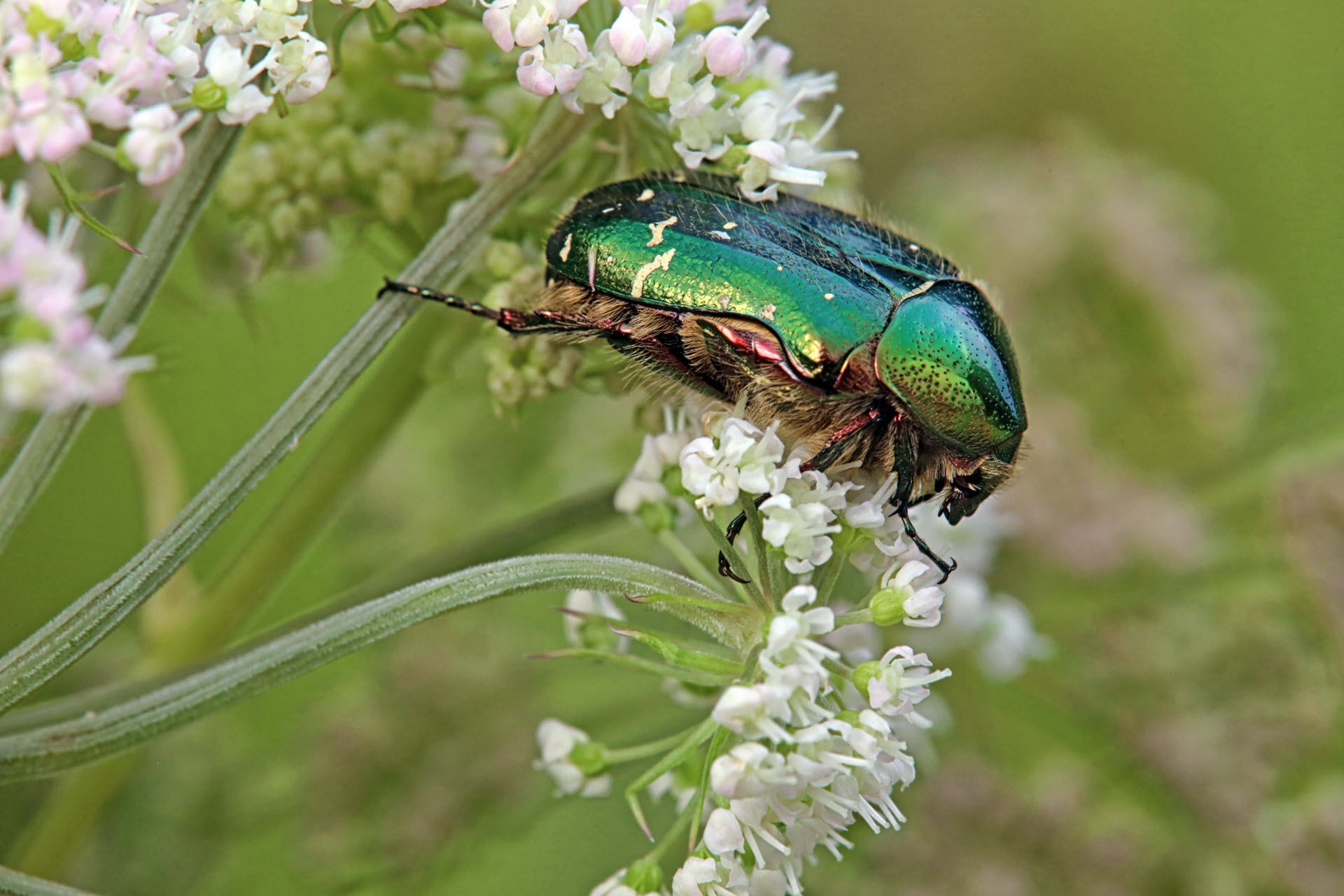
Image: A beetle
Role in Nature
Insects play essential roles in ecosystems. Many are pollinators, helping plants reproduce by transferring pollen from one flower to another.
Others act as decomposers, breaking down dead material and recycling nutrients back into the environment. Predatory insects help control populations of other organisms, maintaining balance within ecosystems.
Insects are also an important food source for many animals, including birds, reptiles, amphibians, and mammals.
Because they are involved in so many processes, changes in insect populations can affect entire ecosystems.
Unique Insect Characteristics
Insects have evolved a wide range of specialized abilities that allow them to survive in many different environments.
Some can fly with great precision, while others can jump, burrow, or glide. Many species use camouflage or mimicry to avoid predators, blending into their surroundings or resembling other organisms.
Communication is often chemical, with insects releasing signals that others can detect. Some species also produce light, sound, or vibrations.
Unique qualities include:
- Metamorphosis
- Flight in many species
- Chemical communication (pheromones)
- Camouflage and mimicry
- Ability to live in diverse environments
- Rapid reproduction and adaptation
Insect Conservation
Insects face a variety of environmental pressures, many of which are linked to human activity. Habitat loss from agriculture, urban development, and deforestation can reduce the areas where insects can live and reproduce.
Pesticide use can directly affect insect populations, sometimes harming beneficial species along with target pests. Light pollution can disrupt behavior, especially for nocturnal insects.
Climate change may alter temperature and weather patterns, affecting insect life cycles, distribution, and food availability.
Conservation efforts may include:
- Reducing pesticide use
- Protecting natural habitats
- Supporting pollinator-friendly environments
- Monitoring insect populations
- Promoting sustainable land use practices
Sources
- U.S. Department of Agriculture (USDA)
- U.S. Geological Survey (USGS)
- Smithsonian Institution
- University of Michigan Animal Diversity Web