
Animals live in an enormous variety of habitats. Even broad habitats such as forests, deserts, grasslands, and oceans contain many different environments, each with its own climate, vegetation, water, and physical conditions.
These differences create specialized habitats that support different communities of animals. A tropical rainforest, for example, provides very different living conditions from a boreal forest, while a coral reef is very different from the deep ocean. Understanding the different types of habitats helps explain where animals live and how they have adapted to their surroundings.
Forest Habitats
Forests are found in many parts of the world, but they are not all alike. Temperature, rainfall, latitude, elevation, and seasonal changes create several different types of forest habitats, each supporting its own communities of plants and animals.
Tropical Rainforests
Tropical rainforests occur in warm regions near the equator and receive abundant rainfall. Their dense vegetation forms several layers, from the forest floor to the canopy, creating many different places for animals to live. Monkeys, parrots, frogs, insects, reptiles, and large predators are among the many animals found in tropical rainforest habitats.
Temperate Forests
Temperate forests occur in regions with moderate climates and distinct seasons. Many are dominated by deciduous trees that lose their leaves each year, although evergreen trees may also be present. Deer, bears, foxes, birds, insects, and many smaller animals use these forests for food and shelter.
Boreal Forests
Boreal forests, also called taiga, stretch across large northern areas of North America, Europe, and Asia. Long, cold winters and short summers favor evergreen conifers such as spruce, fir, and pine. Animals living in boreal forests include moose, wolves, lynx, bears, snowshoe hares, and many migratory birds.
Grassland Habitats
Grasslands are open environments where grasses and other low-growing plants dominate. Rainfall is generally too limited or seasonal to support extensive forests. Grasslands occur in both temperate and tropical regions and support many grazing animals, predators, birds, insects, and burrowing species.
Temperate Grasslands
Temperate grasslands include the prairies of North America, steppes of Eurasia, and pampas of South America. They typically experience hot or warm summers and cold winters. Grazing animals, burrowing mammals, birds of prey, insects, and predators are characteristic members of temperate grassland communities.
Tropical Savannas
Savannas are tropical grasslands characterized by grasses with scattered trees and shrubs. They generally have distinct wet and dry seasons. African savannas are famous for animals such as elephants, giraffes, zebras, antelopes, lions, and cheetahs, but savanna habitats also occur in South America, Australia, and Asia.
Desert Habitats
Deserts receive very little precipitation, creating environments where water is one of the most important limits on life. Deserts are not necessarily hot. Both hot and cold deserts occur around the world, and animals living in them have adaptations for surviving dry and often extreme conditions.
Hot Deserts
Hot deserts can experience extremely high daytime temperatures, although temperatures may fall considerably at night. Animals may avoid the hottest part of the day by sheltering in burrows, beneath rocks, or in shade. Reptiles, insects, rodents, foxes, and other desert animals also have adaptations that help them conserve water.
Cold Deserts
Cold deserts receive little precipitation but experience much colder temperatures than hot deserts. Winters can be severe, and precipitation may fall as snow. Animals living in these environments must cope with both limited water and seasonal cold.
Wetland Habitats
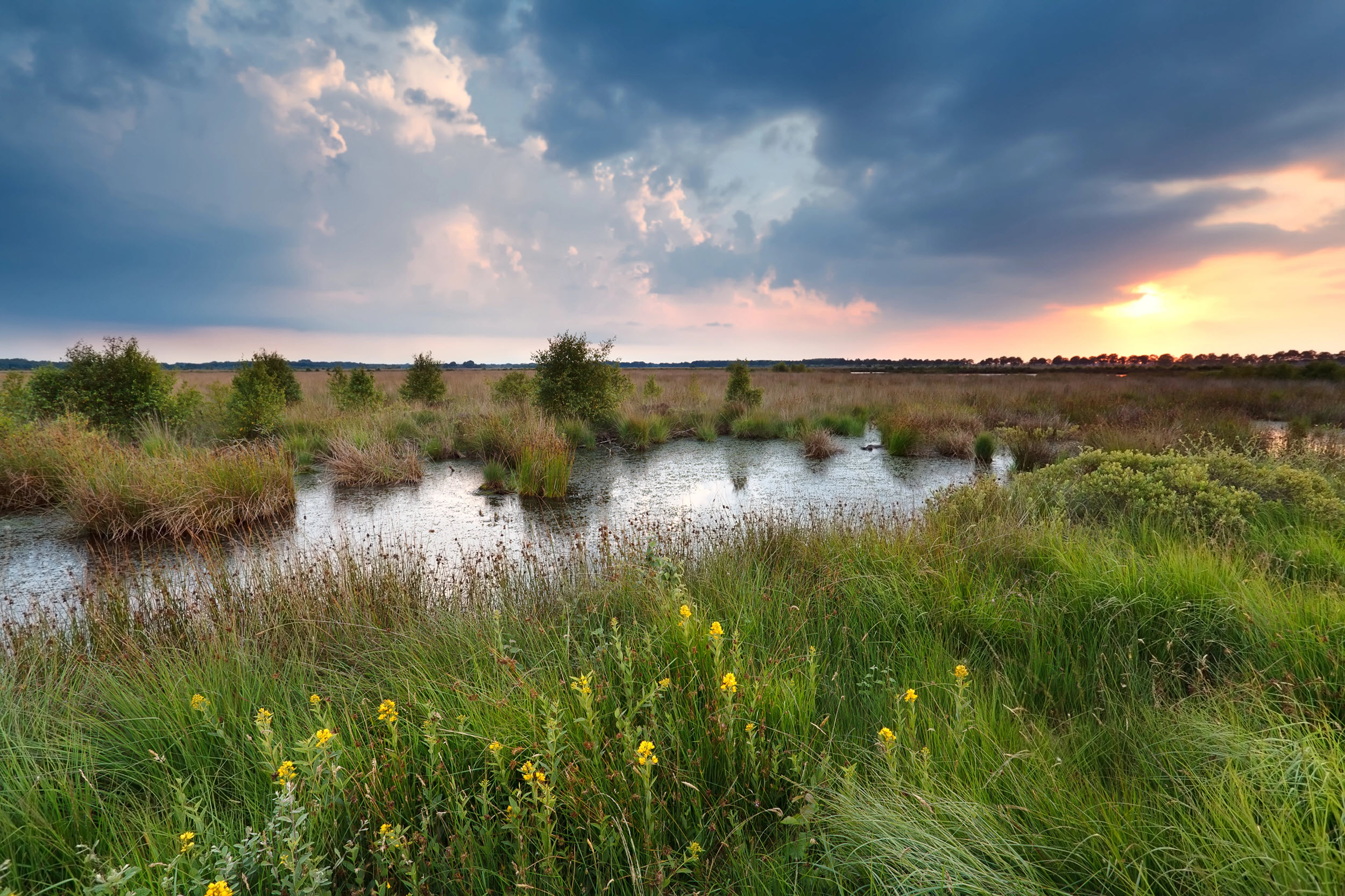
Wetlands occur where water covers the soil or keeps it saturated for all or part of the year. The depth, duration, and type of water help determine which plants and animals can live there. Wetlands are particularly important as feeding, breeding, and nursery habitats for wildlife.
Marshes
Marshes are wetlands dominated by grasses, reeds, sedges, and other soft-stemmed plants rather than trees. They may contain fresh, brackish, or salt water. Marshes provide habitat for fish, frogs, turtles, insects, waterfowl, wading birds, and many mammals.
Swamps
Swamps are wetlands dominated by trees or woody shrubs. They can occur along rivers, around lakes, and in low-lying areas where water collects. Fish, amphibians, reptiles, birds, insects, and mammals may all depend on swamp habitats.
Bogs
Bogs are wetlands that accumulate peat and generally receive much of their water from precipitation. They are often acidic and low in nutrients, creating conditions suited to specialized plants and animals.
Fens
Fens are peat-forming wetlands that receive water from groundwater as well as precipitation. Their water chemistry and vegetation differ from those of bogs, and they can support distinctive communities of plants, insects, birds, amphibians, and other wildlife.
Freshwater Habitats
Freshwater habitats contain water with very low concentrations of dissolved salts. Although freshwater covers only a small portion of Earth’s surface, rivers, streams, lakes, ponds, and springs provide essential habitat for a wide variety of animals.
Rivers and Streams
Rivers and streams are flowing-water habitats. Conditions can change considerably from fast, cool headwaters to slower and wider sections downstream. Fish, aquatic insects, amphibians, birds, mammals, and many other animals depend on rivers and streams.
Lakes and Ponds
Lakes and ponds are standing bodies of freshwater that range from small, shallow ponds to enormous deep lakes. Different areas within them provide habitats for different species, including open water, shallow shorelines, bottom environments, and areas filled with aquatic vegetation.
Springs
Springs form where groundwater naturally reaches Earth’s surface. Some feed streams, wetlands, ponds, or other freshwater environments. Because spring conditions can remain relatively stable, some springs support highly specialized animals with very limited geographic ranges.
Marine Habitats
Marine habitats are found in saltwater oceans and seas, which cover most of Earth’s surface. Differences in depth, temperature, sunlight, currents, seafloor conditions, and distance from land create an enormous variety of marine environments.
Open Ocean
The open ocean extends beyond coastal waters and contains a vast three-dimensional habitat from the sunlit surface to deep, dark waters. Animals ranging from plankton and schooling fish to sharks, sea turtles, dolphins, and whales live or travel through the open ocean.
Coastal Waters
Coastal waters occur near continents and islands and are strongly influenced by nearby land and the seafloor. These productive habitats provide feeding, breeding, and nursery areas for fish, seabirds, marine mammals, and many invertebrates.
Coral Reefs
Coral reefs are complex marine habitats built largely by colonies of tiny coral animals. Their three-dimensional structures provide shelter, feeding areas, and breeding sites for an extraordinary variety of fish and other marine life.
Seagrass Beds
Seagrass beds form in shallow coastal waters where enough sunlight reaches the seafloor for flowering marine plants to grow. They provide food and shelter for fish, sea turtles, seahorses, crustaceans, and many other animals and often serve as nursery habitats for young marine species.
Deep Sea
The deep sea lies beyond the reach of most sunlight and includes some of the largest and least familiar habitats on Earth. Animals living there must survive darkness, cold temperatures, high pressure, and often limited food. Many deep-sea species have unusual adaptations for finding food, attracting mates, and sensing their surroundings.
Polar Seas
Polar seas surround the Arctic and Antarctica and are strongly influenced by cold temperatures and seasonal sea ice. Despite the extreme conditions, these waters can support rich food webs that include plankton, fish, seabirds, seals, whales, and other marine animals.
Mountain Habitats
Mountain environments change dramatically with elevation. Temperature, vegetation, snowfall, wind, and oxygen availability can all change as elevation increases, creating several different habitat zones on the same mountain.
Montane Forests
Montane forests grow on mountain slopes at elevations where conditions still support trees. The animals found in them vary by region but can include deer, bears, wild cats, monkeys, birds, amphibians, and many smaller species.
Subalpine Habitats
Subalpine habitats occur near the upper limit at which trees can grow. Forests become thinner and trees may be shorter or more widely spaced as conditions become colder and harsher. These environments form a transition between mountain forests and open alpine habitats.
Alpine Habitats
Alpine habitats occur above the natural tree line. They are exposed to cold temperatures, strong winds, short growing seasons, and intense weather. Mountain goats, pikas, marmots, insects, and specialized birds are among the animals adapted to alpine environments in different parts of the world.
Polar Habitats
Polar habitats occur in Earth’s far northern and southern regions. Long winters, extreme cold, seasonal changes in daylight, snow, ice, and short growing seasons create demanding conditions for wildlife.
Arctic Tundra
Arctic tundra is a cold, largely treeless habitat found across northern North America, Greenland, Europe, and Asia. Much of the ground is underlain by permafrost. Animals include caribou, musk oxen, Arctic foxes, lemmings, snowy owls, and large numbers of migratory birds during the short summer.
Sea Ice
Sea ice creates an important seasonal habitat at the surface of polar oceans. In the Arctic, polar bears use sea ice to hunt seals, while seals use it for resting and raising young. In Antarctica, sea ice also supports food webs that ultimately provide food for penguins, seals, whales, and other animals.
Antarctic Land Habitats
Most of Antarctica is covered by ice, and terrestrial life is concentrated in relatively small ice-free areas and along the coast. The continent has few land animals compared with other regions, but coastal areas provide important breeding habitat for penguins and other seabirds.
Coastal and Transitional Habitats
Some habitats occur where land, freshwater, and marine environments meet. These transitional areas can change dramatically with tides, storms, river flow, and seasons and are often highly productive wildlife habitats.
Estuaries
Estuaries occur where freshwater from rivers mixes with salt water from the sea. Their changing salinity and sheltered waters create productive feeding and nursery habitats for fish, shellfish, birds, and many other animals.
Mangrove Forests
Mangrove forests grow along tropical and subtropical coastlines where salt-tolerant trees can survive in tidal waters. Their tangled roots provide shelter and nursery habitat for fish and other marine animals, while birds, reptiles, mammals, and insects use the vegetation above the water.
Salt Marshes
Salt marshes are coastal wetlands dominated by salt-tolerant grasses and other low-growing plants. Regular flooding by tides creates habitat for fish, crustaceans, insects, shorebirds, and other wildlife.
Intertidal Zones
The intertidal zone is the area of shoreline covered by water at high tide and exposed at low tide. Animals living there must cope with waves, changing temperatures, exposure to air, and rapidly changing water conditions. Barnacles, crabs, mussels, sea stars, snails, and many other animals are adapted to this demanding habitat.
Sandy and Rocky Shores
Coastlines can include sandy beaches, rocky shores, cliffs, dunes, and other habitats shaped by waves, wind, and tides. Shorebirds, nesting sea turtles, seals, crabs, mollusks, insects, and many other animals use these coastal environments for feeding, resting, breeding, or nesting.
Habitats Within Habitats
Habitat categories help us describe the natural world, but their boundaries are not always clear. A mountain can contain forests, streams, wetlands, and alpine areas, while a coastline can contain beaches, estuaries, marshes, mangroves, and nearby marine habitats.
Animals may also depend on more than one habitat during their lives. Migrating animals can travel through many different environments, and other species move between feeding, breeding, nesting, and nursery habitats. Looking more closely at different habitat types helps us understand the many environments animals need to survive.