
Word Origin
The term “reptile” comes from the Latin reptilis, meaning “creeping” or “crawling.” It was originally used to describe animals that move low to the ground.
Over time, the word became associated with a broad group of animals that share similar physical traits, especially dry skin and scaled bodies.
Today, it refers to a distinct class of vertebrates that includes snakes, lizards, turtles, and crocodilians.
Scientific Name
Reptilia
Class
Reptilia
Species
There are approximately 11,500 known species of reptiles worldwide, including lizards, snakes, turtles, crocodilians, and tuataras. Here is a breakdown of the number of species in some of the major groups:
- Lizards & snakes (Order: Squamata) – 10,500+ species
- Turtles & tortoises (Order: Testudines) – 360 species
- Crocodilians (Order: Crocodilia) – 25 species
- Tuataras (Order: Rhynchocephalia) – 2 species
Many reptile species are still being studied, and ongoing research continues to refine our understanding of their diversity and classification.
Conservation Status
Across the group, conservation status varies widely depending on the species and region. Some reptiles remain abundant, while others are facing serious declines.
Habitat loss is one of the most significant pressures, especially in tropical and coastal areas. In addition, climate change, pollution, and illegal wildlife trade continue to impact many populations worldwide.
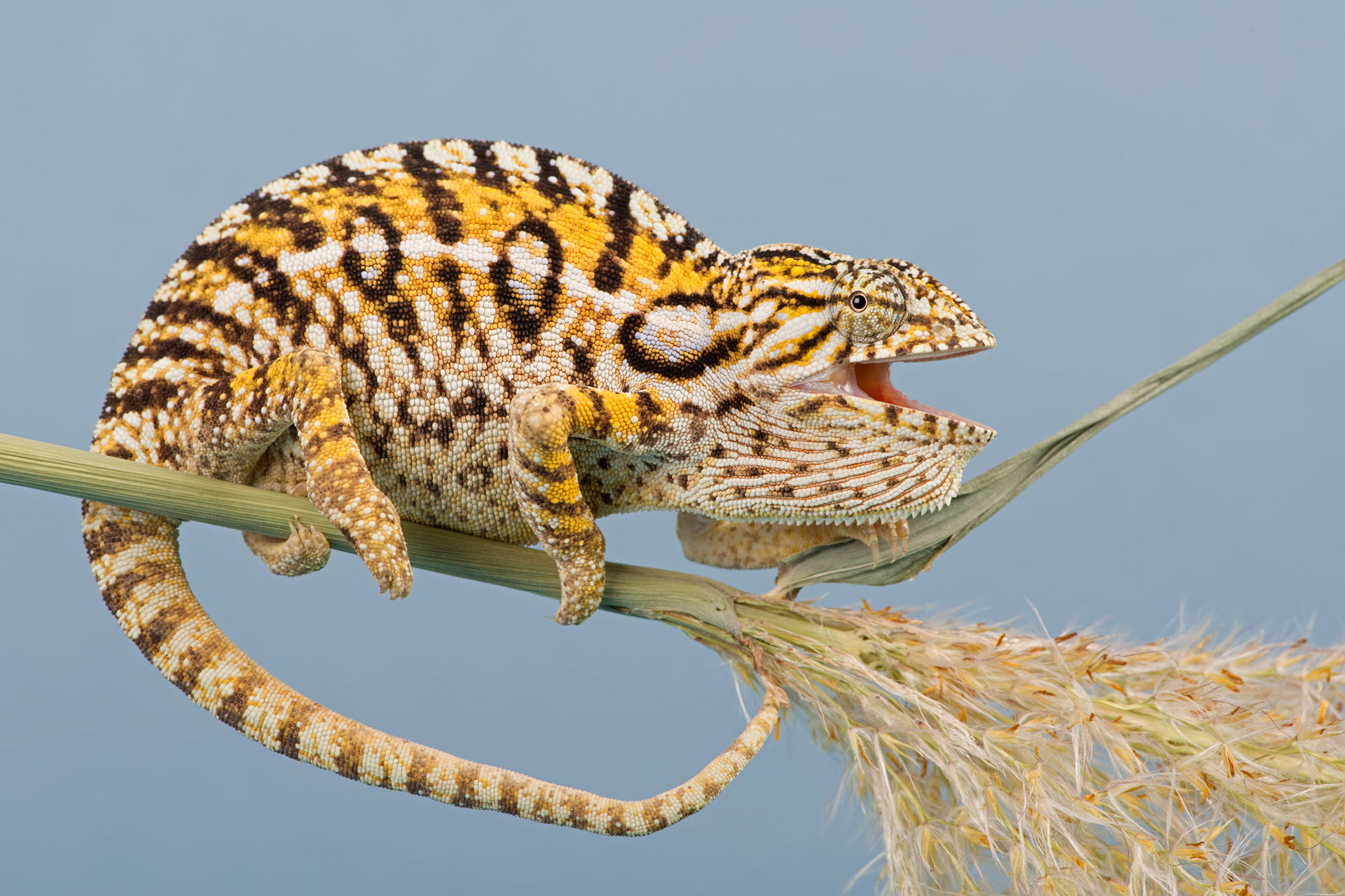
Image: Carpet chameleon
Interesting Reptile Facts
- Body temperature is regulated through external heat sources
- Certain lizards can regrow lost tails after escaping predators
- Some turtles have lifespans that exceed 100 years
- Crocodilians share a closer evolutionary link to birds than to most reptiles
- Heat-sensing abilities allow some snakes to detect prey in darkness
Types of Reptiles
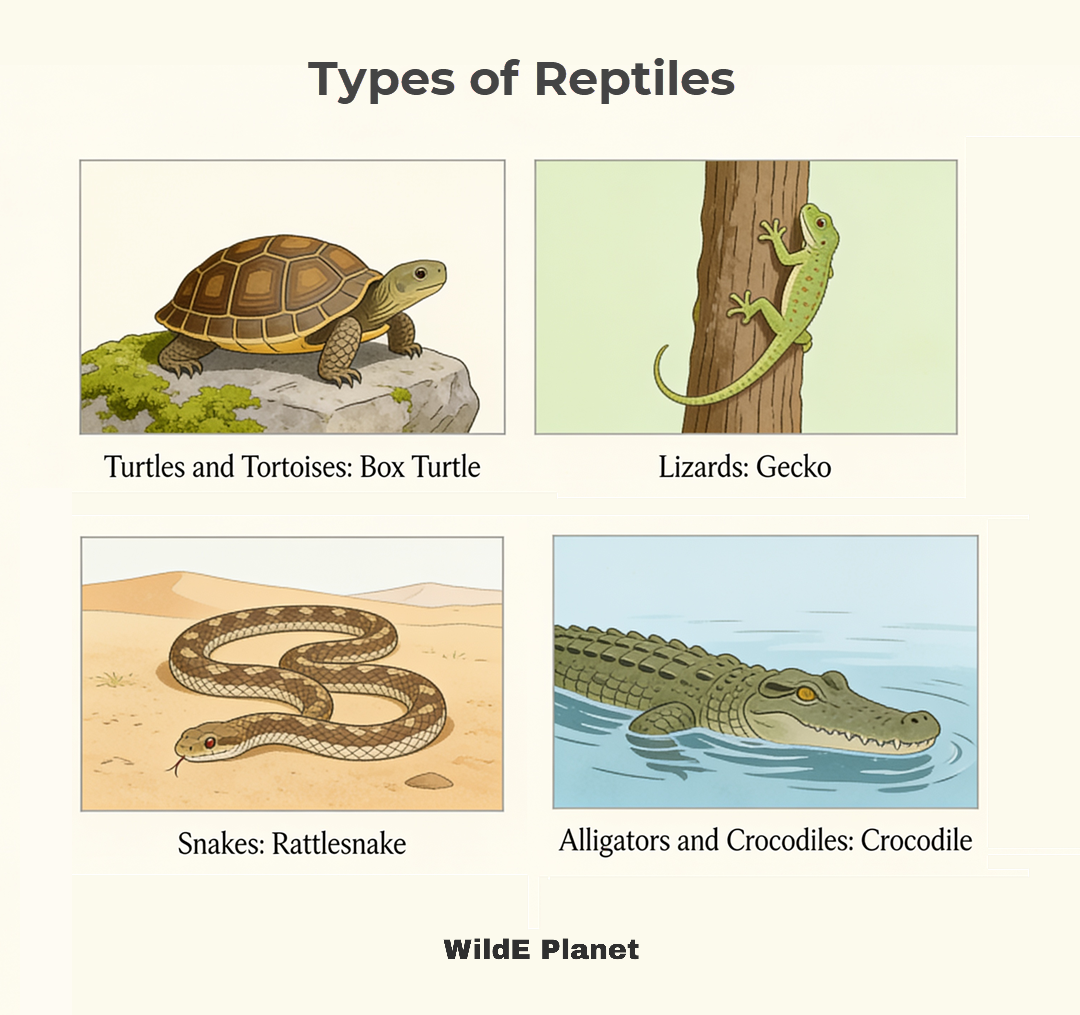
Reptiles are cold-blooded vertebrates with dry, scaly skin that helps protect them from drying out. There are many different types of reptiles. Most lay eggs, although some species give birth to live young. Scientists group reptiles into four main groups based on their body structure and characteristics.
1. Turtles and Tortoises
Turtles and tortoises are reptiles protected by a hard shell that helps defend them from predators. Turtles usually spend much of their lives in water, while tortoises live mainly on land. Examples: Sea Turtle, Box Turtle, Galápagos Tortoise
2. Lizards
Lizards are scaly reptiles found in a wide variety of habitats around the world. They come in many shapes and sizes, from tiny geckos to the world’s largest lizard, the Komodo dragon. Examples: Komodo Dragon, Gecko, Iguana, Chameleon
3. Snakes
Snakes are legless reptiles that move by slithering across the ground, through water, or even up trees. They are skilled hunters and use a variety of methods, including constriction and venom, to catch their prey. Examples: Python, Cobra, Rattlesnake
4. Crocodilians
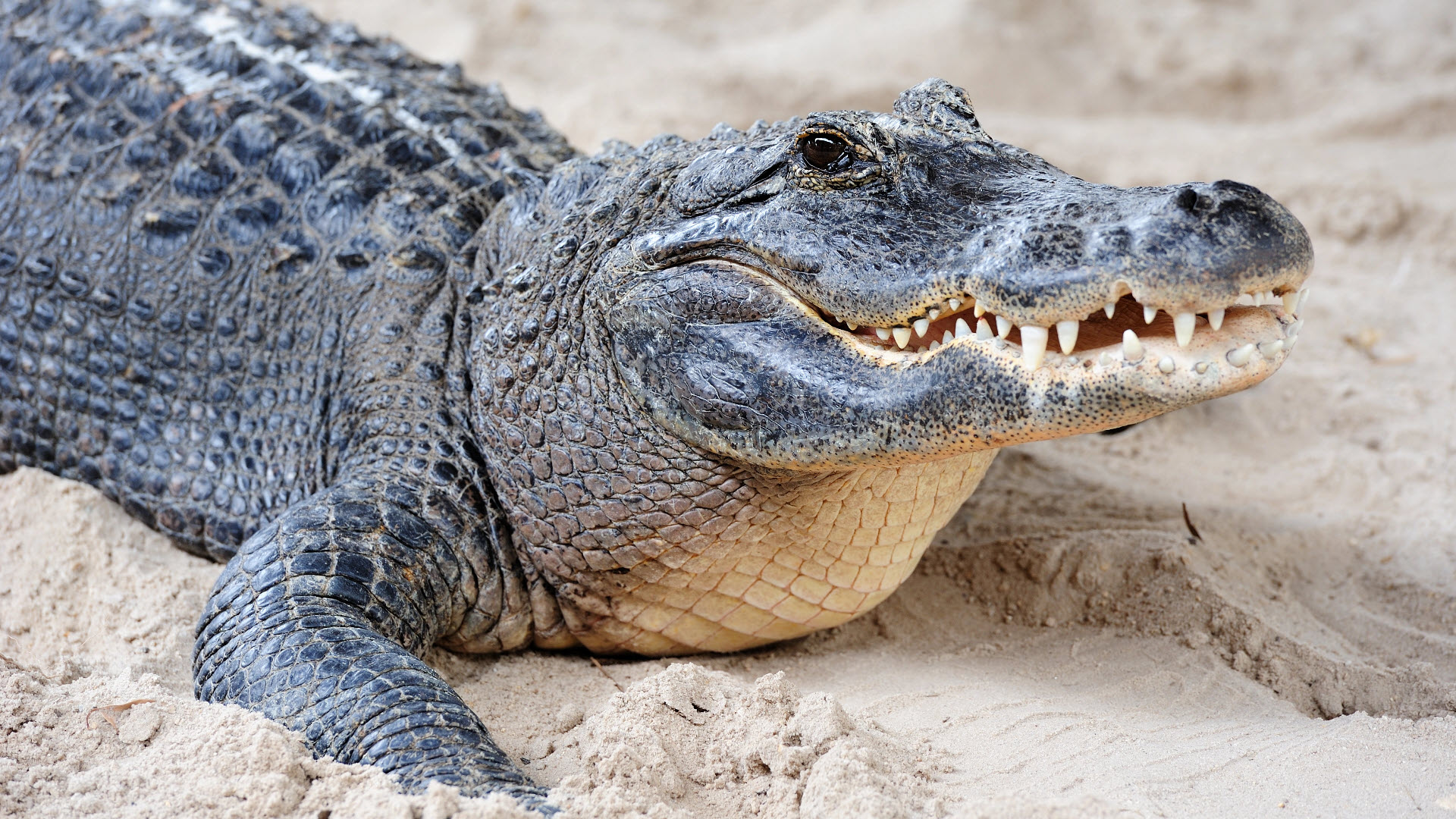
Crocodilians are large, semi-aquatic reptiles that spend much of their time in rivers, lakes, wetlands, and swamps. They are powerful predators with strong jaws and have changed very little over millions of years. Examples: American Alligator, Nile Crocodile, Gharial
History & Evolution
Long before mammals became dominant, early reptile ancestors were already adapting to life on land. A major step in that transition was the development of the amniotic egg, which allowed reproduction away from water.
Over millions of years, this group expanded into a wide variety of forms. While many ancient lineages have disappeared, modern species still reflect that deep evolutionary past.
Reptile Characteristics
Reptiles have unique characteristics. For many people, encounters with these animals can spark curiosity or hesitation. Their quiet movements and unfamiliar features often make them feel mysterious or unpredictable.
In reality, most species go about their lives unnoticed, avoiding contact whenever possible. Found across a wide range of environments, they play steady and often overlooked roles in nature.
Appearance - What Reptiles Look Like
A defining feature across the group is the presence of dry, protective skin. Scales or scutes help reduce water loss and provide a barrier against the environment.
Body shapes vary widely, from long and limbless forms to armored shells and powerful, low-built bodies.
- Skin covered in scales or bony plates
- Ectothermic (cold-blooded) metabolism
- Most lay eggs, though some give live birth
- Limbs adapted for crawling, climbing, or swimming
- Strong jaws in many species
Reptile Habitats
Warm environments tend to support the greatest diversity, as external heat plays a key role in daily activity. For this reason, many species are concentrated in tropical and subtropical regions.
Even so, a wide range of habitats can support reptile life, including both dry and aquatic environments.
- Deserts and semi-arid regions
- Forests and jungles
- Rivers, lakes, and wetlands
- Coastal zones and open ocean
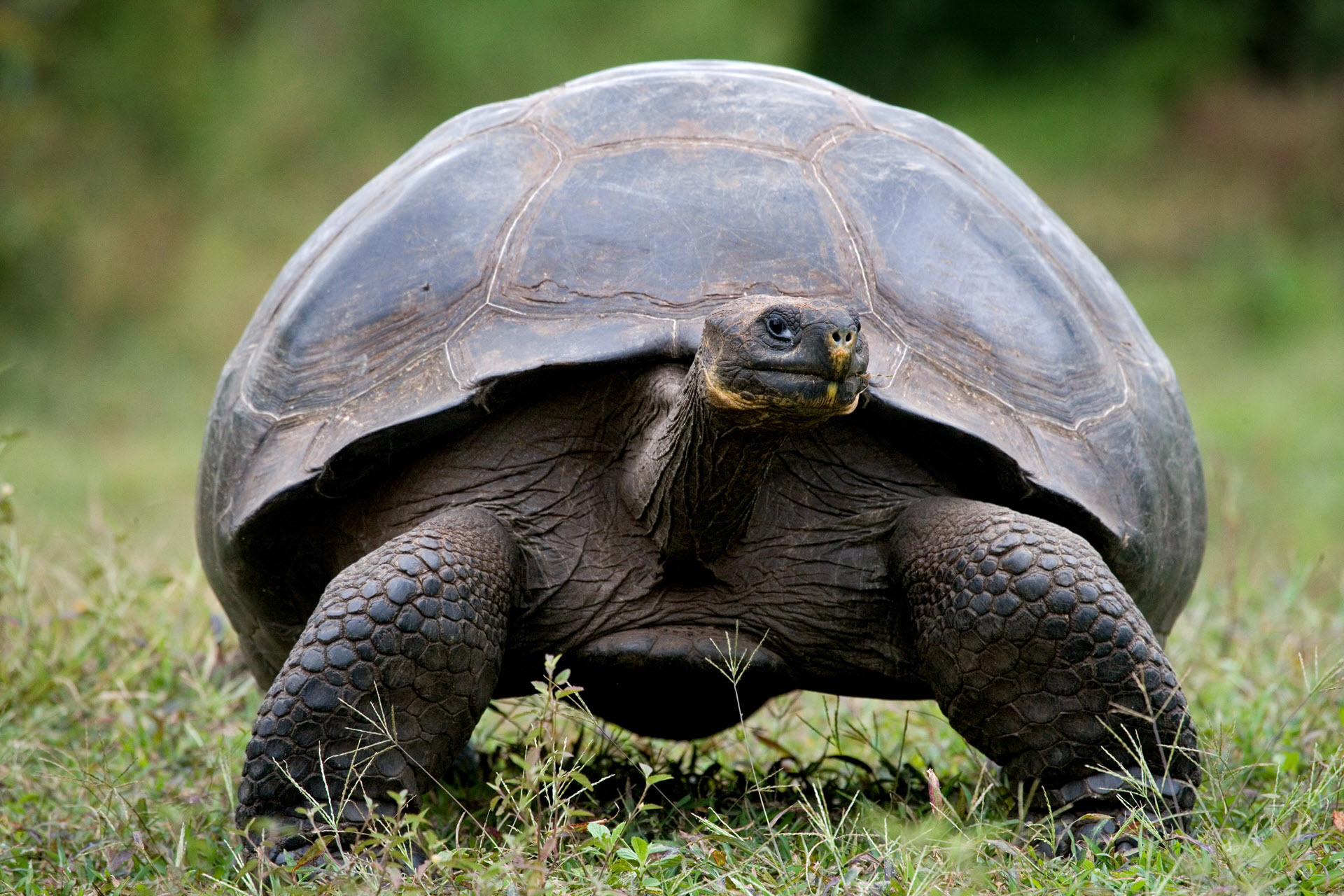
Image: Galapagos giant tortoise
Behavior
Daily activity is often shaped by temperature rather than time of day. Movement, feeding, and rest all depend on finding the right balance of warmth.
Energy use tends to be low compared to warm-blooded animals. This allows long periods of stillness, which can be an advantage when avoiding predators or waiting for prey.
What Reptiles Eat
Feeding habits vary depending on species, but many rely on other animals as their primary food source. Hunting strategies range from active pursuit to patient ambush.
Some species, however, have adapted to plant-based diets, especially in stable, resource-rich environments.
- Insects and other invertebrates
- Small mammals and birds
- Fish and amphibians
- Leaves, fruits, and vegetation (in some species)
Reptile Life Cycle
Reptile reproduction typically involves laying eggs in protected or hidden locations. In many cases, little to no parental care is provided after that point.
Survival depends heavily on environmental conditions. Temperature, humidity, and food availability all influence growth and development.
Where to See Reptiles in the Wild
Encounters are often brief and easy to miss. Many species rely on camouflage or stillness to avoid detection.
Natural areas offer the best chances for observation, especially in warmer climates.
- Basking on rocks or fallen logs
- Moving through grass, sand, or leaf litter
- Near ponds, rivers, or wetlands
- Along trails in forests or deserts
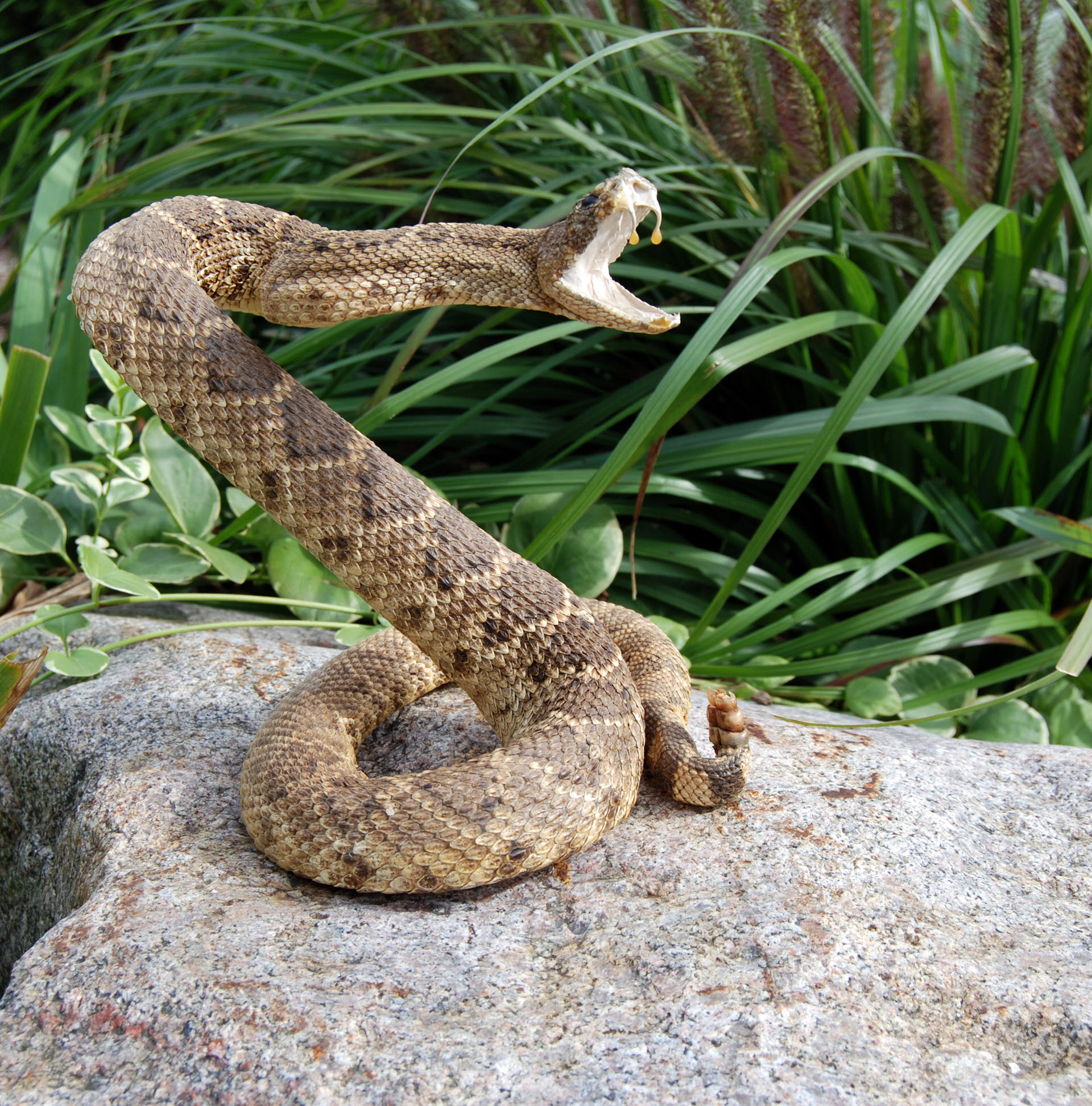
Image: Rattlesnake
Role in Nature
Balance within many ecosystems depends partly on their presence. By feeding on insects and small animals, reptiles help regulate population levels.
At the same time, they serve as prey for larger predators, linking different levels of the food web.
Unique Reptile Traits
One reptile advantage is the ability to function with relatively low energy needs. By relying on environmental heat, reptiles require less food to maintain basic activity.
This efficiency allows survival in habitats where resources may be limited or unpredictable.
Reptile Conservation
Growing human activity continues to affect habitats around the world. Land development, pollution, and climate shifts are altering the environments many species depend on.
Illegal collection and trade also pose risks, particularly for rare or visually striking species. Conservation efforts focus on habitat protection, legal regulation, and public awareness.
Sources
- U.S. Fish & Wildlife Service
- National Park Service
- Smithsonian National Museum of Natural History
- U.S. Fish & Wildlife Service (USFWS) – Species Profiles and Conservation