
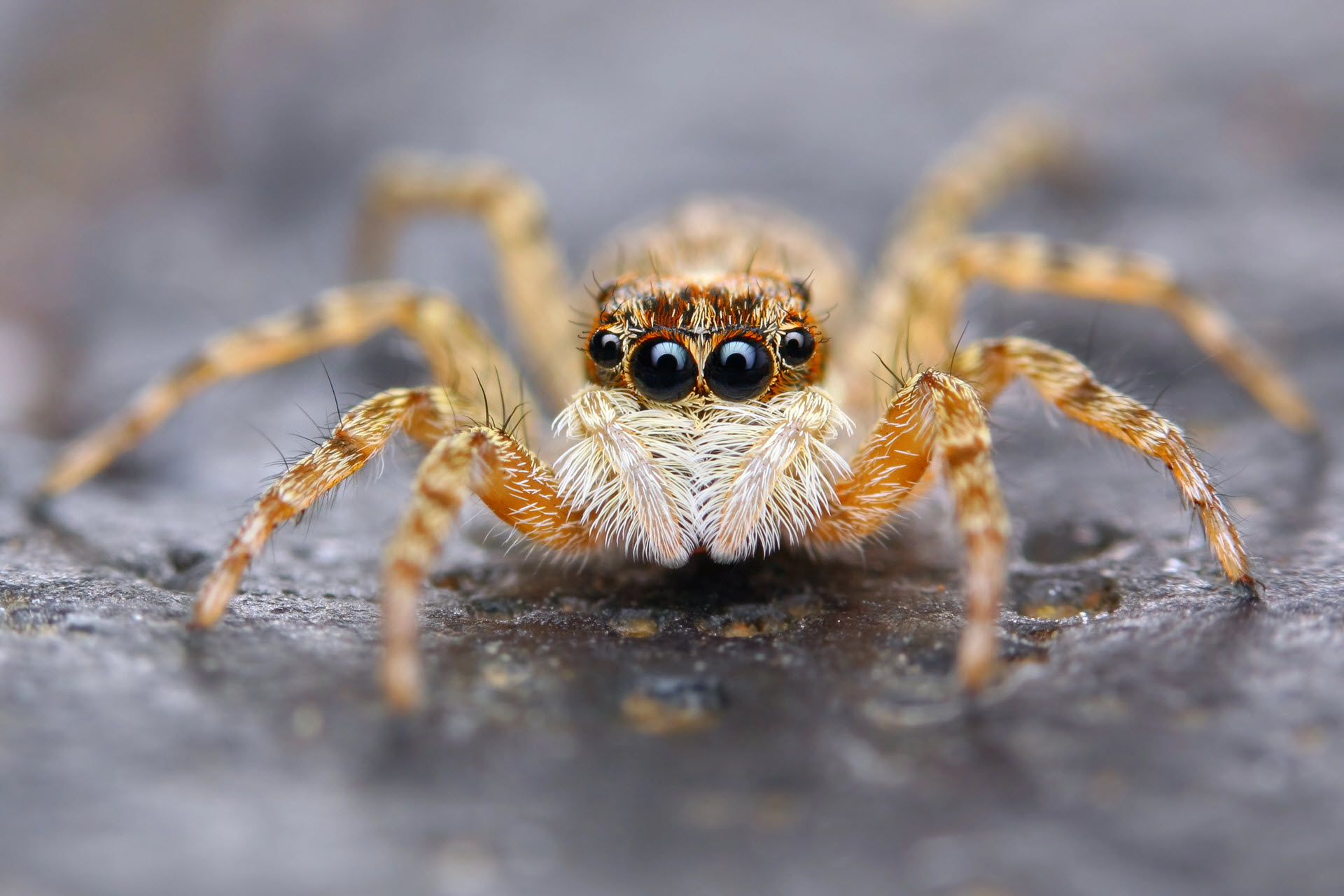
Arachnids are a class of invertebrates (animals without a backbone) that includes spiders, scorpions, ticks, and mites.
Word Origin
The word arachnid comes from the Greek word “arachne,” meaning spider. In Greek mythology, Arachne was a skilled weaver who challenged the gods and was transformed into a spider. The name reflects both the appearance of these animals and their long association with weaving and silk.
Scientific Name
Arachnida
Class
Arachnida
Species
There are about 100,000–110,000 known species of arachnids worldwide. Here are the species estimates for some of the major groups:
- Spiders (Order: Araneae) – 50,000 species
- Mites & Ticks (Subclass: Acari) – 55,000+ species
- Scorpions (Order: Scorpiones) – 2,500 species
- Harvestmen (Order: Opiliones) – 6,500 species
Many arachnid species, especially mites, remain understudied, and the total number of species is likely much higher.
Conservation Status
Arachnids are a large and varied group, so their conservation status differs widely. Many species have not been formally studied, which makes it difficult to assess their populations.
Some species remain common and widespread, while others are more sensitive to environmental changes. Habitat loss, pollution, and pesticide use can affect certain arachnid populations, even if these impacts are not always immediately visible.
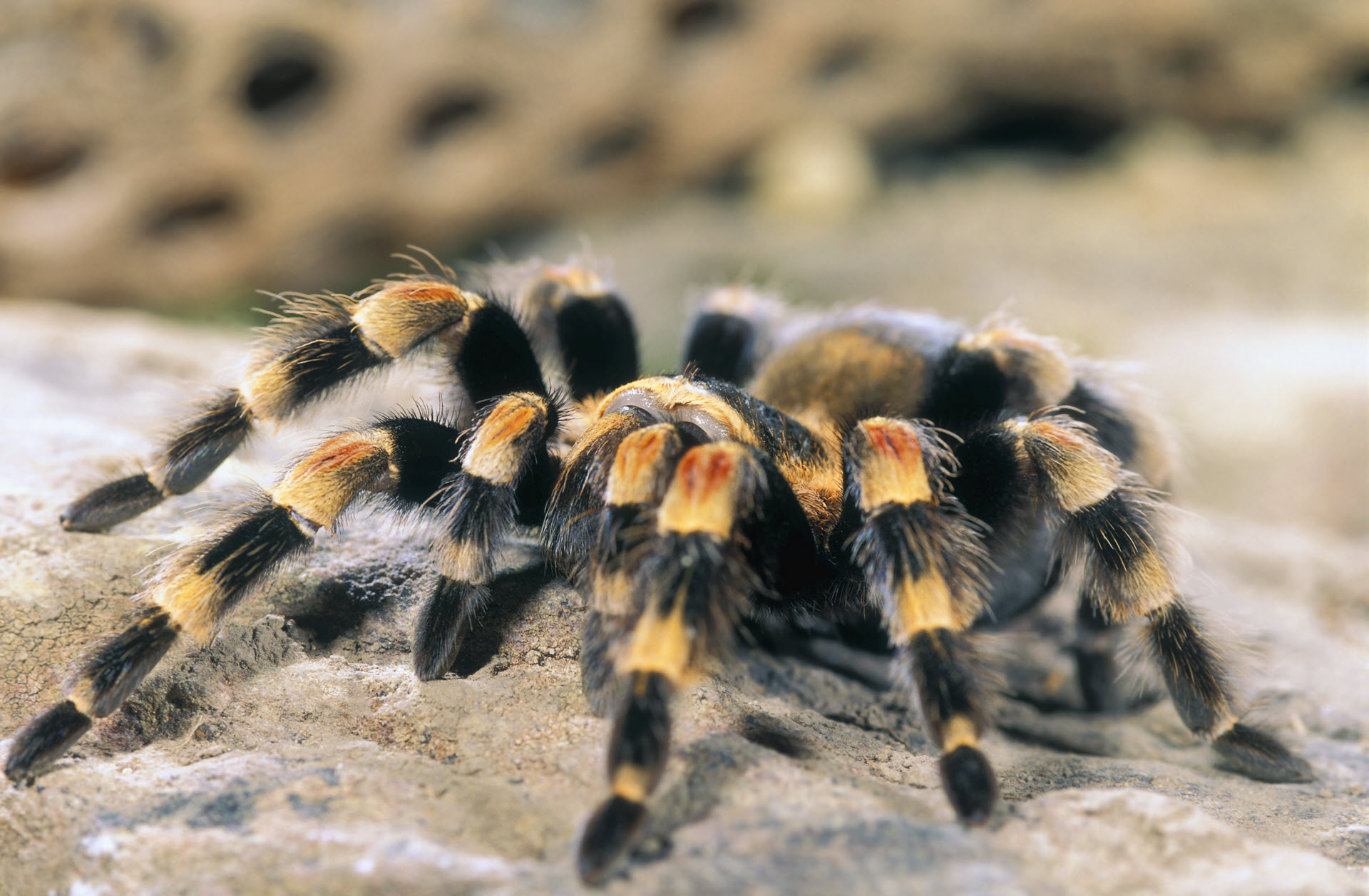
Image: A Mexican red leg tarantula
Interesting Arachnid Facts
Arachnids are more diverse and complex than many people realize. While spiders are the most familiar members, the group includes many species that differ greatly in size, behavior, and habitat.
- Arachnids have eight legs, unlike insects which have six.
- They do not have antennae or wings.
- Scorpions can glow under ultraviolet light due to substances in their exoskeleton.
- Some arachnids, like mites, are so small they can only be seen with magnification.
- Spiders produce silk that can be used for webs, shelters, or protecting eggs.
Despite their differences, all arachnids share a similar basic body structure and play important roles in the environments they inhabit.
Types of Arachnids
Arachnids are invertebrates with eight legs and two main body sections. Unlike insects, arachnids do not have wings or antennae. Most are predators that help control insect populations and play an important role in healthy ecosystems.
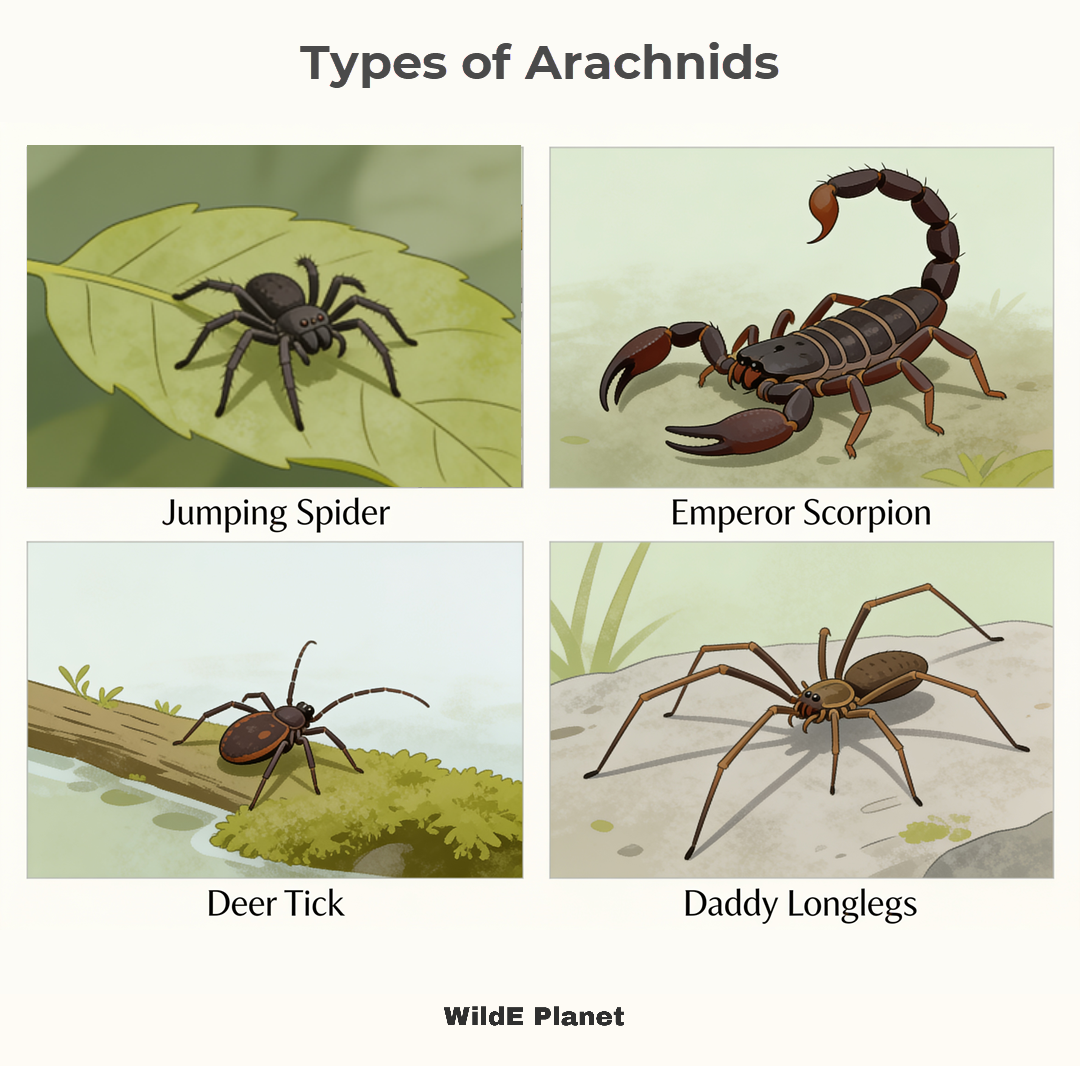
1. Spiders
Spiders are the largest group of arachnids. Most spin silk to build webs, create shelters, or wrap their prey. Nearly all spiders are venomous, but only a few species pose a danger to humans. Examples: Tarantula, Jumping Spider, Orb-weaver Spider
2. Scorpions
Scorpions are easily recognized by their large pincers and curved tail with a venomous stinger. They are mostly noctu rnal hunters that feed on insects and other small animals.Examples: Emperor Scorpion, Arizona Bark Scorpion
3. Ticks and Mites
Ticks and mites are the smallest and most diverse arachnids. Some are free-living and help break down organic matter, while others are parasites that feed on animals or plants. Examples: Deer Tick, Dust Mite, Spider Mite
4. Harvestmen
Harvestmen, often called “daddy longlegs,” are arachnids with long, slender legs and a single, rounded body. Unlike spiders, they do not produce silk or venom and are harmless to people. Examples: Common Harvestman
Arachnid Characteristics
For many people, arachnids are associated with spiders and often trigger a sense of unease. But beyond that first reaction, arachnids are an essential part of the natural world, quietly shaping ecosystems in ways that often go unnoticed.
Arachnids are invertebrates with two main body sections and eight legs. This class includes spiders, scorpions, ticks, mites, and several lesser-known groups. They are found across nearly every environment on Earth, from dense forests to dry deserts, and even inside human homes.
Their ability to adapt to different conditions has allowed them to survive for hundreds of millions of years, making them one of the most successful groups of land animals.
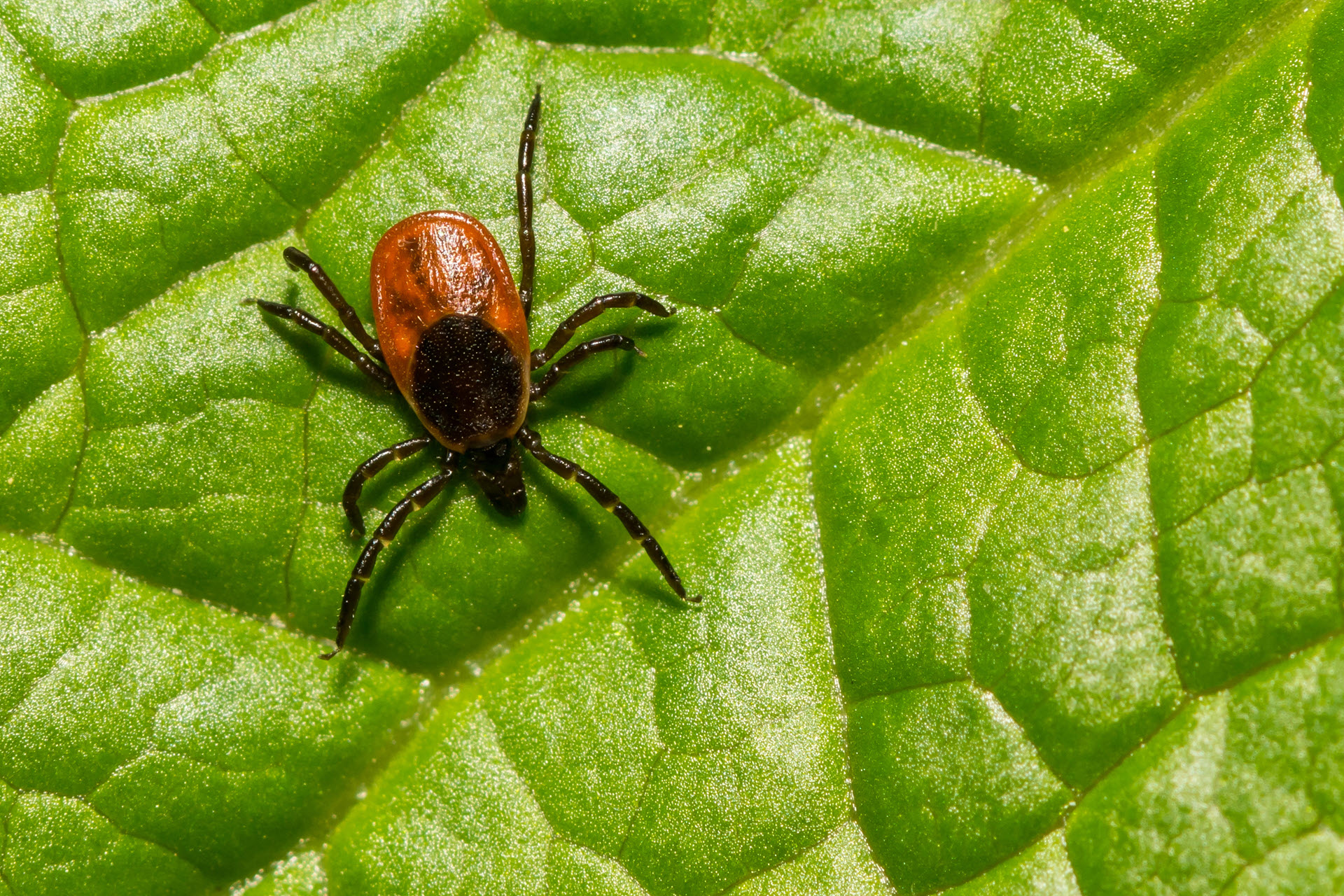
Image: A deer tick
History
Arachnids have a long evolutionary history that stretches back more than 400 million years. They are believed to have evolved from marine ancestors before gradually adapting to life on land.
Early arachnids were among the first animals to develop features that allowed them to survive outside of water. These included protective exoskeletons to prevent water loss and specialized respiratory systems.
- Fossil evidence shows early scorpion-like species living in ancient environments
- Over time, arachnids diversified into many forms, each adapted to specific habitats
- Their success is linked to their ability to conserve water and efficiently capture prey
This long history helps explain why arachnids are found in such a wide variety of environments today.
Appearance - What Arachnids Look Like
Arachnids share a set of defining physical features that distinguish them from other arthropods. Their bodies are divided into two main parts: the cephalothorax and the abdomen.
They have eight legs, which are attached to the cephalothorax, and lack both wings and antennae. Their outer covering, or exoskeleton, provides protection and helps retain moisture.
- Two-part body structure
- Eight legs
- No wings or antennae
- Exoskeleton made of chitin
Some arachnids have additional specialized features. Spiders have spinnerets for producing silk, while scorpions have stingers used for defense and capturing prey. These differences reflect how each group has adapted to its environment.
Habitat
Arachnids are found on every continent except Antarctica and occupy a wide range of habitats. Their adaptability allows them to live in both extreme and moderate environments.
They can be found in forests, grasslands, deserts, caves, and even aquatic environments in some cases. Many species also live close to humans, often unnoticed.
- Tropical rainforests with high biodiversity
- Dry deserts where survival requires conserving moisture
- Underground spaces such as burrows or soil layers
- Human environments like homes, gardens, and buildings
Their presence in so many environments highlights their resilience and ecological importance.
Behavior
Arachnid behavior varies widely, but many species rely on patience and subtlety rather than speed or strength. Most are solitary and spend much of their time hidden or inactive.
Spiders may build webs to capture prey or actively hunt, depending on the species. Scorpions often wait for prey to pass by before striking. Many arachnids are nocturnal, becoming active at night when temperatures are cooler and predators are less active.
- Predatory behavior focused on capturing small animals
- Use of venom or silk in hunting
- Reliance on vibrations and touch rather than vision
- Nocturnal activity in many species
One interesting aspect of arachnid behavior is their sensitivity to their surroundings. Fine hairs on their bodies allow them to detect even slight movements in the air or ground.
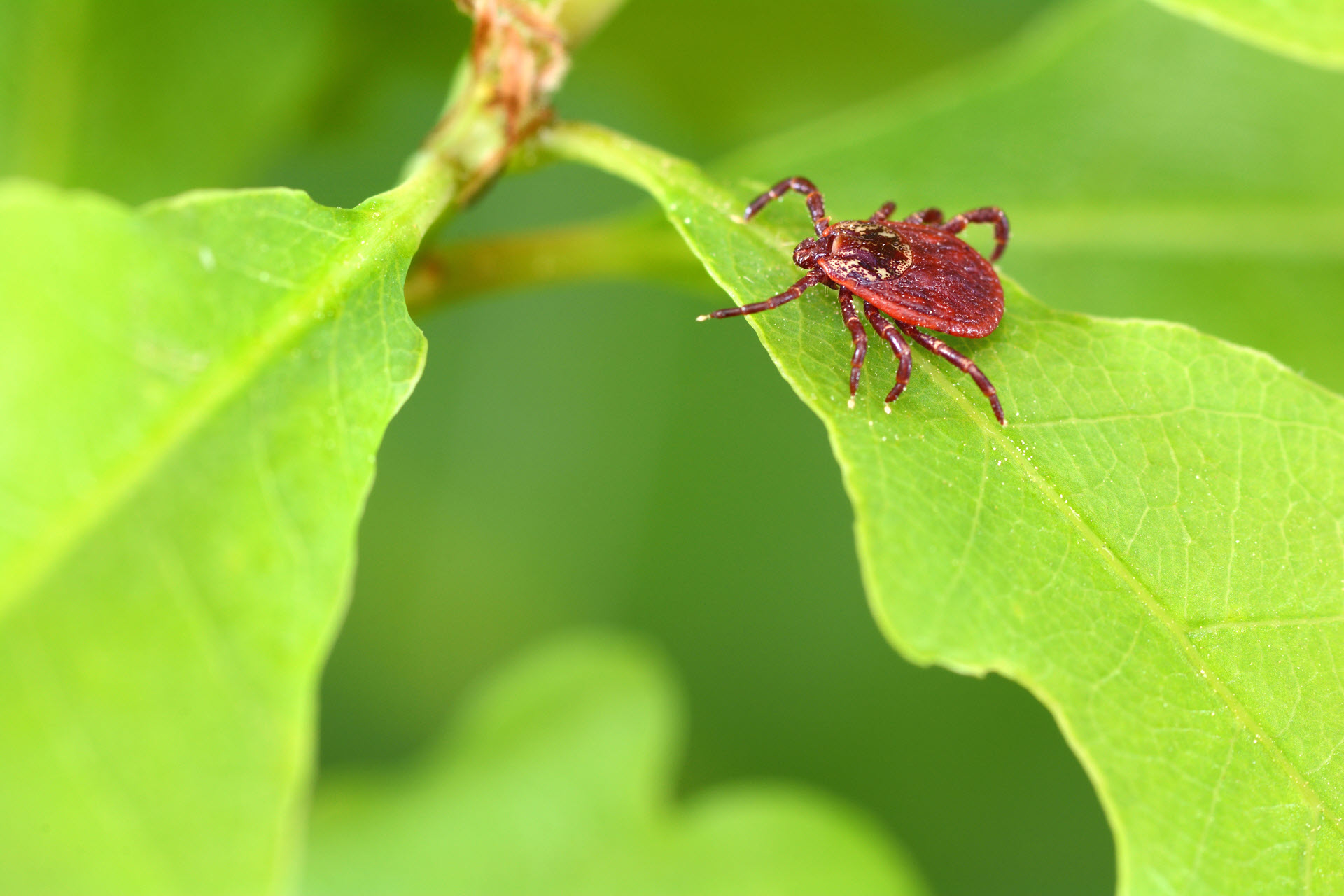
Image: Mite
What Arachnids Eat
Most arachnids are carnivorous and feed on insects and other small animals. Their feeding methods are often highly specialized.
Instead of chewing food in the traditional sense, many arachnids break down their prey externally. Spiders, for example, inject digestive enzymes into their prey and then absorb the liquefied nutrients.
- Insects are the primary food source
- Some species consume other arachnids
- Ticks and certain mites feed on blood or skin
- Feeding helps regulate insect populations
This role as predators makes arachnids an important part of natural pest control.
The Life Cycle of an Arachnid
Arachnids typically reproduce by laying eggs, which are often protected in sacs or hidden in safe environments. The young that emerge are usually smaller versions of the adults.
As they grow, arachnids molt their exoskeleton, shedding it to allow for further development. This process may occur several times throughout their lives.
- Eggs laid in protected areas
- Juveniles resemble adults but are smaller
- Growth occurs through molting
- Lifespan varies from months to several years
Unlike many insects, most arachnids do not undergo complete metamorphosis, which means they do not pass through dramatically different life stages.
Where to Find Arachnids
Arachnids are common in both natural and human-made environments, although they are often overlooked.
You might encounter them in gardens, forests, or under rocks and logs. Inside homes, they are often found in corners, basements, or quiet spaces where they can remain undisturbed.
- In vegetation and leaf litter
- Beneath stones or fallen branches
- Inside buildings, especially undisturbed areas
- In deserts, forests, and grasslands
Because many arachnids are small or well camouflaged, they are often present without being noticed.
Role in Nature
These creatures play a crucial role in maintaining ecological balance. As predators, they help control populations of insects and other small animals.
They also serve as prey for larger animals, including birds, reptiles, and mammals. In this way, they are part of a larger food web that supports many forms of life.
- Regulate insect populations
- Provide food for other species
- Contribute to ecosystem stability
- Some mites aid in decomposition
Without arachnids, ecosystems could experience significant increases in pest populations.
Unique Arachnid Traits
Arachnids have evolved a range of adaptations that allow them to survive in diverse environments. These traits vary widely depending on the species.
Spiders produce silk that can be used for capturing prey, building shelters, or protecting eggs. Scorpions use venom for both hunting and defense. Many arachnids can survive long periods without food, conserving energy until conditions improve.
- Silk production in spiders
- Venom used for prey capture and defense
- Sensitive hairs for detecting movement
- Ability to survive in harsh conditions
These abilities reflect millions of years of adaptation and specialization.
Arachnid Conservation
Although many arachnids are common, some species face environmental pressures. Because they are often small and not well studied, changes in their populations may go unnoticed.
Habitat destruction, pesticide use, and climate change can all affect arachnid populations. In addition, fear and misunderstanding can lead to unnecessary killing of these animals.
- Habitat loss from development and deforestation
- Chemical exposure from pesticides
- Climate-related changes in ecosystems
- Human perception and fear
Improving understanding of arachnids can help support their conservation and highlight their ecological importance.
Sources
- Encyclopaedia Britannica – Arachnid
- National Geographic – Arthropods and Arachnids
- Smithsonian Institution – Arachnid Overview
- World Wildlife Fund (WWF) – Invertebrates