
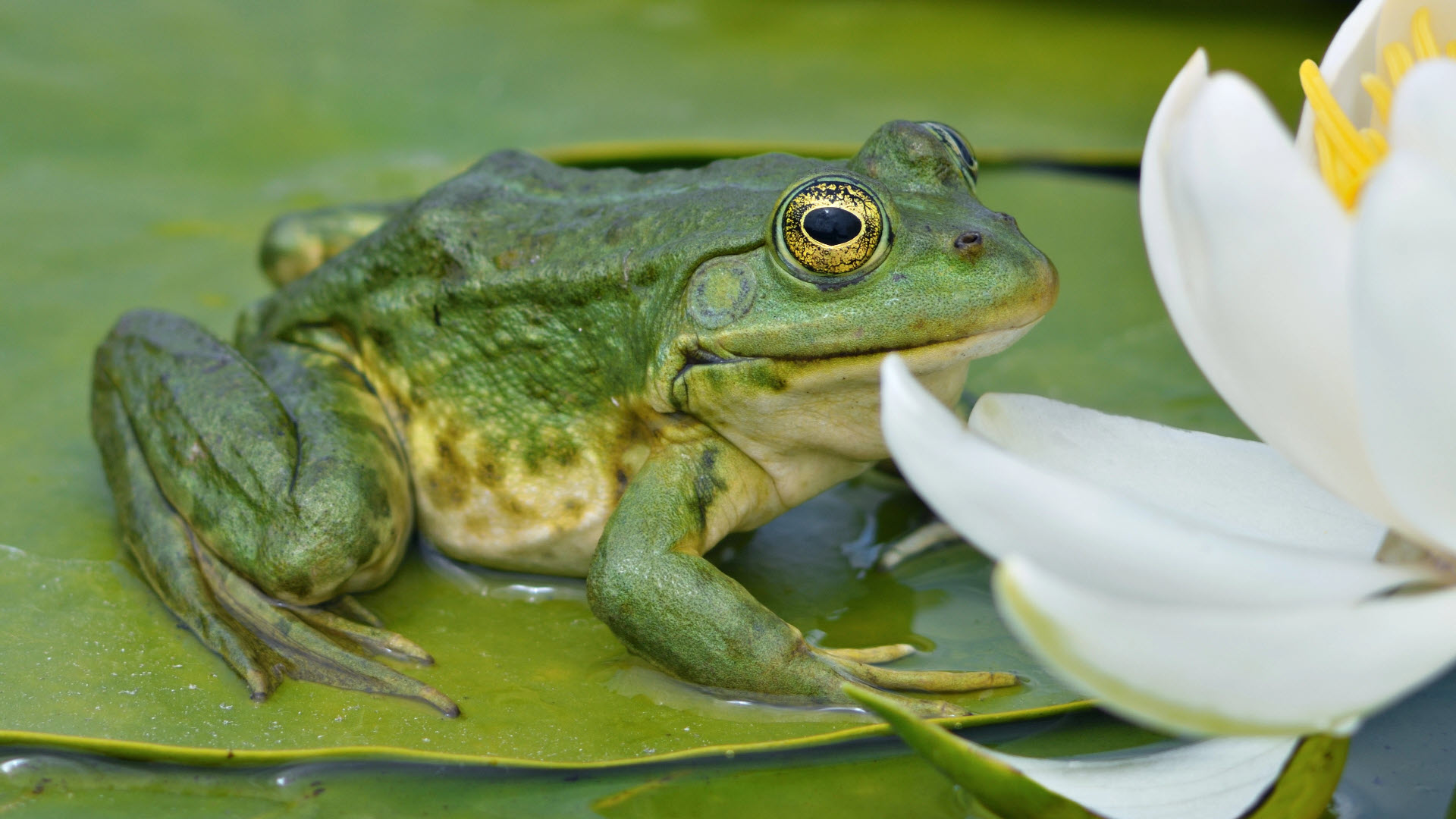
Amphibians are vertebrates (animals that have a backbone) that typically live part of their lives in water and part on land, often undergoing a transformation as they grow.
Word Origin
The word amphibian comes from the Greek amphibios, meaning “both kinds of life,” referring to living both in water and on land.
This name reflects one of the most defining traits of amphibians—their connection to two different environments during their life cycle. While not all amphibians move equally between land and water, most depend on both at some stage.
The term has remained consistent in scientific use, emphasizing this dual lifestyle as a key characteristic of the group.
Scientific Name
Amphibians belong to the class Amphibia, within the phylum Chordata.
Class
Amphibia
Species
There are approximately 8,700 known species of amphibians worldwide, including frogs (7,700 species), salamanders (800 species), and caecilians (200 species).
Conservation Status
Amphibians are among the most vulnerable groups of animals globally. While some species remain stable, many are declining due to a combination of environmental pressures.
Habitat loss is one of the most significant threats. Wetlands, forests, and freshwater systems are often altered or reduced by development, agriculture, and pollution. Because amphibians rely on both land and water, they are affected by changes in either environment.
Disease has also played a major role in amphibian declines. Certain fungal infections have spread across regions, affecting populations that may not have natural resistance.
Climate change adds further stress by altering temperature, rainfall patterns, and water availability. These changes can disrupt breeding cycles and reduce suitable habitats.
Although conservation efforts are underway in many areas, amphibians remain sensitive indicators of environmental change due to their reliance on specific conditions.
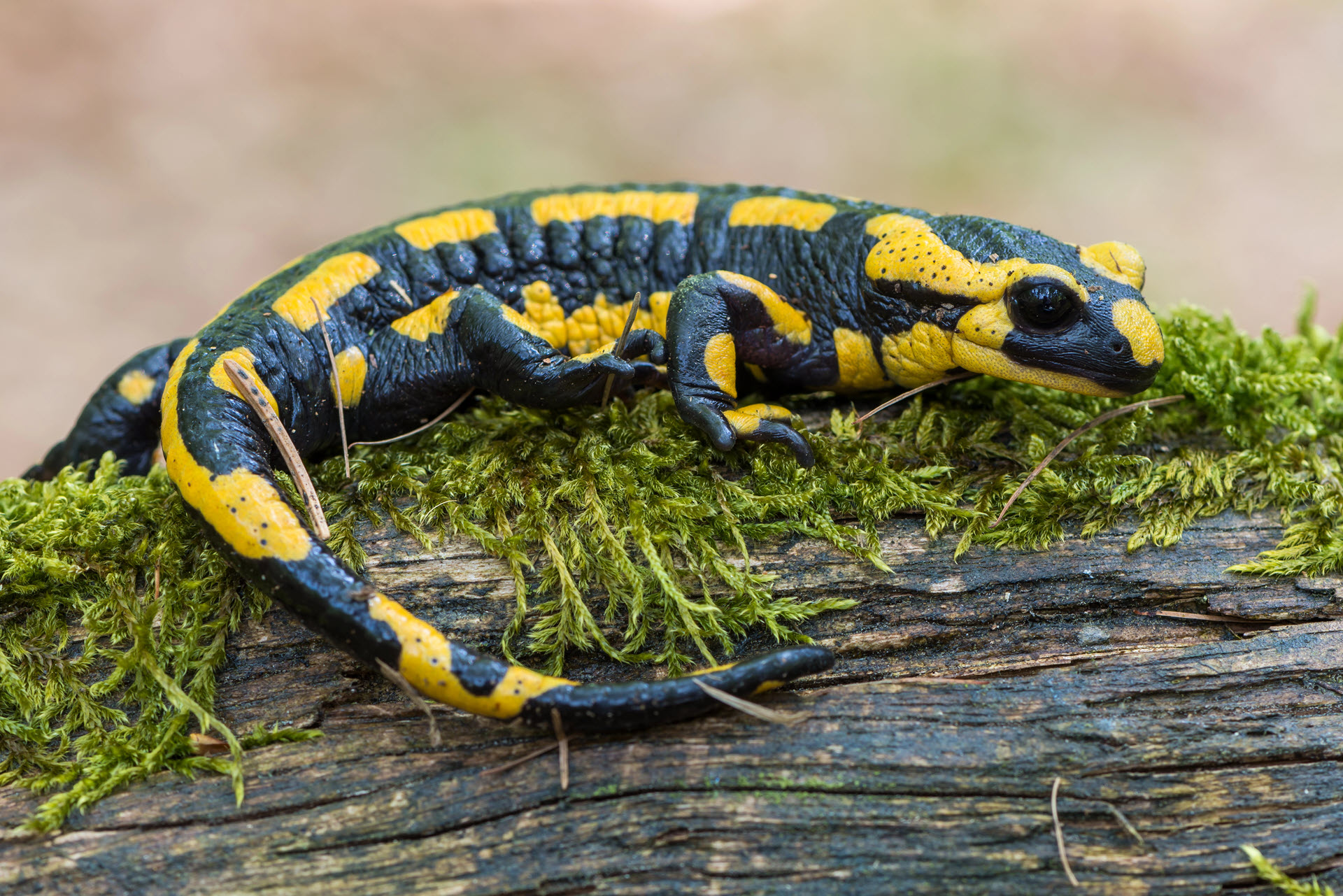
Image: Fire salamander on a branch.
Interesting Amphibian Facts
- Amphibians were the first vertebrates to live on land.
- Many amphibians undergo metamorphosis from aquatic larvae to land-based adults.
- Their skin can absorb water and oxygen directly.
- Some species can regenerate lost limbs.
- Frogs and toads are the most familiar amphibians.
- Salamanders and newts have long bodies and tails.
- Caecilians are limbless amphibians that resemble worms or snakes.
- Amphibians often use vocal calls to attract mates.
Types of Amphibians
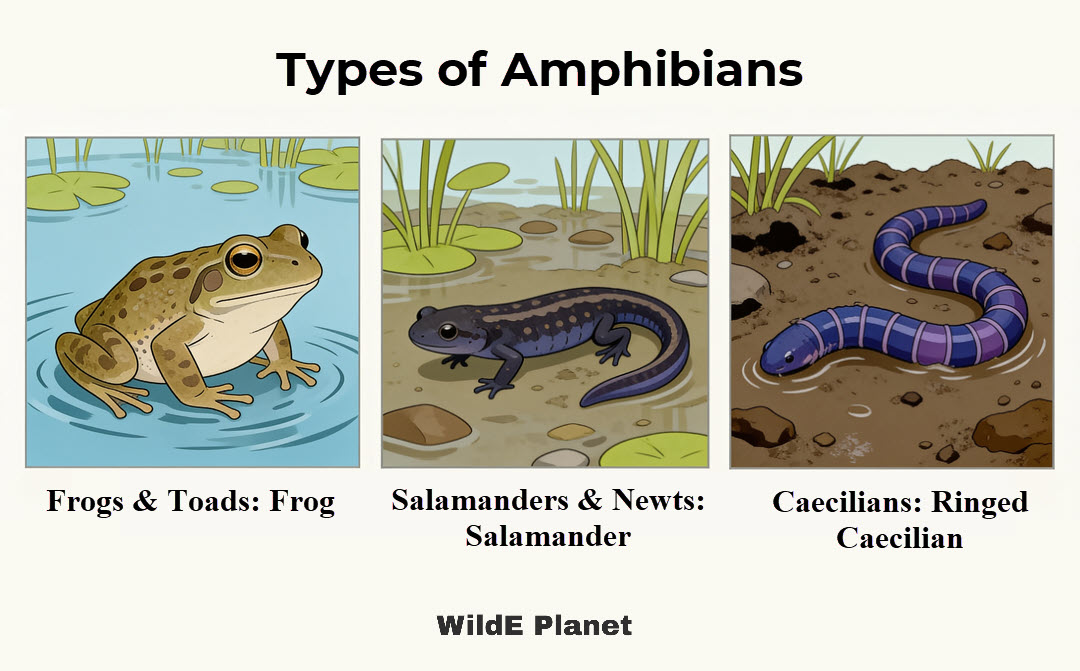
Amphibians are cold-blooded vertebrates that usually begin life in water before undergoing a remarkable transformation called metamorphosis. Most have smooth, moist skin that helps them breathe and absorb water. Scientists divide amphibians into three main groups based on their body structure and life cycle.
1. Frogs and Toads
Frogs and toads are the largest group of amphibians. Most begin life as tadpoles living in water before transforming into adults with legs and lungs. Frogs usually have smooth, moist skin and long legs for jumping, while toads tend to have drier, bumpy skin and shorter legs. Examples: Tree Frog, American Bullfrog, Cane Toad
2. Salamanders and Newts
Salamanders and newts are amphibians that keep their tails throughout their lives. They are found in forests, streams, ponds, and wetlands, where many species spend part of their lives in water and part on land. Examples: Tiger Salamander, Red-Spotted Newt, Axolotl
3. Caecilians
Caecilians are rare, legless amphibians that resemble large earthworms or snakes. Most live underground in tropical regions, using their strong skulls to burrow through soil while feeding on insects and other small animals. Examples: Ringed Caecilian, Yellow-striped Caecilian
Did You Know? Scientists have identified more than 8,000 species of amphibians worldwide. Because amphibians are highly sensitive to changes in their environment, they are often considered important indicators of the health of ecosystems such as forests, rivers, and wetlands.
Amphibian History
Amphibians evolved from early fish-like vertebrates that developed the ability to move onto land. This transition marked a major step in the history of life on Earth.
Early amphibians retained many features suited to water but gradually adapted to terrestrial environments. Over time, they developed limbs for movement on land and lungs for breathing air.
Despite these changes, amphibians remain closely tied to water, especially for reproduction. Most species still lay eggs in water or moist environments, reflecting their evolutionary origins.
Modern amphibians are divided into several major groups, including frogs and toads, salamanders and newts, and caecilians. Each group represents a different path of adaptation within the broader class.
Amphibian Characteristics
Amphibians occupy a unique place in the animal world. They are closely tied to both aquatic and terrestrial environments, and their life cycles often reflect this connection.
Many amphibians begin life in water as larvae, then undergo a transformation that allows them to live on land. This shift involves changes in body structure, breathing, and behavior.
Although they are not as visible as birds or mammals, amphibians are found in a wide range of habitats, especially in moist environments where their skin can remain hydrated.
Their presence often reflects the health of an ecosystem. Because they are sensitive to changes in water quality, temperature, and habitat, amphibians can serve as indicators of environmental conditions.
Appearance - What Amphibians Look Like
Amphibians have a range of body forms, but they share several key features. Most have smooth, moist skin that allows for the exchange of gases and helps regulate water balance.
Unlike reptiles, amphibians do not have scales, feathers, or fur. Their skin is often permeable, meaning substances from the environment can pass through it. This makes them especially sensitive to pollution and environmental change.
Many amphibians have limbs for movement on land, though some species, like caecilians, are limbless. Their body structures vary depending on habitat and lifestyle.
Common physical features include:
- Moist, permeable skin
- Ability to absorb water through the skin
- Limbs in most species (except caecilians)
- External or internal gills in early life stages
- Lungs or skin-based breathing in adults
- Body shapes adapted to aquatic or terrestrial environments
Habitat
Amphibians are found on every continent except Antarctica, though they are most abundant in warm, moist environments such as tropical forests and wetlands.
They typically live near water sources, including ponds, streams, lakes, and marshes. Even species that spend much of their time on land usually remain close to moisture.
Some amphibians are highly specialized and require very specific environmental conditions. Others are more adaptable but still depend on access to water for breeding.
Because their skin must remain moist, amphibians are less common in dry or extreme environments, though a few species have adapted to such conditions.
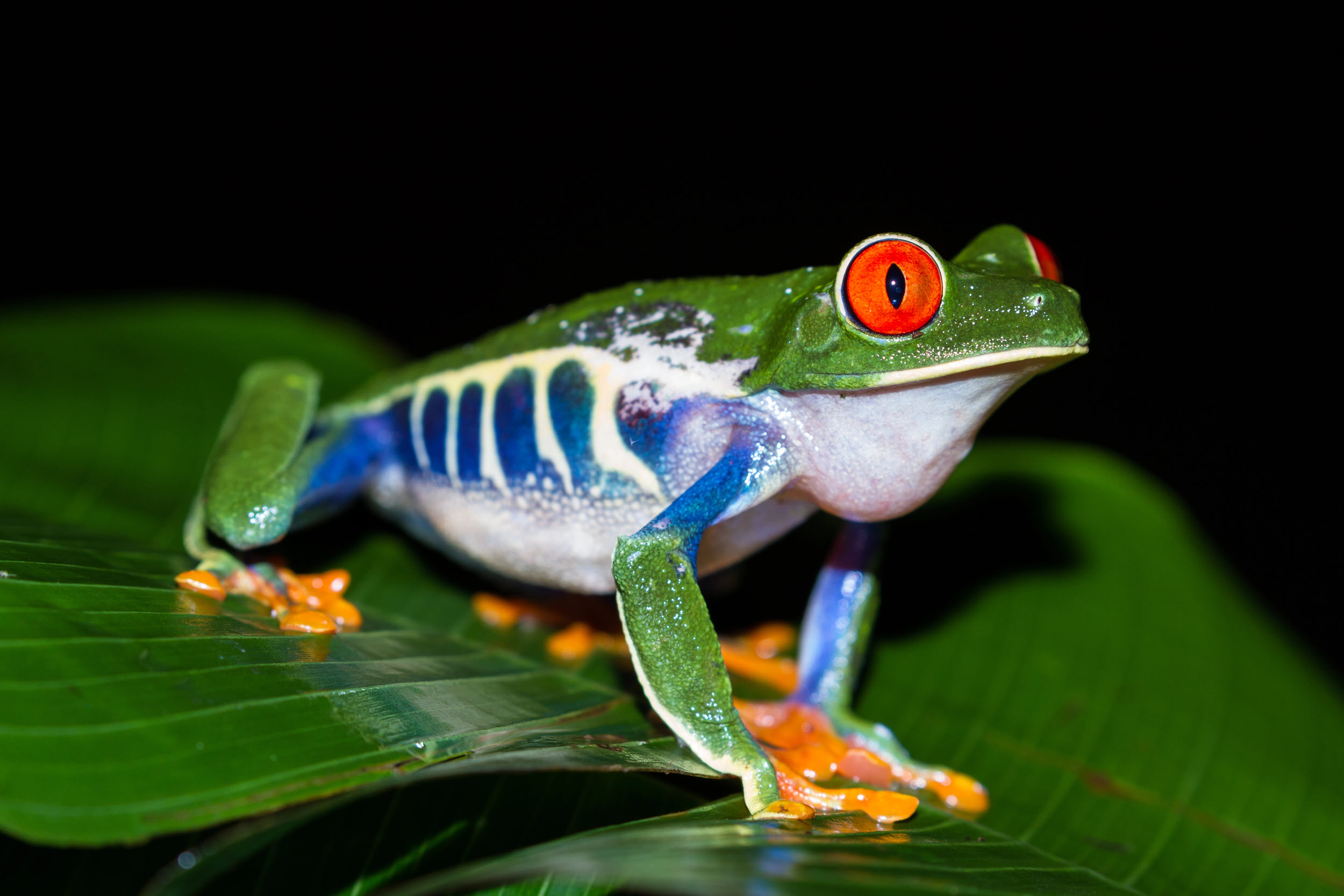
Image: Red-eyed tree frog.
Amphibian Behavior
Amphibian behavior often revolves around moisture, temperature, and reproduction. Many species are more active at night or during damp conditions when the risk of drying out is lower.
Some amphibians are solitary, while others gather in large numbers during breeding seasons. Vocal communication is especially common in frogs and toads, where calls play a role in attracting mates and establishing territory.
Amphibians may hide under rocks, burrow into soil, or remain still to avoid predators. Their behavior is often closely tied to environmental conditions.
Common behaviors include:
- Seasonal breeding in water
- Vocal calls for communication
- Nocturnal or low-light activity
- Hiding or burrowing to retain moisture
- Territorial behavior in some species
What Amphibians Eat
Most amphibians are carnivorous, feeding on a variety of small animals. Their diet typically includes insects, worms, and other invertebrates.
Some larger species may consume small vertebrates, including fish or other amphibians. Feeding methods vary, with some species using sticky tongues to capture prey, while others rely on movement or ambush.
Larval amphibians may have different diets than adults. For example, some tadpoles feed on plant material or algae before transitioning to a carnivorous diet as adults.
Typical amphibian diets include:
- Insects and larvae
- Worms and small invertebrates
- Crustaceans
- Small fish or amphibians in some species
- Algae or plant material in larval stages
The Life Cycle of an Amphibian
The amphibian life cycle often includes a transformation known as metamorphosis. In many species, eggs are laid in water, and the young hatch as aquatic larvae.
These larvae may have gills and different body shapes compared to adults. As they grow, they undergo changes that allow them to breathe air, develop limbs, and move onto land.
Not all amphibians follow the same pattern. Some species bypass the free-swimming larval stage, while others retain aquatic characteristics throughout life.
Reproduction is often seasonal and closely tied to environmental conditions such as rainfall and temperature.
Where to See Amphibians in the Wild
Amphibians are often found in moist environments, especially near freshwater sources. They may be seen near ponds, streams, wetlands, or forest floors.
Because many species are active at night, they may be heard more often than seen, especially during breeding seasons when calls are common.
You might notice amphibians:
- Near ponds and lakes
- In wetlands and marshes
- In forests with damp ground
- Under rocks, logs, or leaf litter
- Near streams and slow-moving water
Role in Nature
Amphibians play important roles in ecosystems as both predators and prey. They help control populations of insects and other small animals, contributing to ecological balance.
At the same time, they are a food source for birds, reptiles, mammals, and fish. This makes them an important link in food webs.
Amphibians can also influence nutrient cycling, especially in aquatic systems where larvae and adults interact with different parts of the environment.
Because they are sensitive to environmental changes, amphibians can provide insight into the overall health of ecosystems.
Unique Amphibian Traits
Amphibians have several distinctive traits that set them apart from other vertebrates. Their ability to live in both water and on land is one of their most notable features.
Their skin plays a central role in their survival, allowing them to absorb water and, in some cases, oxygen. This also makes them vulnerable to environmental changes.
Some amphibians produce toxins as a defense against predators, while others rely on camouflage or stillness to avoid detection.
Unique qualities include:
- Dual life stages (aquatic and terrestrial)
- Metamorphosis
- Permeable skin for water and gas exchange
- Regeneration abilities in some species
- Use of vocal calls for communication
- Chemical defenses in certain species
Amphibian Conservation
Amphibians face multiple conservation challenges, many of which are interconnected. Habitat loss, pollution, disease, and climate change all contribute to population declines.
Because amphibians rely on clean water and stable environments, even small changes can have significant effects. Agricultural runoff, chemical pollutants, and habitat fragmentation are ongoing concerns.
Efforts to protect amphibians often focus on preserving wetlands, improving water quality, and monitoring populations. In some cases, captive breeding and reintroduction programs are used to support threatened species.
Conservation strategies may include:
- Protecting wetlands and natural habitats
- Reducing pollution and chemical use
- Monitoring disease and population health
- Supporting habitat restoration
- Raising awareness of amphibian decline
Sources
- U.S. Geological Survey (USGS)
- National Park Service (NPS)
- Smithsonian Institution
- University of Michigan Animal Diversity Web