
What Are Mammals?
Mammals are a group of animals known for a few defining traits. They have hair or fur at some stage of life, are warm-blooded, and females produce milk to feed their young. Most mammals give birth to live young, although a small group, such as the platypus, lay eggs.
Mammals live in almost every environment on Earth. They can be found in forests, grasslands, deserts, mountains, freshwater systems, and oceans. Some, like whales and dolphins, are fully aquatic, while others, like bats, are capable of sustained flight. This wide range of habitats reflects how adaptable mammals are as a group.
Physically, mammals vary greatly in size and form, but they share common features. These include a backbone, a four-chambered heart, and complex brains that support learning and social behavior. Their body structures are adapted to their environments—streamlined bodies for swimming, long legs for running, or specialized limbs for climbing or flying.
What Does “Largest” Mean in Mammals?
When we talk about the largest mammals, we are usually referring to body weight, although height and length are also important. The largest mammals are not found on land alone—some of the biggest animals ever to exist live in the ocean.
Size in mammals is closely tied to environment. Water supports more weight than land, which is why marine mammals can grow much larger than land mammals. On land, size is limited by the need to support body weight and move efficiently.
The largest mammals today include both marine species, like whales, and land species, such as elephants and rhinoceroses. Each represents a different way of surviving at large scale.
The Top 5 Largest Mammals in the World
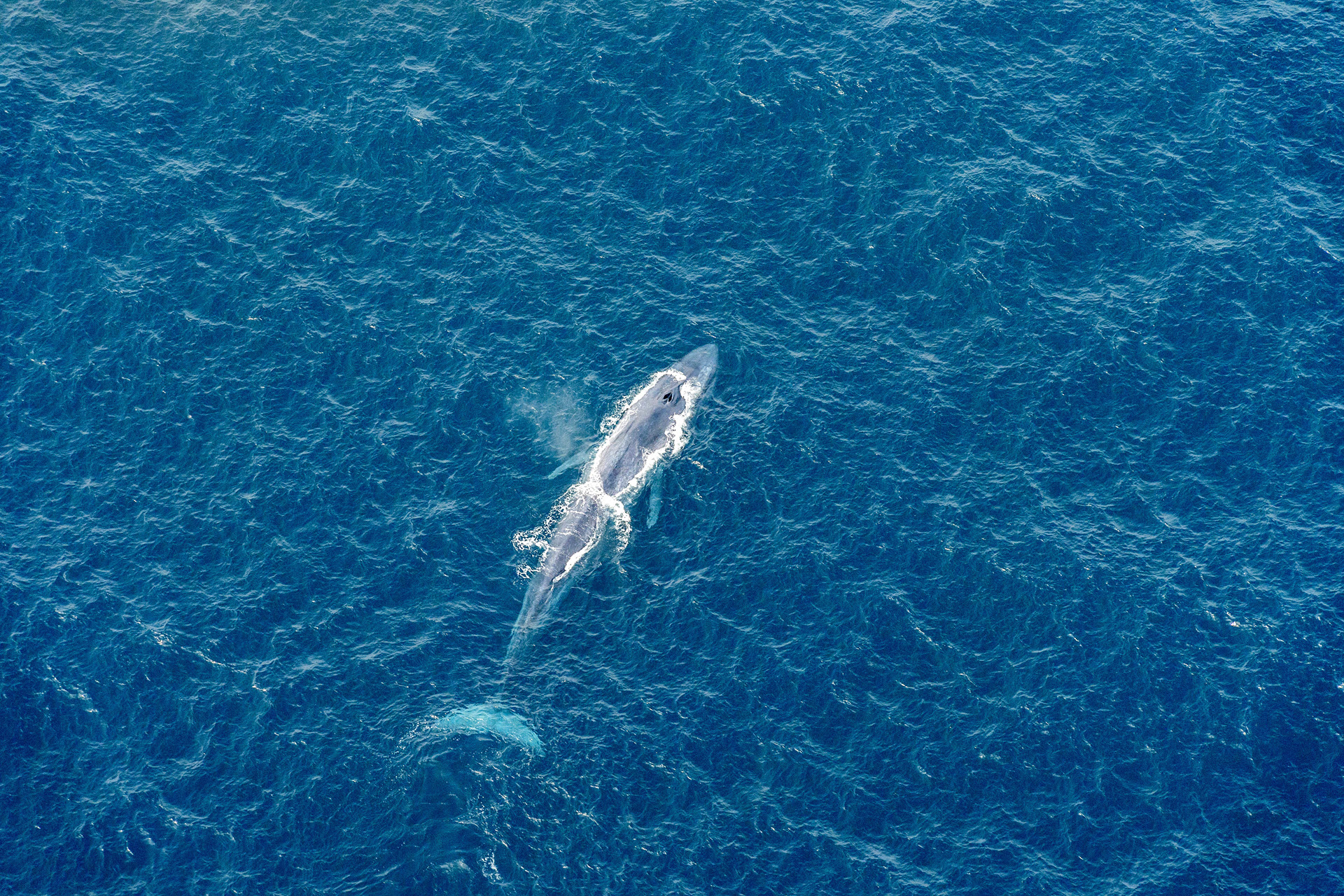
1. Blue Whale (Balaenoptera musculus)
The blue whale is the largest animal known to have ever lived on Earth. It can reach lengths of more than 90 feet (27 meters) and weigh over 150 tons. Despite its enormous size, it feeds mainly on tiny shrimp-like animals called krill.
Blue whales are found in oceans around the world and migrate long distances between feeding and breeding areas. Their size is possible because water supports their weight, allowing them to grow far larger than any land mammal.
Interesting Fact: A blue whale’s heart can weigh as much as a small car.
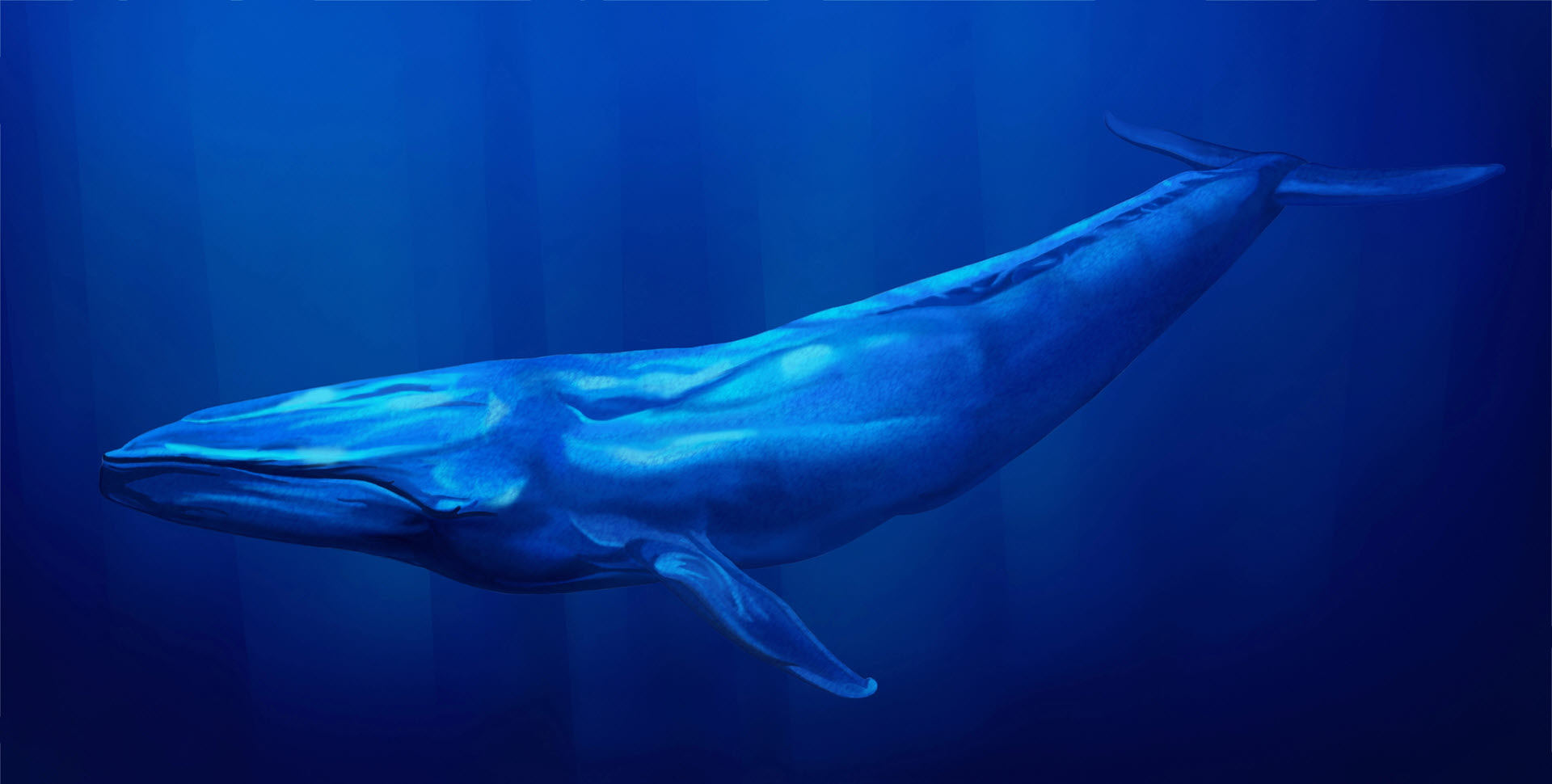
2. African Elephant (Loxodonta africana)
The African elephant is the largest land mammal. Adult males can weigh up to 6 to 7 tons and stand over 10 feet (3 meters) tall at the shoulder. They are known for their large ears, long trunks, and tusks.
African elephants live in a variety of habitats, including savannas and forests.
Their size helps protect them from predators, but it also means they need to eat large amounts of vegetation every day.
Interesting Fact: An African elephant can eat up to 300 pounds of food in a single day.
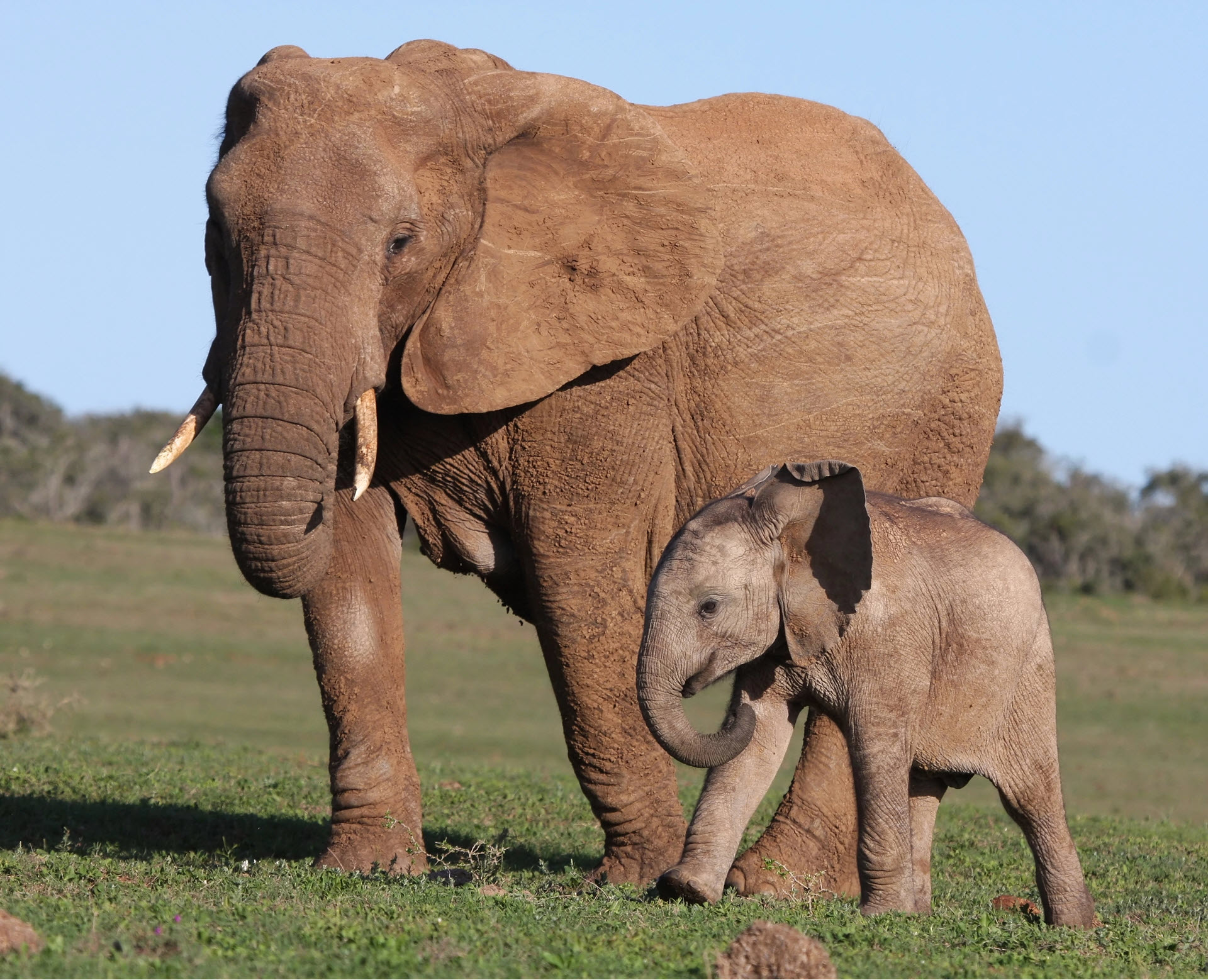
3. Asian Elephant (Elephas maximus)
Asian elephants are slightly smaller than African elephants, but they are still among the largest land mammals in the world. They can weigh up to 5 tons and are found in forested regions of South and Southeast Asia.
They differ from African elephants in several ways, including smaller ears and a more rounded back. Asian elephants also play an important ecological role by shaping vegetation and helping disperse seeds.
Interesting Fact: Asian elephants can use their trunks to pick up objects as small as a single blade of grass.
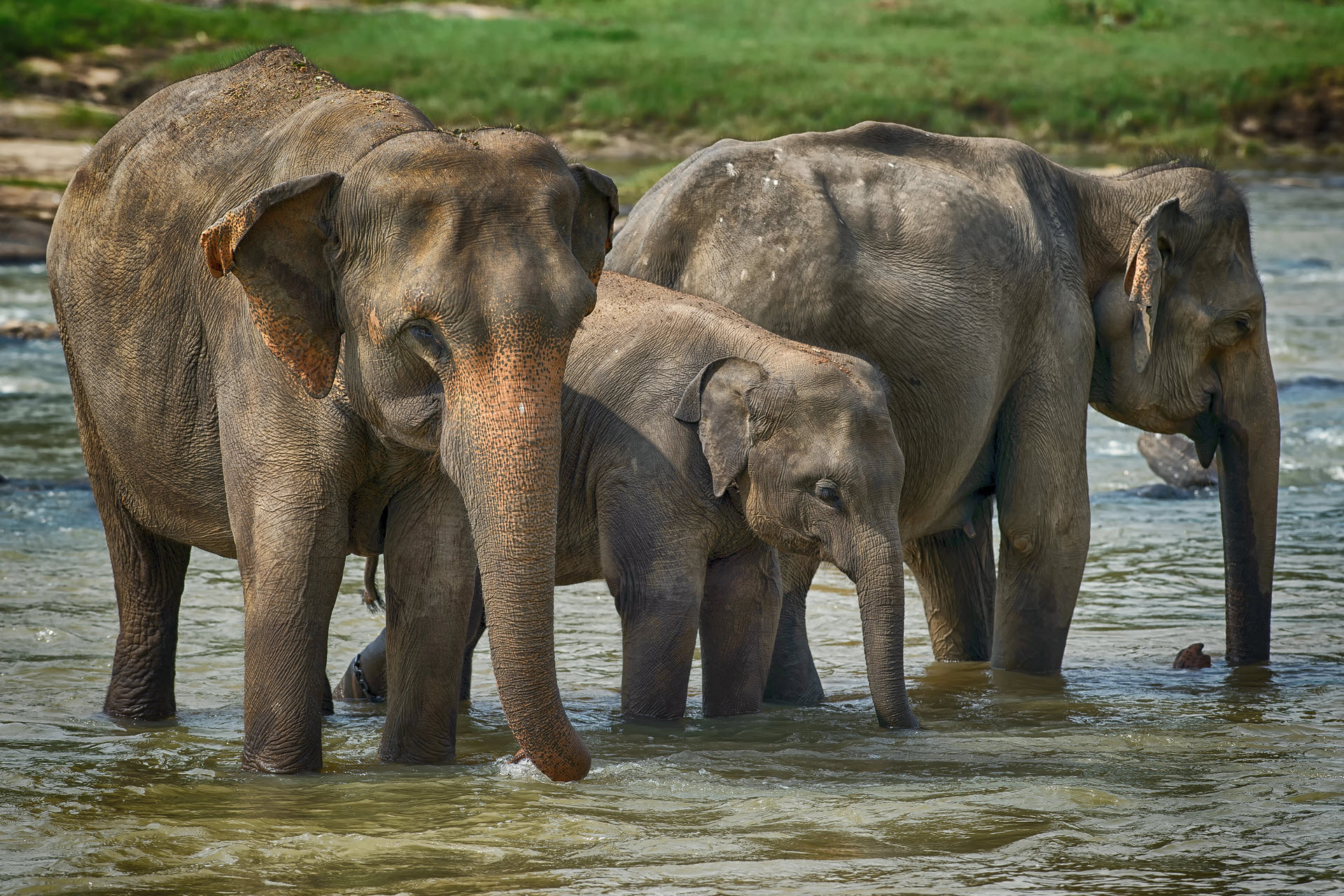
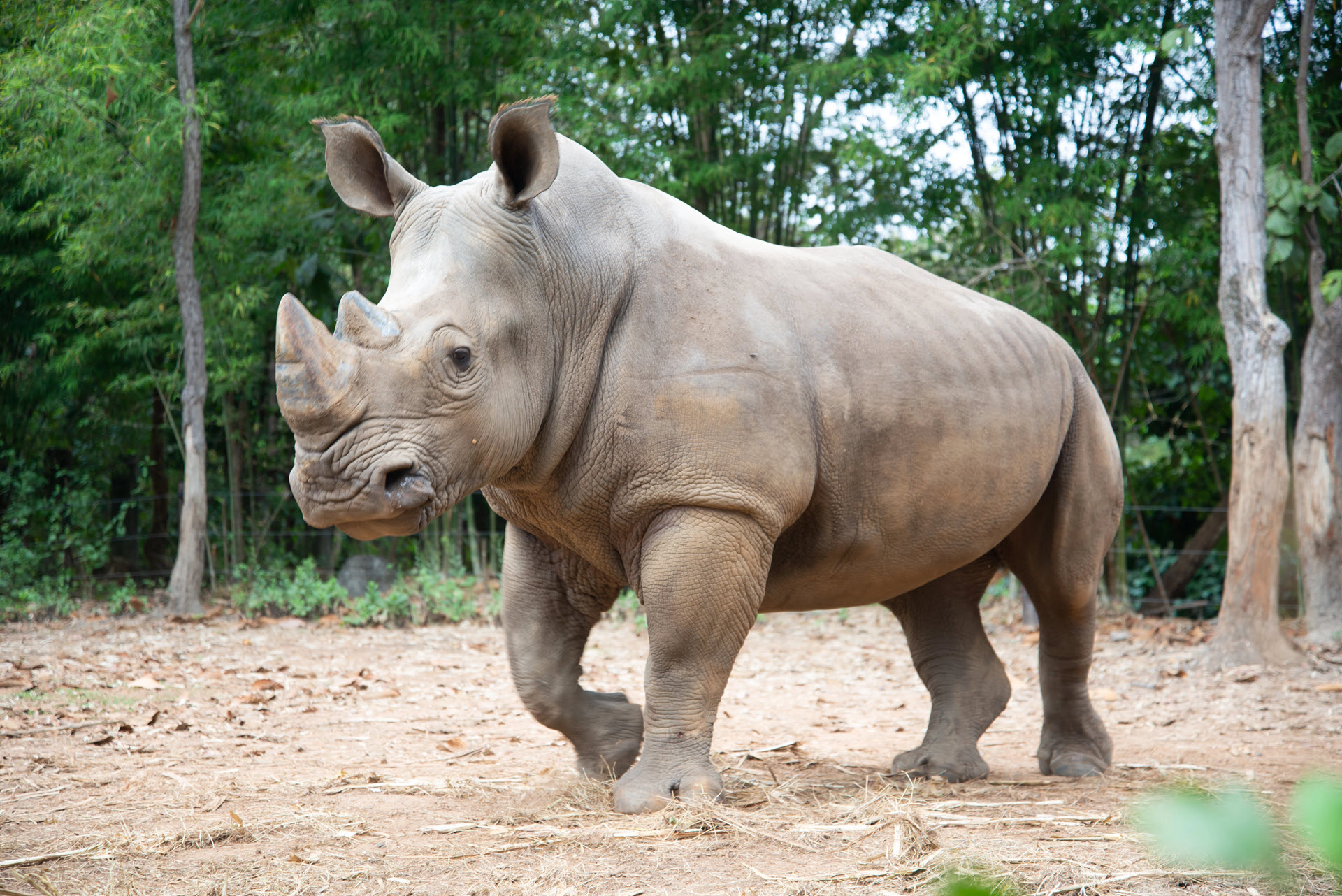
4. White Rhinoceros (Ceratotherium simum)
The white rhinoceros is one of the heaviest land mammals, with some individuals weighing more than 2 tons. It has a broad, square-shaped mouth adapted for grazing and two large horns made of keratin.
White rhinos live in parts of Africa, mainly in grassland habitats. Their size and thick skin provide some protection, but they are still highly vulnerable to human threats, especially poaching.
Interesting Fact: A rhino’s horn is made of the same material as human nails.
5. Hippopotamus (Hippopotamus amphibius)
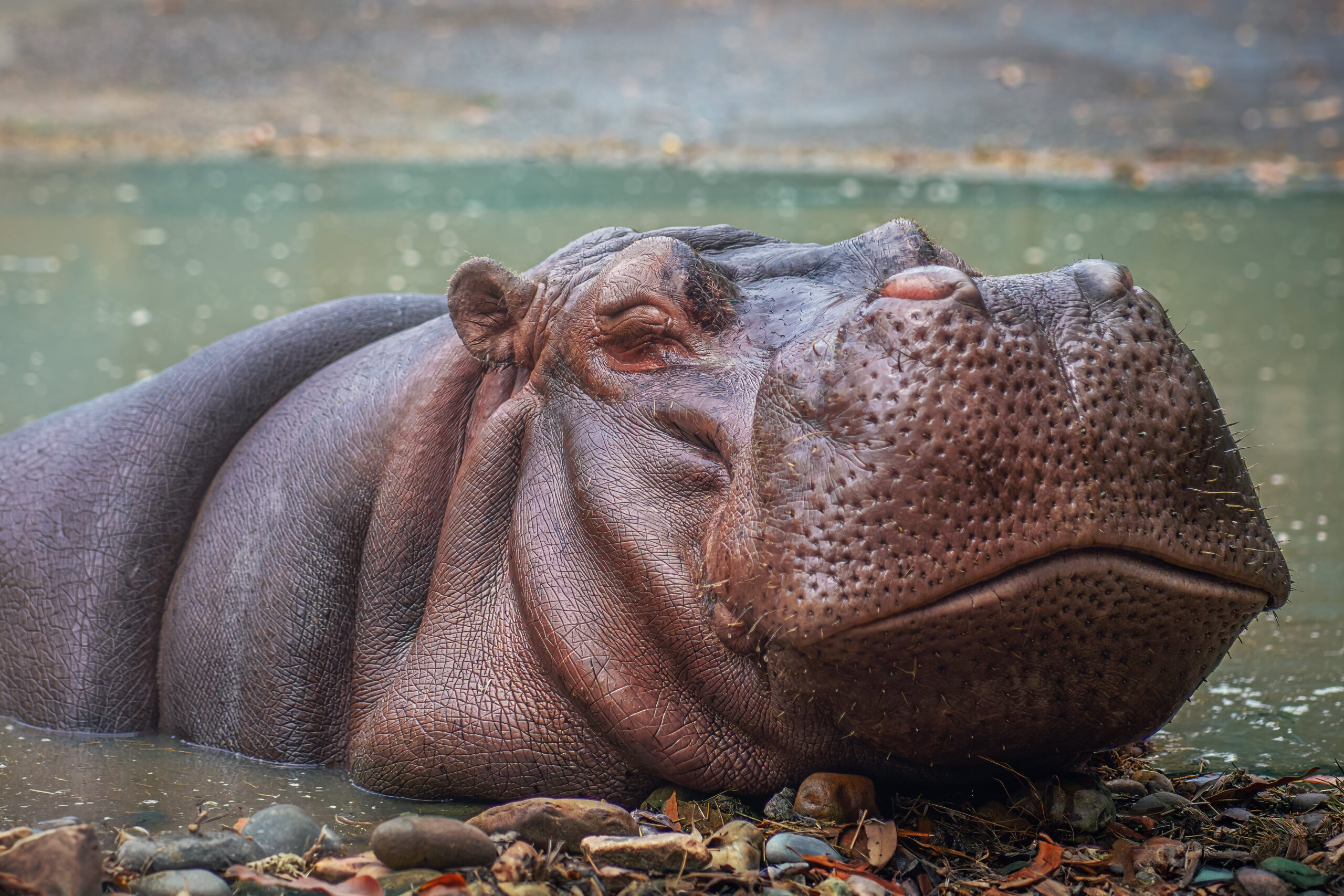
The hippopotamus is a large, semi-aquatic mammal that can weigh up to 2 tons. It spends much of its time in rivers and lakes, where the water helps support its body weight and keeps it cool.
Although it has a heavy body, the hippopotamus can move surprisingly quickly on land over short distances. It is known for its strong jaws, large teeth, and territorial behavior.
Interesting Fact: Hippos spend most of their day in water to keep their bodies cool.
5 Largest Mammals Size Comparison Table
| Animal | Height | Length | Weight |
|---|---|---|---|
| Blue Whale | Up to 15 ft tall | Up to 100 ft long | Up to 300,000 lbs |
| African Elephant | Up to 13 ft tall | Up to 24 ft long | Up to 13,000 lbs |
| Asian Elephant | Up to 11 ft tall | Up to 21 ft long | Up to 10,000 lbs |
| White Rhinoceros | Up to 6 ft tall | Up to 13 ft long | Up to 5,000 lbs |
| Hippopotamus | Up to 5.5 ft tall | Up to 14 ft long | Up to 3,500 lbs |
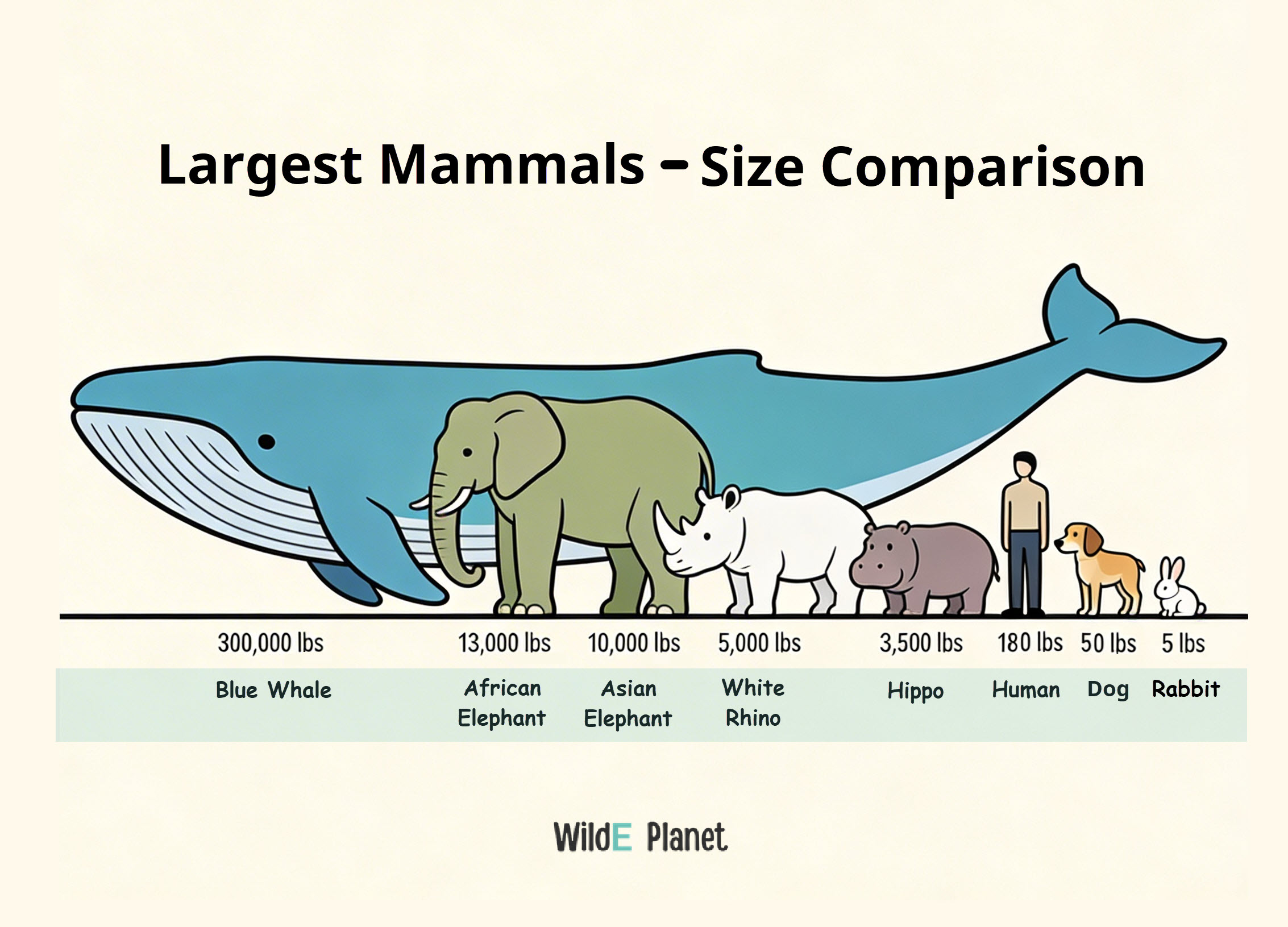
Image: Visual size comparison
Other Large Mammals
Many other mammals are also remarkable for their size. Some are especially heavy, while others are known for their height, length, or overall body mass.
- Giraffe (Giraffa camelopardalis) – the tallest land mammal
- Southern elephant seal (Mirounga leonina) – the largest seal species
- Walrus (Odobenus rosmarus) – a large marine mammal with tusks
- Sperm whale (Physeter macrocephalus) – the largest toothed whale
- Gray whale (Eschrichtius robustus) – one of the largest migrating mammals
- American bison (Bison bison) – the largest land mammal in North America
- Polar bear (Ursus maritimus) – the largest land carnivore
- Moose (Alces alces) – the largest member of the deer family
- Gaur (Bos gaurus) – one of the largest wild cattle species
- Kodiak bear (Ursus arctos middendorffi) – one of the largest bears
Conservation and Threats
Many of the largest mammals face serious conservation challenges. Large mammals often reproduce more slowly than smaller animals, which can make it harder for their populations to recover after decline.
Blue whales were heavily hunted in the past but are now protected in many parts of the world. African and Asian elephants face threats from habitat loss, conflict with people, and poaching. White rhinoceroses are still under pressure from illegal hunting, while hippopotamuses are affected by habitat loss and increasing human activity near rivers and wetlands.
Conservation efforts for large mammals include habitat protection, anti-poaching programs, wildlife monitoring, and international agreements that regulate hunting and trade. Protecting these species can also help protect the larger ecosystems they live in.
The Importance of Size in Nature
The largest mammals show how animals adapt to their environments. In the ocean, water supports massive body sizes, allowing whales to grow larger than any land animal. On land, size is limited by gravity, food availability, and the need to move efficiently.
Each of these animals plays an important role in its ecosystem. From shaping landscapes to supporting food chains, large mammals help maintain balance in the natural world.
Sources
- NOAA Fisheries
- U.S. Fish & Wildlife Service
- Smithsonian’s National Zoo & Conservation Biology Institute
- IUCN Red List