Whale Shark
The whale shark is the largest fish in the world.
Despite its enormous size, the whale shark does not hunt large animals. Instead, it swims through warm ocean waters filtering tiny animals and other food from the water.
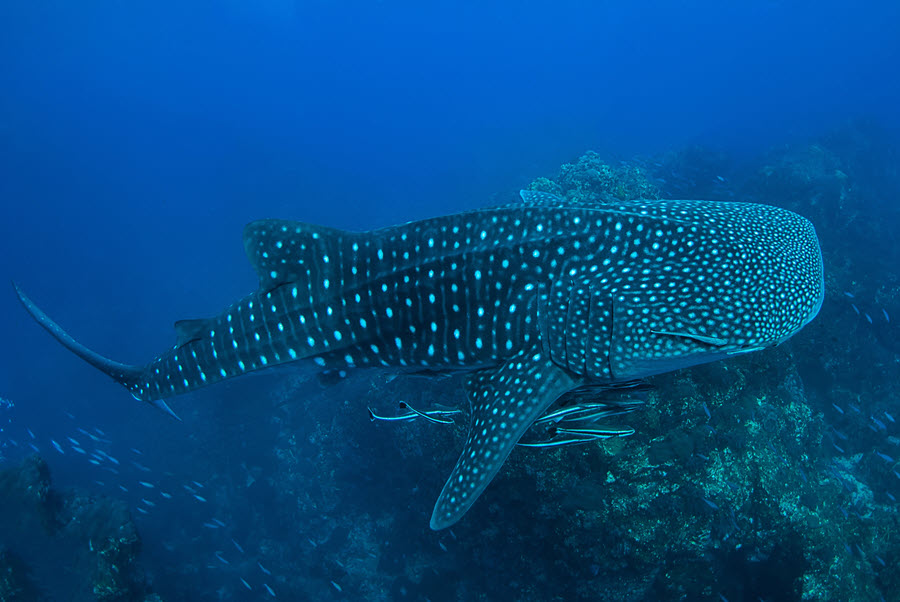
Whale sharks are easy to recognize because their dark bodies are covered with pale spots and stripes. Each shark has its own pattern of spots, almost like a fingerprint.
What Is a Whale Shark?
A whale shark is a very large shark that lives in warm oceans around the world. Its scientific name is Rhincodon typus.
Whale sharks are fish, not whales. They breathe through gills, have fins, and have skeletons made of cartilage instead of bone.
They are called whale sharks because they can grow to an enormous size. Whale sharks are usually about 30 feet long, but some can grow to around 40 feet long.
Even though whale sharks are huge, they are filter feeders. They collect small animals and other food from the water instead of biting large prey.
What Do Whale Sharks Look Like?
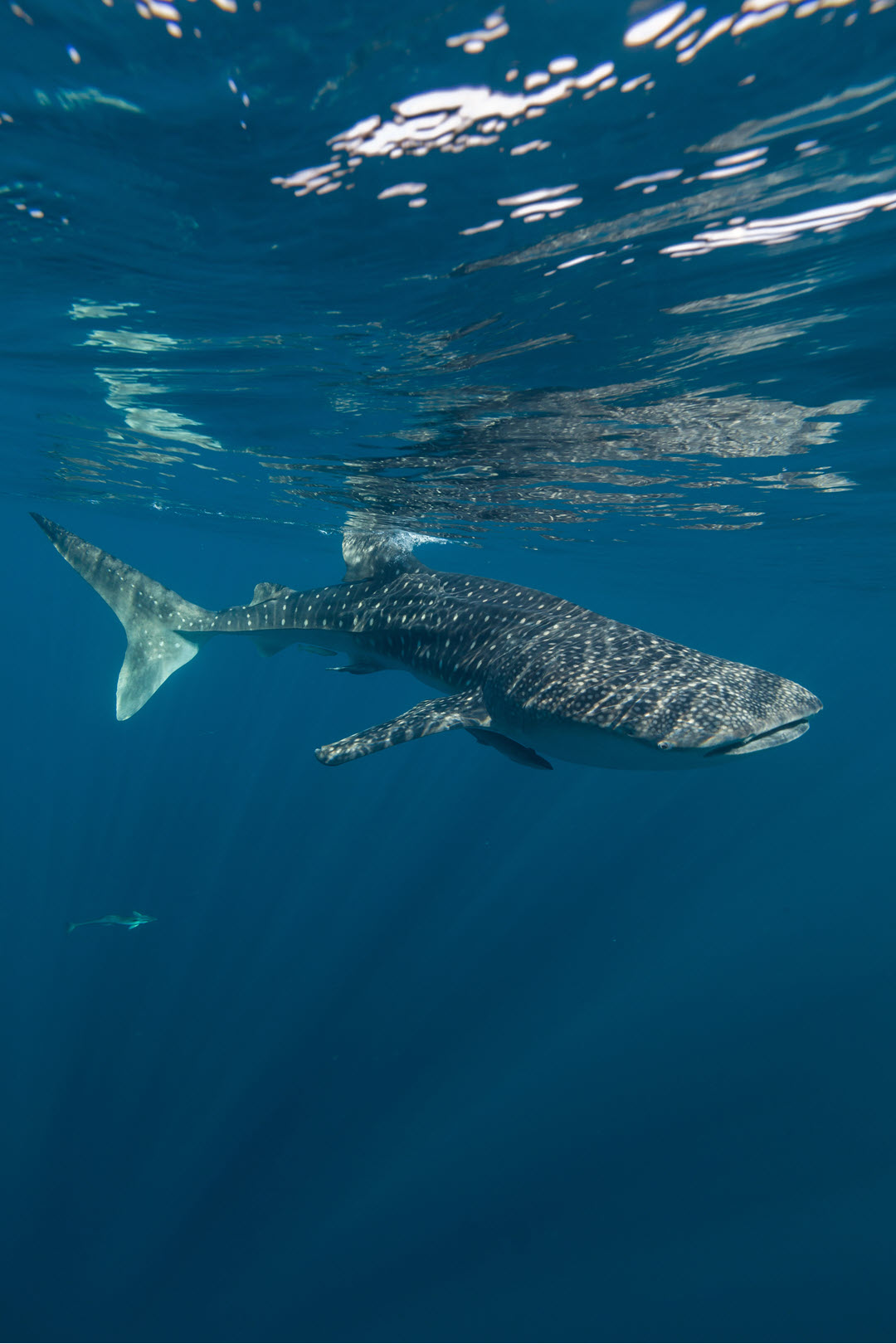
Whale sharks have broad, flat heads and enormous mouths at the front of their heads. Their bodies are thick and powerful, with large pectoral fins and a strong tail.
The most famous feature of a whale shark is its pattern. Its dark gray, blue-gray, or brownish back is covered with pale spots and stripes.
No two whale sharks have exactly the same pattern. Scientists can use photographs of these markings to recognize individual sharks and follow them over time.
The underside of a whale shark is much lighter than its back. This light-and-dark coloring is called countershading and is common in many sharks.
Whale sharks also have very large gill openings. Their gills help them breathe and also play an important role when they filter food from the water.
What Is the History of Whale Sharks?
Whale sharks belong to a shark group called the carpet sharks. This group also includes wobbegongs, nurse sharks, and bamboo sharks.
Whale sharks are the only living species in their family, Rhincodontidae. That makes them a very unusual branch of the shark family tree.
Like all living sharks, whale sharks are the result of millions of years of evolution. Their enormous size, wide mouths, special feeding structures, and powerful swimming bodies developed over many generations.
Scientists study fossils, living sharks, genetics, and the relationships between species to understand how different shark groups evolved.
Where Do Whale Sharks Live?
Whale sharks live in tropical and warm-temperate oceans around the world. They are found in the Atlantic, Pacific, and Indian Oceans.
They can live near coasts and islands, around reefs, and far out in the open ocean. Whale sharks sometimes travel very long distances between feeding areas.
Although they are often seen near the surface, whale sharks can dive surprisingly deep. Researchers have recorded them traveling more than 1,000 meters, or over 3,000 feet, below the surface.
Whale sharks often gather in places where food becomes especially plentiful. Famous whale shark gathering areas can be found near Mexico, Australia, the Philippines, the Maldives, and other tropical locations.
What Do Whale Sharks Do?
Whale sharks spend much of their time swimming through the ocean searching for areas where food is concentrated.
They are powerful swimmers, but they often move slowly while feeding. Their movements can change with ocean currents, water temperature, seasons, and the location of food.
Whale sharks are often seen alone, but many may gather in the same place when large amounts of food are available.
What Do Whale Sharks Eat?
Whale sharks eat small animals that drift or swim in the water. Their food can include plankton, tiny crustaceans, fish eggs, and small fishes.
They may also feed where huge numbers of fish or corals release eggs into the water.
How Do Whale Sharks Feed?
Whale sharks are filter feeders.
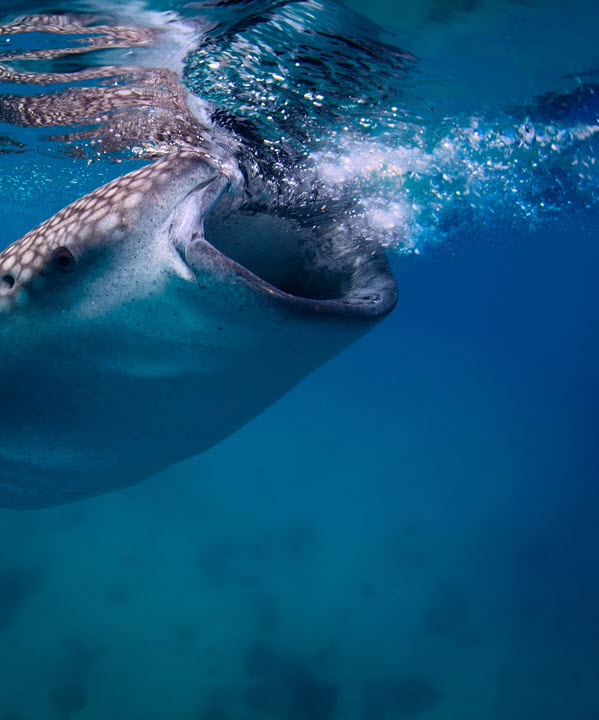
A whale shark opens its enormous mouth and takes in water filled with food. The water moves through special filtering structures near the gills, while small food particles are trapped and swallowed.
Whale sharks can feed while swimming forward, but they can also remain almost in one place and actively pull water into their mouths.
Although whale sharks have thousands of tiny teeth, those teeth are not used to bite or chew large prey.
Reproduction and Life Cycle
Whale sharks give birth to live young.
The developing pups grow inside their mother’s body. They receive nourishment from yolk while they develop.
Scientists know surprisingly little about where whale sharks mate or give birth because these events are rarely seen.
One pregnant whale shark examined by scientists carried about 300 developing young. This showed that whale sharks can produce an unusually large number of embryos.
Newborn whale sharks are much smaller than adults. Some of the smallest known free-swimming young have been only about 22 inches long.
Whale sharks grow slowly and can live for many decades.
Unique Qualities and Characteristics
The whale shark is the largest living fish. An animal can be enormous without being a whale or another marine mammal. Whale sharks are true sharks and therefore true fish.
Every whale shark has its own spot pattern. Scientists photograph the markings behind the gills and use them to identify individual sharks.
They have enormous mouths but tiny food. A whale shark may be longer than a school bus, yet much of its food is made up of animals small enough to drift in the water.
They can travel enormous distances. Tracking studies have shown that individual whale sharks can move across large areas of ocean.
They can dive deep. Whale sharks are famous for swimming near the surface, but they also make deep dives into darker, colder water.
Scientists still have major mysteries to solve. Researchers know where whale sharks gather to feed in some parts of the world, but much about their mating, pregnancy, birth, and earliest years of life remains unknown.
Why Are Whale Sharks Important?
Whale sharks are part of ocean ecosystems around the world.
As they feed, travel, and move between different ocean areas, they are connected to many other forms of marine life.
Whale sharks can also help scientists learn about the ocean. Researchers track their movements to study where they travel, which habitats they use, and where important feeding areas occur.
Because whale sharks travel across national borders and through international waters, studying them also shows why protecting ocean animals often requires countries to work together.
Whale sharks are also important to people. In many places, visitors travel to see these enormous sharks swimming in the wild. Responsible whale shark tourism can help people learn about sharks and can give local communities a reason to protect them and their habitats.
Why Should Whale Sharks Be Protected?
Whale sharks are listed as Endangered on the IUCN Red List.
One of their biggest problems is that they grow slowly and take years to become adults. When whale sharks are killed, their populations cannot quickly replace them.
Whale sharks can be caught accidentally in fishing gear. In some places they have also been hunted for their meat, fins, and other products.
Ships and boats can injure whale sharks when they strike animals swimming near the surface. This is especially dangerous in places where busy shipping routes overlap with important whale shark habitat.
Pollution and changes in ocean conditions may also affect the places where whale sharks live and find food.
Protecting whale sharks includes reducing harmful fishing, protecting important feeding areas, preventing boat strikes, studying their movements, and making sure tourism around them is managed responsibly.
Whale sharks have survived in the world’s oceans for millions of years. Protecting them can help make sure these enormous spotted sharks continue swimming through the ocean far into the future.
READING LEVEL: Grades 4-5 & Above
Shark Pages
Words to Know
Carpet Shark — a shark belonging to a group that includes whale sharks, nurse sharks, wobbegongs, and bamboo sharks. Many have flattened bodies or patterns that help them blend into their surroundings, although members of the group can look very different.
Cartilage — the strong, flexible material that makes up a shark’s skeleton instead of bone
Countershading — a coloring pattern with a darker back and lighter underside that can help an animal blend into the water
Embryo — a developing young animal before it is born or hatches
Endangered — at very high risk of disappearing from the wild
Filter Feeder — an animal that collects tiny food from the water as it feeds
Gills — body parts that take oxygen from water so a shark can breathe
Habitat — the place where an animal lives and finds what it needs
Migration — regular movement from one area to another
Open Ocean — the large area of ocean far from the coast
Pectoral Fins — the large fins on the sides of a shark that help with lift and control
Plankton — tiny living things that drift in the water
Pup — a baby shark
Species — a group of similar living things that can reproduce with one another
Tropical — relating to warm areas near the equator
Yolk — stored food that helps a developing young animal grow before birth or hatching