Wobbegong Shark
Wobbegongs are sharks that look like they were made for hiding.
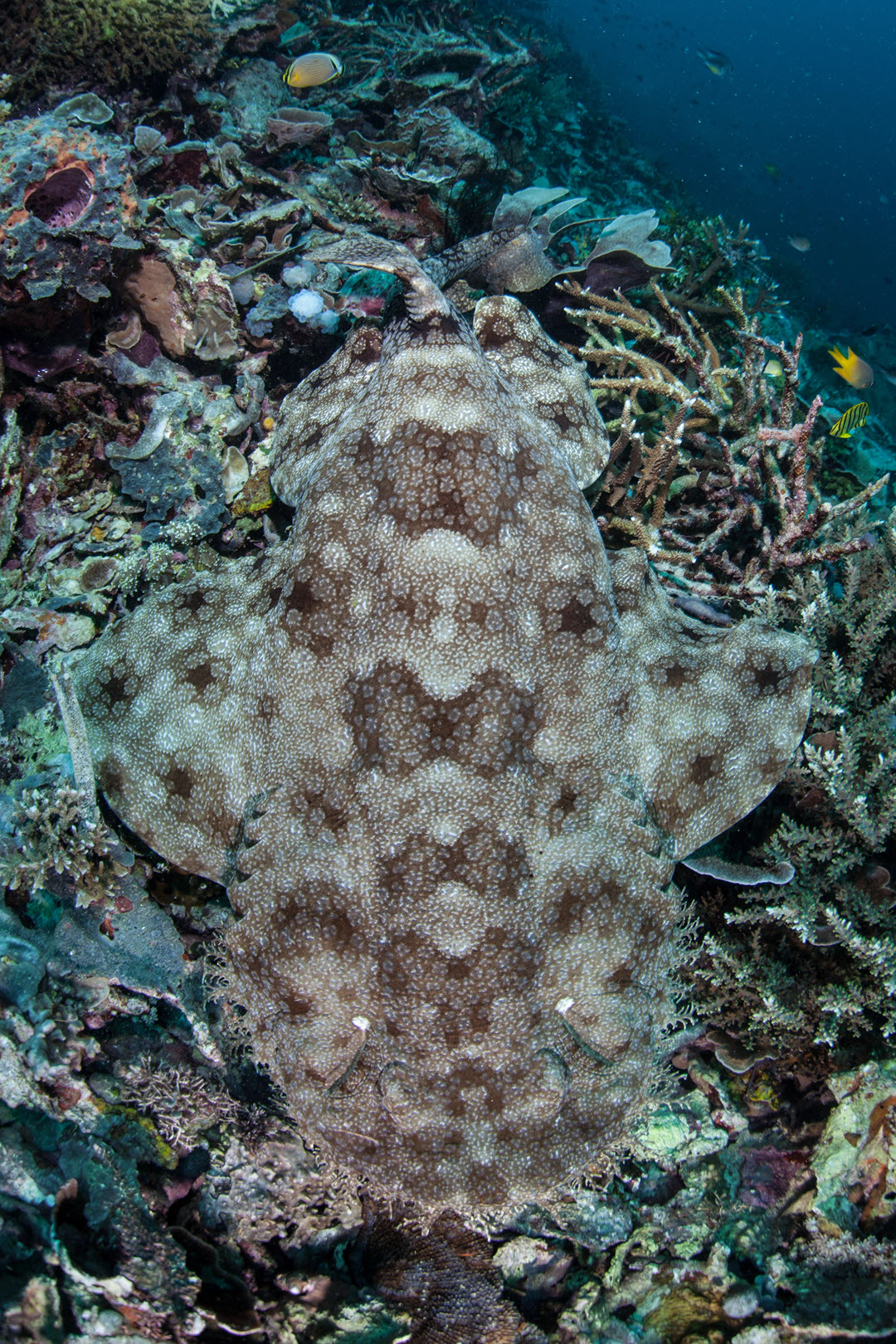
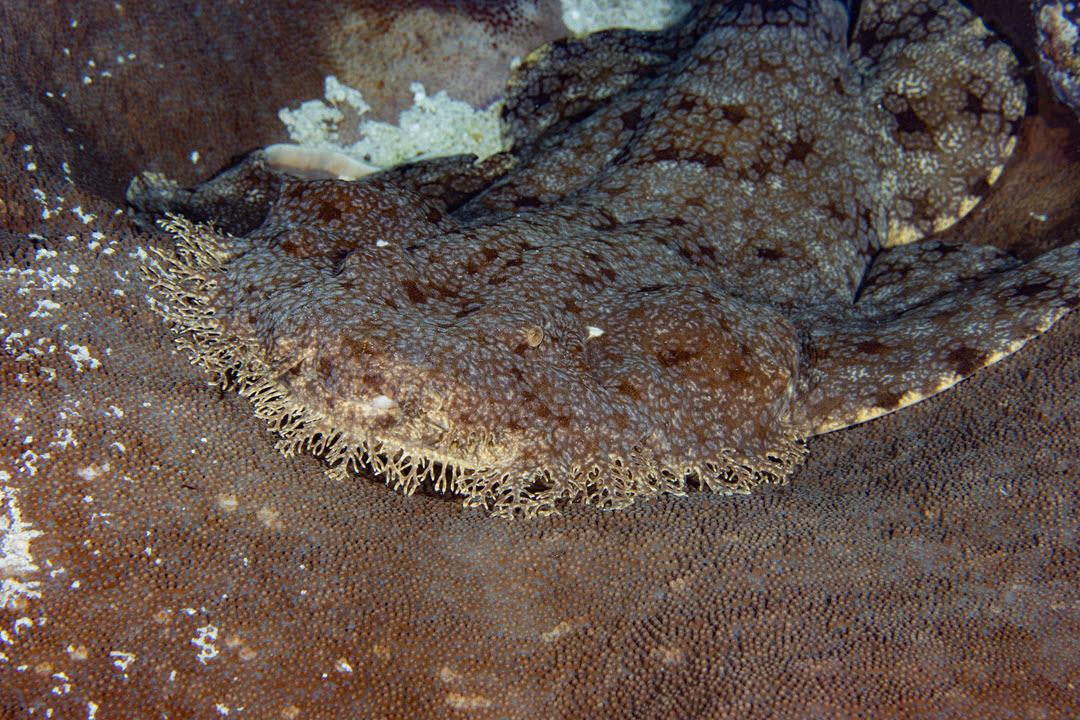
Instead of swimming through the open ocean, wobbegongs spend much of their time resting on or near the ocean floor. Their flat bodies and amazing patterns help them blend in with rocks, reefs, and sand.
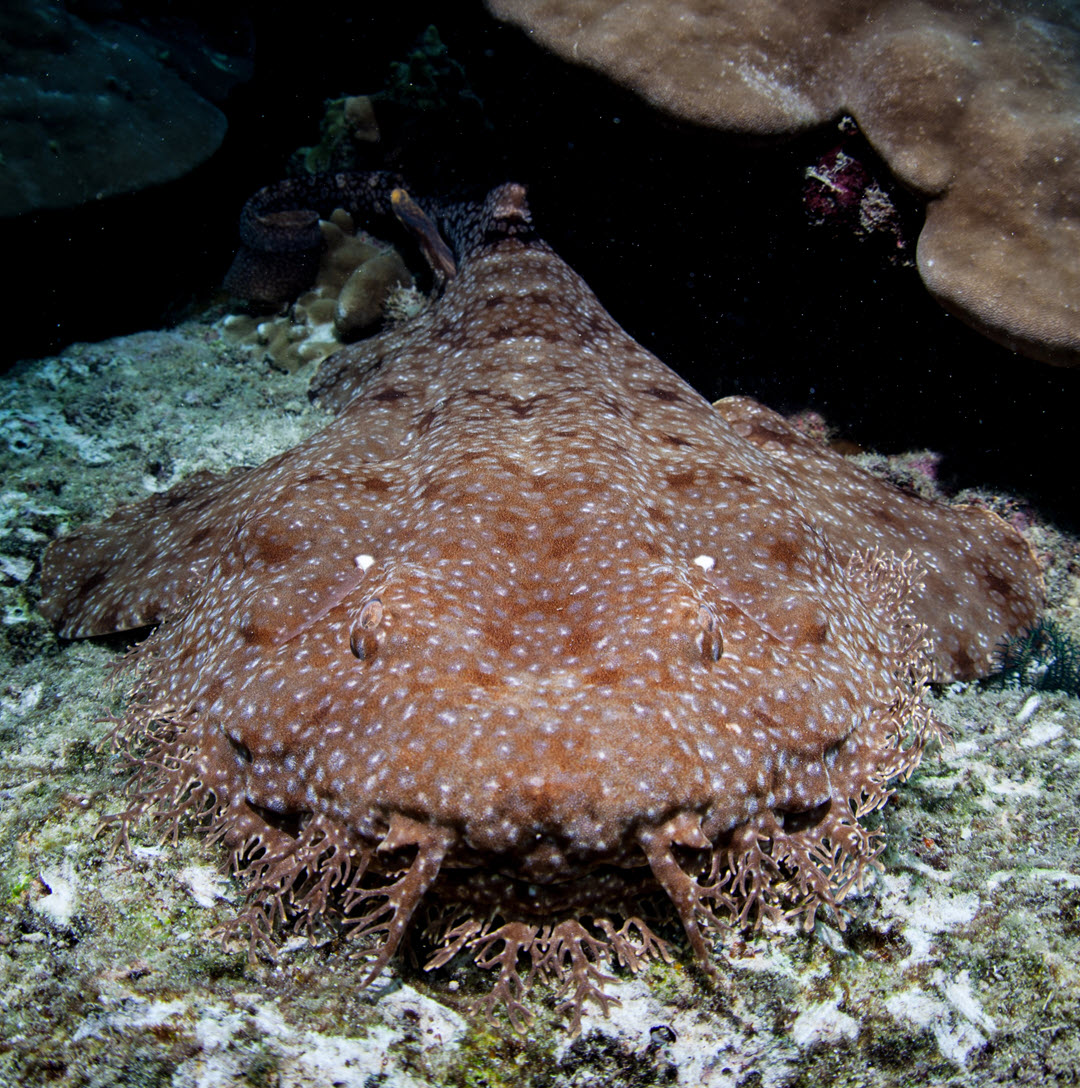
Some wobbegongs even have strange, leafy-looking flaps around their heads. These help break up the shark’s outline and make it even harder to see.
What Is a Wobbegong?
A wobbegong is a type of carpet shark. There are several different species of wobbegong, and most live in waters around Australia and nearby parts of the Pacific Ocean.
Wobbegongs are bottom-dwelling sharks. This means they spend much of their time on or close to the ocean floor.
Most wobbegongs are not huge sharks. Their size depends on the species. Some are only a few feet long, while the largest can grow much longer.
The name wobbegong may come from an Australian Aboriginal language, although the exact origin of the word is uncertain.
What Do Wobbegongs Look Like?
Wobbegongs have wide, flattened heads and bodies. Their shape is very different from the pointed, streamlined shape of sharks such as blue sharks.
Many wobbegongs have beautiful patterns of spots, patches, and lines. Their colors can include brown, tan, gray, yellow, and other shades that match the ocean floor.
Some species have branching skin flaps around their heads. These are called dermal lobes. They can look a little like seaweed.
Their mouths are near the front of their broad heads. Wobbegongs have many small, sharp teeth that help them catch and hold prey.
History of the Wobbegong
Wobbegongs belong to a group of sharks called carpet sharks. Whale sharks, nurse sharks, and bamboo sharks are also members of this group.
Sharks have lived in Earth’s oceans for hundreds of millions of years. Over time, different kinds of sharks developed features that helped them survive in different places.
Wobbegongs became well suited for life near the ocean floor. Their flat bodies, patterns, and hunting style help them live among reefs, rocks, and other underwater habitats.
Scientists study living sharks, fossils, and DNA to learn how wobbegongs and other sharks are related.
Where Do Wobbegongs Live?
Wobbegongs live in warm and mild ocean waters of the western Pacific Ocean and eastern Indian Ocean. Most species are found around Australia and nearby areas.
They often live around coral and rocky reefs. They can also be found in sandy areas, seagrass beds, and other places along the ocean floor.
Wobbegongs usually stay close to the bottom. During the day, they may rest under ledges, inside caves, or in other sheltered places.
Their colors and patterns help them blend into these habitats.
Wobbegong Behavior
Wobbegongs spend a lot of time resting on the ocean floor. They can remain very still, especially during the day.
Many become more active after dark. At night, they may move around the reef looking for food.
Wobbegongs do not have to swim all the time to breathe. They can pump water over their gills while resting on the bottom.
Their ability to stay still and blend into the ocean floor also helps them hunt.
What Do Wobbegongs Eat?
Wobbegongs eat animals that live on or swim near the ocean floor.
Their food can include fish, crabs, lobsters, octopuses, and other small sea animals.
What they eat depends on the species, its size, and which animals live in its habitat.
How Do Wobbegongs Hunt?
Wobbegongs are ambush predators. Instead of chasing food for long distances, they can hide and wait for an animal to come close.
Their patterns help them blend into the ocean floor while they wait.
When a fish or other animal comes close enough, a wobbegong can quickly open its mouth and pull the animal in.
This hunting style allows the shark to catch food with a sudden burst of speed.
Reproduction and Life Cycle
Wobbegongs give birth to live young called pups.
The pups develop inside their mother’s body before they are born. They receive food from yolk while they grow.
The number of pups can be different among wobbegong species.
When the pups are born, they already look like tiny wobbegongs. Their patterns help them blend into their surroundings.
Young wobbegongs grow over time until they are large enough to reproduce and have pups of their own.
Unique Traits
- Wobbegongs are masters of camouflage. Their colors and patterns can make them surprisingly difficult to see against the ocean floor.
- Some have what looks like a fringe around their faces. These skin flaps help break up the outline of the shark’s head.
- They hunt by waiting. A wobbegong can stay hidden until an animal swims close enough to catch.
- They can breathe while resting. Wobbegongs can move water over their gills without having to swim constantly.
- There is more than one kind of wobbegong. Wobbegongs are a group of sharks that includes several different species.
Why Wobbegongs Are Important
Wobbegongs are predators in the habitats where they live.
They eat fish and other animals that live around reefs and the ocean floor. They are also part of the lives of other animals in these habitats.
Wobbegongs show us how sharks can adapt to very different ways of life. A blue shark is built to travel across the open ocean, while a wobbegong is built to hide and hunt near the bottom.
Scientists can study wobbegongs to learn more about sharks, camouflage, hunting, and life in reef habitats.
Why Wobbegongs Should Be Protected
Different wobbegong species face different levels of risk, so there is not one conservation status for all wobbegongs.
Wobbegongs can be caught by fishers, both on purpose and by accident. Because they spend time near the ocean floor, some types of fishing can affect them and their habitats.
Damage to reefs and other coastal habitats can also affect the places where wobbegongs find food, rest, and hide.
Protecting wobbegongs means managing fishing carefully and protecting the ocean habitats they need.
These unusual sharks are an important part of the underwater world. Protecting them helps keep that world full of different kinds of sharks and other sea life.
READING LEVEL: Grades 4-5 & Above
Shark Pages
Words to Know
Ambush Predator — an animal that hides or waits for prey to come close before attacking
Camouflage — colors, patterns, or shapes that help an animal blend into its surroundings
Carpet Shark — a shark from a group that includes wobbegongs, whale sharks, nurse sharks, and bamboo sharks
Coral Reef — an underwater habitat built by tiny animals called corals
Dermal Lobes — skin flaps around the head of some wobbegongs that help them blend into their surroundings
Habitat — the place where an animal lives
Ocean Floor — the bottom of the ocean
Predator — an animal that hunts and eats other animals
Prey — an animal that is hunted and eaten by another animal
Pup — a baby shark
Seagrass — a flowering plant that grows underwater in shallow ocean areas
Yolk — stored food that feeds a young animal while it develops before birth or hatching