
Baby Sharks
Baby sharks begin life ready for an extraordinary challenge: surviving on their own in the ocean.
Some are born in shallow coastal waters, while others begin life in very different ocean habitats. Some are less than a foot long at birth, while the baby sharks of larger species can already be several feet long.
And unlike human babies—and the young of many other animals—baby sharks generally do not have a parent looking after them. Once they are born or hatch, they must be able to swim, find food, and avoid danger on their own.
What Is a Baby Shark Called?
A baby shark is called a pup.
The word is used for young sharks whether they hatch from an egg case or are born alive. A newly born shark may also be called a neonate, a scientific term for a newborn animal.
A shark developing before birth or hatching is called an embryo.
Pups are not helpless babies. By the time they enter the ocean, their bodies are developed enough for them to begin living independently. They can swim, use their senses, and eventually find food without being taught by their parents.
For most shark species, growing up begins without Mom or Dad nearby.
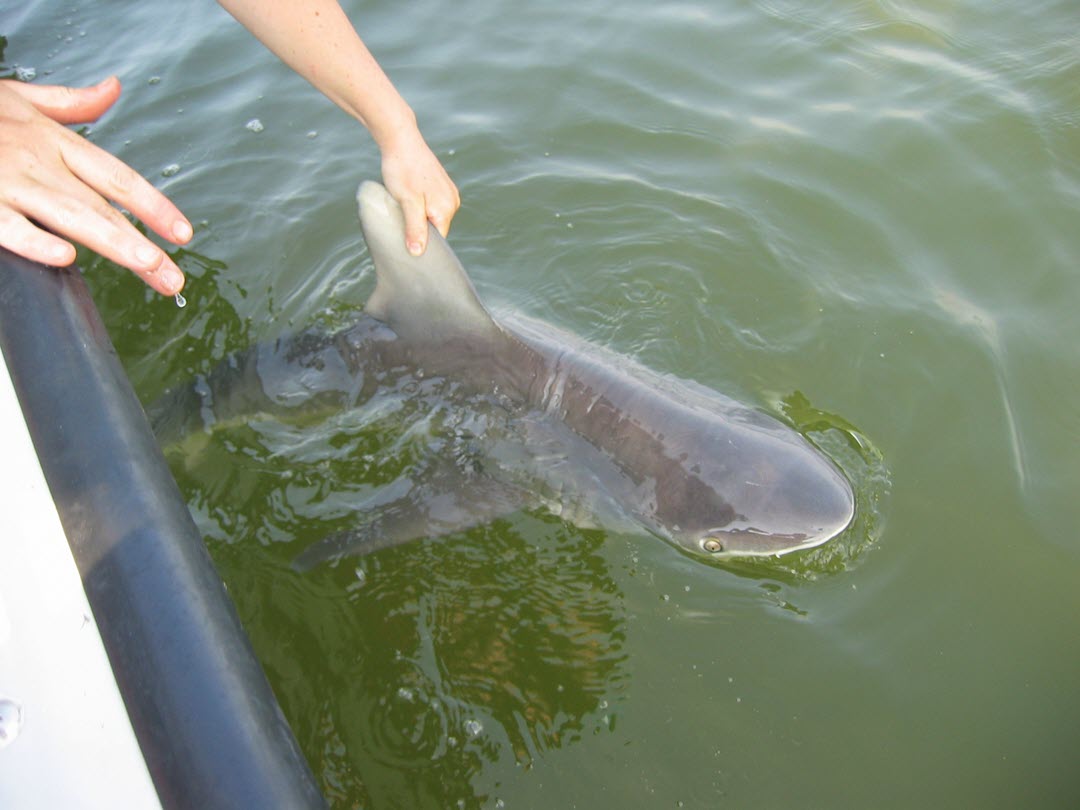
Baby Shark – Sandbar Shark

How Are Baby Sharks Born?
Not all baby sharks are born the same way. Sharks reproduce through internal fertilization, but after that, development can take several different paths. Scientists use specialized terms for these reproductive methods, but the basic differences are fairly easy to understand.
Some Sharks Lay Eggs
Some mother sharks lay eggs. Each baby shark grows inside a tough egg case that helps protect it.
Inside the case, the baby gets food from a yolk as it grows. When it is ready, the young shark breaks out of the egg case and swims away.
Catsharks, bamboo sharks, and horn sharks are some of the sharks that lay eggs.
Some Sharks Give Birth to Live Babies
Many sharks do not lay their eggs in the ocean. Instead, their babies develop inside the mother’s body and are born alive.
The developing babies get the food they need in different ways. Some get their food from a yolk, while others receive food from their mother through a special connection similar to a placenta.
Hammerheads, Tiger Sharks, Great White Sharks, and many other sharks give birth to live young.
So, do sharks hatch from eggs or are they born alive?
Both! It depends on the kind of shark.
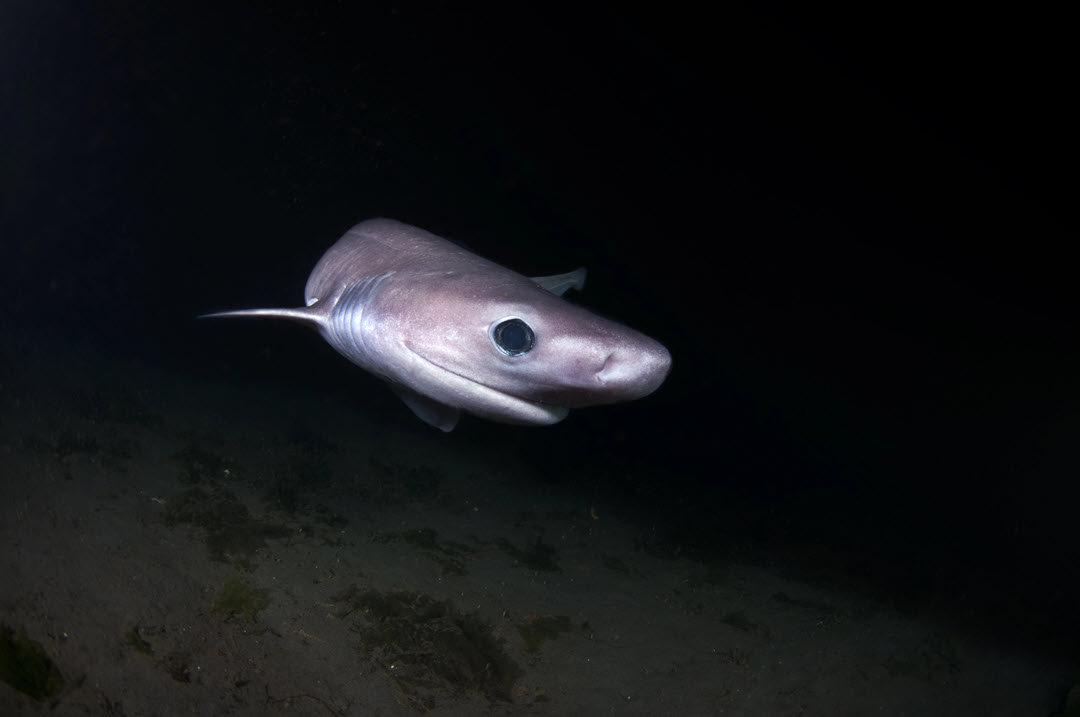
Baby Shark – Bluntnose Sixgill Shark
What Do Shark Eggs Look Like?
Shark eggs don’t look much like chicken eggs.
The baby shark grows inside a tough egg case instead of a hard shell. Egg cases come in different shapes and sizes. Some look like little pouches. Some have long, curly strands that help them attach to seaweed, rocks, or other objects underwater. Horn Sharks even produce unusual spiral-shaped egg cases.
Shark and skate egg cases sometimes wash up on beaches. People often call them mermaid’s purses.
Most egg cases found on the beach are empty because the young animal has already hatched.
While a baby shark is growing, its egg case helps protect it while allowing oxygen from the surrounding water to reach it.
A Shark Can Sense Danger Before It Hatches
The shark inside an egg case isn’t simply sitting there doing nothing.
Scientists studying bamboo shark embryos found that they could detect electrical signals similar to those produced by a nearby predator. In response, the embryos stopped moving their gills and became still.
In other words, some sharks can respond to possible danger before they have even hatched.
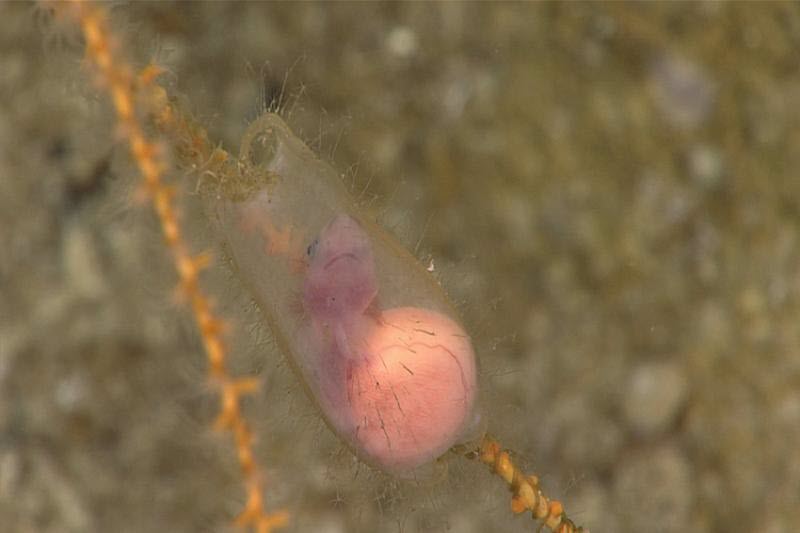
A dogfish shark embryo swimming inside its egg. Credit: NOAA/Okeanos Explorer. Public domain.
How Big Are Baby Sharks?
There isn’t one answer because shark species differ enormously in size.
Some shark pups are only several inches long. Others enter the world already several feet long.
For example, Sandbar Shark pups are around 2 feet long at birth. The adults can reach about 8 feet.
Young sharks can look like smaller versions of adults, but their proportions, markings, and colors may change as they grow. They may also use different habitats or eat somewhat different foods.
One important point is that being a “baby” shark doesn’t necessarily mean being tiny.
A newborn pup from one of the larger shark species may already be a surprisingly large animal.
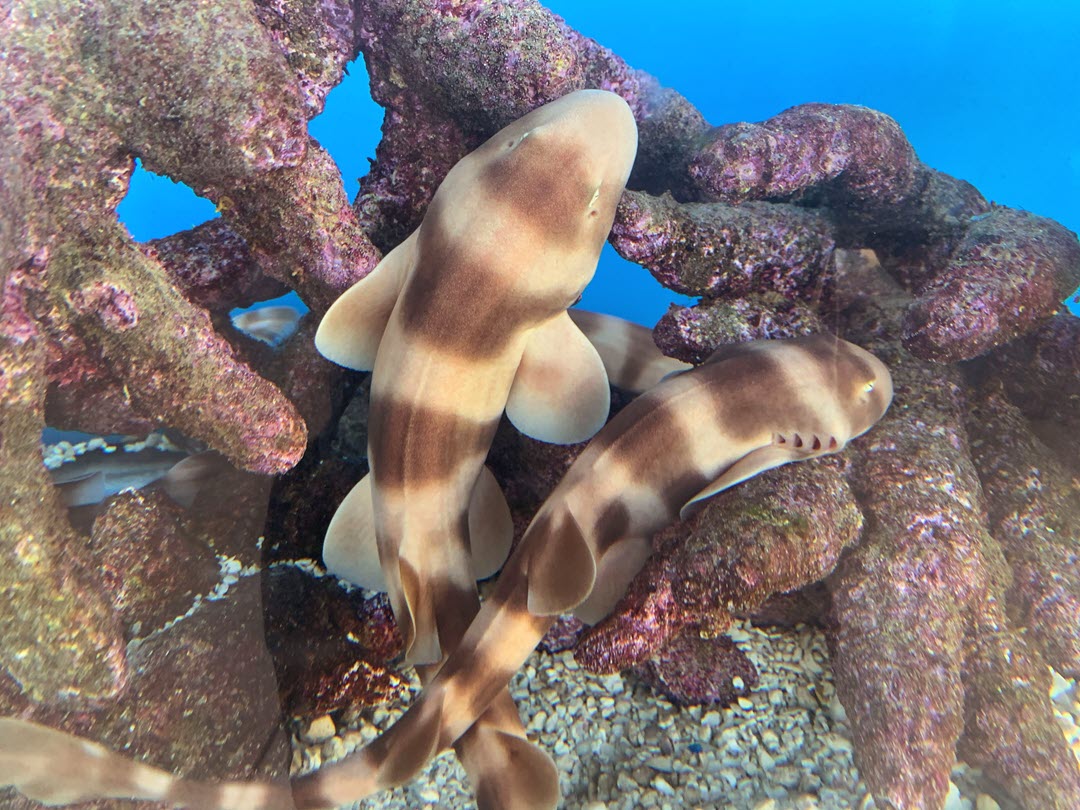
Juvenile Brownbanded Bamboo Shark
Coughdrop12, CC BY-SA 4.0, via Wikimedia Commons

Where Do Baby Sharks Live?
Almost anywhere sharks reproduce.
Young sharks can be found in tropical reefs, coastal waters, estuaries, the open ocean, and even the deep sea.
Some species give birth in shallow coastal habitats. These environments can offer young sharks abundant small prey and places where encounters with larger predators may be reduced.
Other sharks begin life far from shore.
Scientists have even observed developing shark embryos in egg cases in deep water. During a NOAA expedition near Puerto Rico, researchers encountered a developing catshark inside an egg case attached to a deep-sea coral at a depth of hundreds of meters.
There is no universal “baby shark habitat.” Like adults, young sharks live in environments suited to their particular species.
What Is a Shark Nursery?
You’ve probably heard shallow bays, mangroves, and estuaries described as shark nurseries.
But scientists use the term more carefully.
Finding a few baby sharks somewhere does not automatically make that place a nursery.
Researchers have proposed three important signs of a shark nursery:
- Young sharks are found there more often than in other areas.
- They remain there or repeatedly return for extended periods.
- Young sharks use the area repeatedly across different years.
That distinction matters because identifying true nursery areas can help scientists determine which habitats are particularly important to the survival of young sharks.
Some nurseries occur in shallow coastal and estuarine waters.
Why Do Some Baby Sharks Live in Shallow Water?
Shallow coastal habitats can offer young sharks several advantages.
Bays, estuaries, and other nearshore environments can contain abundant small fishes, shrimp, crabs, and other possible food. Shallow water can also reduce encounters with some larger predators.
That doesn’t mean every young shark lives in shallow water, or that shallow water is always safe.
It means that for certain species, these habitats can provide conditions that improve a pup’s chances of surviving its vulnerable early life.
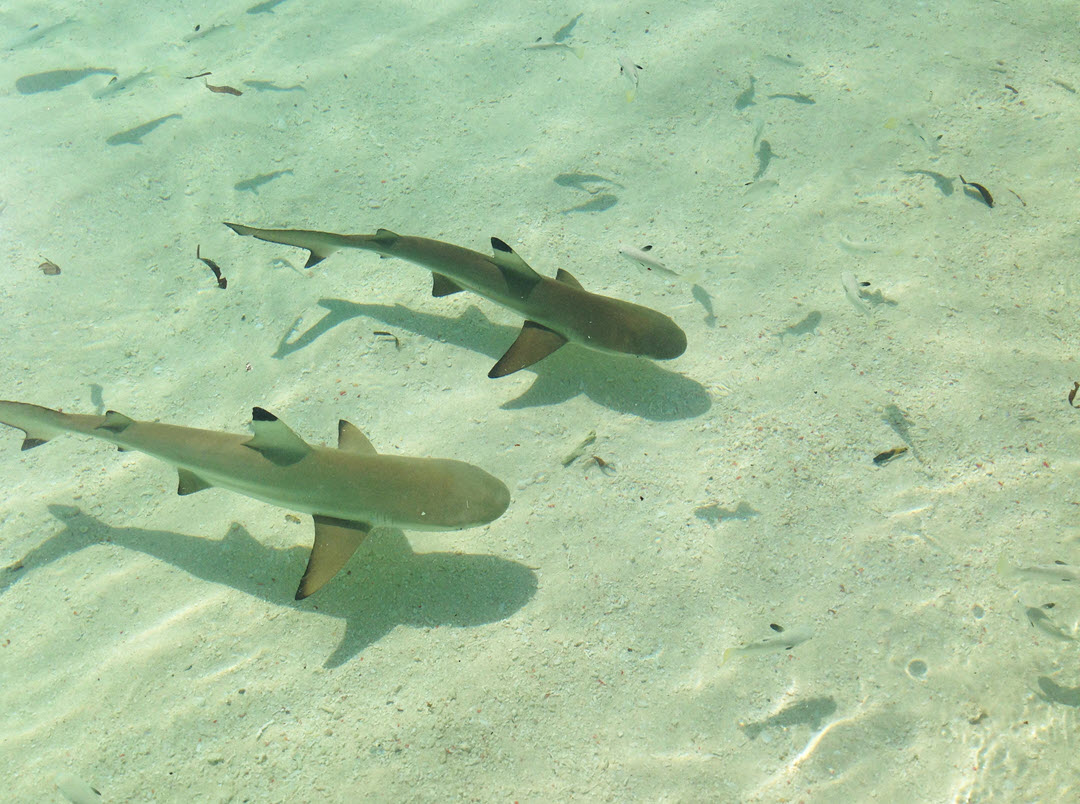
Blacktip Shark Pups – Indonesia
Do Baby Sharks Stay With Their Mothers?
Usually, no.
Sharks generally do not provide the kind of parental care seen in mammals or birds.
Egg-laying sharks leave their egg cases behind. Species that give birth to live young generally do not remain with the pups to feed them, teach them to hunt, or protect them as they grow.
A young shark therefore enters the world equipped to begin surviving independently.
It doesn’t have to learn how to breathe through its gills or how to swim by watching its mother. Its senses and many of the behaviors it needs to survive are already functioning.
This independence is one of the remarkable things about the beginning of a shark’s life.
What Do Baby Sharks Eat?
That depends on the species.
Young predatory sharks may eat small fishes, shrimp, crabs, squid, and other animals they are capable of catching.
As sharks grow, the size and kinds of food they eat may change. A young shark may hunt smaller prey than an adult of the same species simply because its mouth and body are smaller.
Filter-feeding sharks follow a very different feeding strategy. Instead of chasing fish or crabs, they filter tiny organisms from the water.
The important thing is that baby sharks don’t wait for their mothers to bring them dinner.
Once they begin feeding, they have to find food for themselves.
How Do Baby Sharks Survive?
Life as a shark pup can be dangerous.
Young sharks may be eaten by larger fishes—including other sharks. They must find enough food, avoid predators, and cope with changes in their environment.
Different species have different adaptations that help.
Some pups use shallow or sheltered habitats. Some have colors and patterns that provide camouflage. Their senses can help them detect food and movement around them.
Young sharks can detect smells, vibrations, and electrical signals produced by other animals, just as adults can.
Even embryos may have surprising abilities. As we saw earlier, bamboo shark embryos inside egg cases can respond to electrical cues associated with danger.
From the beginning, a shark’s survival depends on the remarkable collection of adaptations its ancestors developed over millions of years.
How Do Baby Sharks Grow Up?
Sharks don’t all grow at the same rate.
Some species mature relatively quickly. Others grow slowly and may take many years to reach adulthood.
As a shark grows, its world can change too. Young sharks of some species use different habitats from adults. Their movements may expand, their food may change, and eventually they reach the size and age at which they can reproduce.
The Sandbar Shark provides a good example of how long growing up can take. Its pups are around 2 feet long when born, but males and females don’t reach sexual maturity until roughly 13 to 14 years old.
That slow life cycle has important consequences.
Many sharks cannot quickly replace individuals lost from a population because females may mature late, reproduce relatively infrequently, or produce fewer young than many bony fishes.
Protecting young sharks and the habitats they use can therefore be an important part of shark conservation.
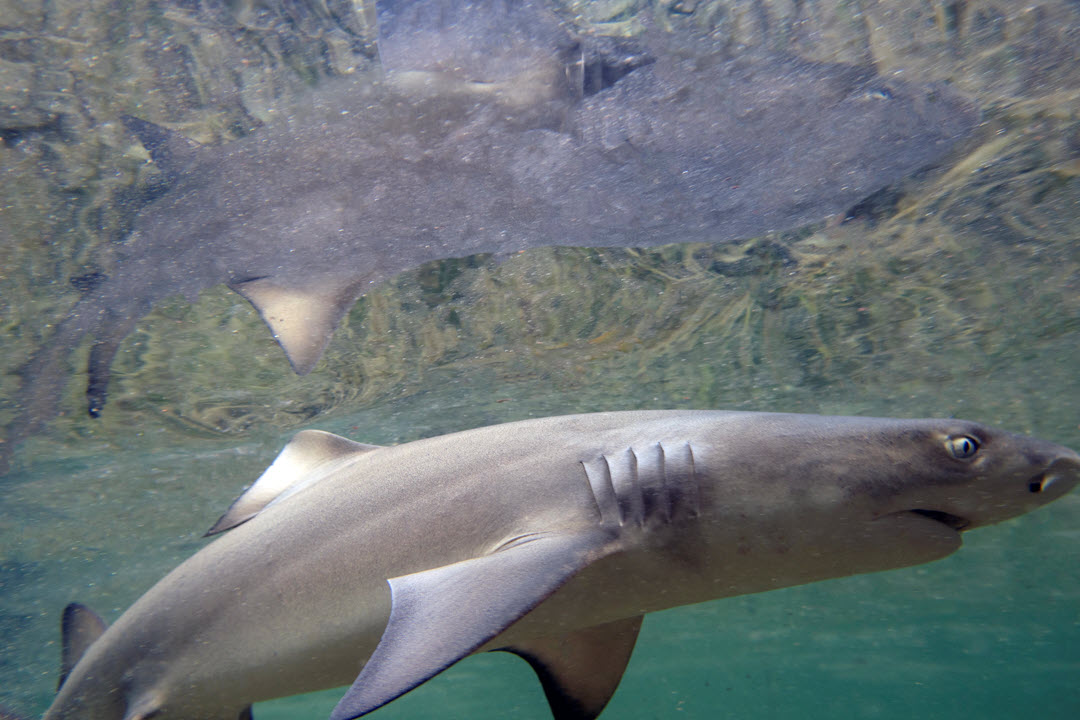
Juvenile Lemon Shark
Image: Whitetip Baby Sharks
Amazing Baby Shark Facts
- Baby sharks are called pups. The term can be used whether a shark hatches from an egg case or is born alive.
- Some sharks hatch from eggs, while others are born alive. Sharks have evolved several different ways of producing young.
- Some baby sharks effectively have belly buttons. In sharks whose embryos develop with a placental connection, a small scar can remain after birth and may be visible for several months.
- A shark egg is often called a mermaid’s purse. More precisely, the “purse” is the leathery egg case surrounding the developing embryo.
- A shark can react to danger before it hatches. Bamboo shark embryos have been observed becoming still in response to electrical signals associated with possible predators.
- Baby sharks usually don’t grow up with their mothers. Once pups are born or hatch, they generally begin independent lives.
- Not every place with baby sharks is a shark nursery. Scientists use specific criteria to identify habitats that young sharks use repeatedly and in greater numbers.
- Some sharks take a very long time to grow up. Sandbar Sharks, for example, may not mature until around 13–14 years old.
- Baby sharks can live in surprisingly different places. Depending on the species, their first home might be a shallow bay, coral reef, estuary, open ocean—or even the deep sea.
SHARK PAGES
SPECIES PAGES
Additional Offsite Reading
The Search for Atlantic Shark Nurseries — NOAA Fisheries
Every year, scientists survey coastal waters along the Atlantic Ocean and Gulf of Mexico to learn where young sharks are born and grow. This NOAA Fisheries story follows that research and shows how scientists identify important shark nursery habitats, from Delaware Bay and Chesapeake Bay to coastal areas of Florida and the Gulf of Mexico. Along the way, researchers encounter young sandbar, blacktip, bull, hammerhead, lemon, tiger, and other sharks and discover that different species prefer different nursery environments.
Read The Search for Atlantic Shark Nurseries at NOAA Fisheries
Five Wild Facts About Shark Reproduction — NOAA Fisheries
This NOAA Fisheries article explores some of the unusual ways sharks reproduce. It explains that different shark species can develop their young in very different ways and includes surprising examples of shark reproduction that show just how varied shark life cycles can be.
Read Five Wild Facts About Shark Reproduction at NOAA Fisheries
Shark Biology — Florida Museum of Natural History
This Florida Museum of Natural History resource answers common questions about shark biology, including how sharks develop, whether sharks lay eggs, what baby sharks are called, and how young sharks use nursery habitats. It is a useful reference for readers who want to learn more about the early life and development of sharks.