
Shark Habitats
Image: Grey Reef Sharks
What Is a Habitat?
A habitat is the natural place where a living thing makes its home. It’s everything that lifeform needs to survive in one spot — food, water, shelter, and the right conditions to grow.
Where an animal lives can shape what it looks like, its social behavior, how it hunts or finds food and even how it reproduces. For example, a shark built for the icy waters of the Arctic wouldn’t survive well on a warm tropical reef, and a reef shark wouldn’t last long in freezing polar seas.
Shark habitats can be divided into Type (what kind of water), Location (where in the water), and Ecosystem (living and non-living things in the environment).
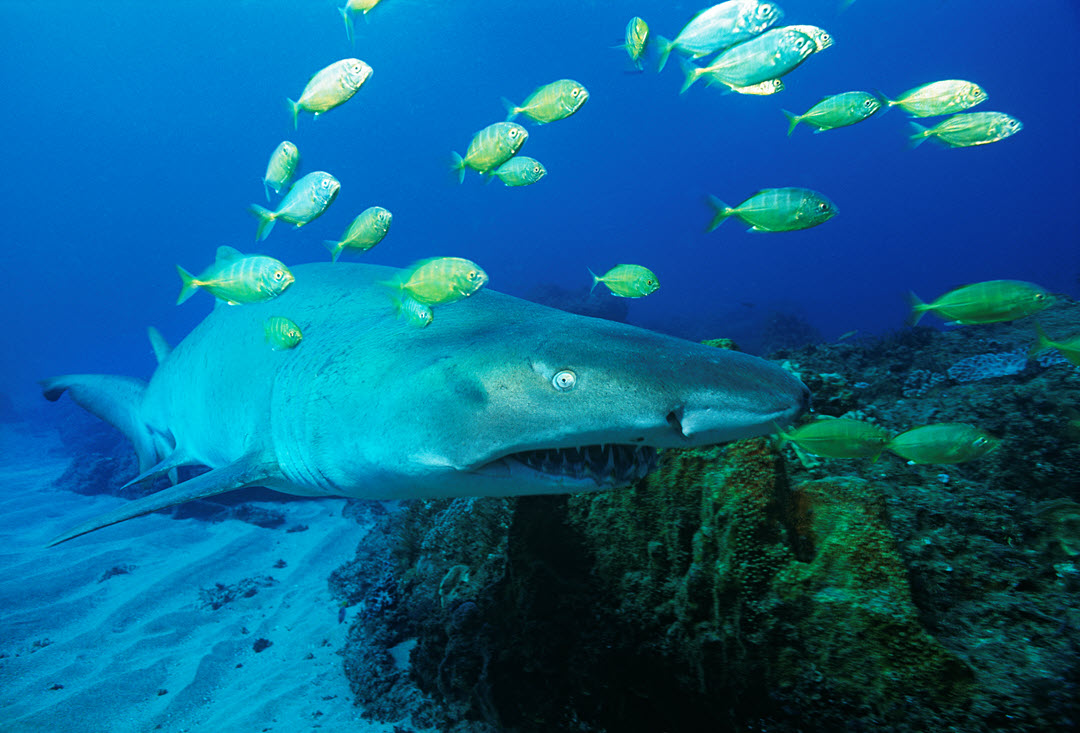
Sand tiger shark in the Indian Ocean.
Habitat Water Type
Type answers a simple question: what kind of water is this? There are three main types of water where sharks are found.
Coastal Waters
Coastal waters extend from the shoreline out into the ocean. The National Weather Service officially defines coastal waters as the area from the shoreline out to 100 nautical miles. U.S. law extends the country’s authority over ocean resources even farther, out to 200 nautical miles, an area called the Exclusive Economic Zone.
Within coastal waters, there are different types of water bodies. These are defined by their physical shape, not by what lives in them. A bay in the Arctic and a bay in the tropics are still both bays, even though each one has different types of ecosystems.
Bay: A part of the coastline that curves inward, where the ocean reaches into the land. Bays are usually more open, with a wider connection to the sea, than a lagoon.
Lagoon: A shallow body of water separated from the open ocean by a sandbar, barrier island, or coral reef. Because of that barrier, a lagoon is more sheltered and cut off from the sea than a bay.
Estuary: A partly enclosed body of water where fresh water from a river mixes with salt water from the ocean. Estuaries can contain many different ecosystems depending on climate and location. This can include mangroves in the tropics, salt marshes in cooler regions, seagrass meadows, and sandy, muddy, or rocky bottoms.
These waters provide feeding, breeding, and nursery areas for many shark species.
Sharks commonly found in coastal waters include bull sharks, lemon sharks, blacktip sharks, bonnetheads, nurse sharks, leopard sharks, tiger sharks, sandbar sharks, and many hammerhead sharks.
Ocean
Beyond the coast lies the open ocean, sometimes called the pelagic zone. There may be no nearby seafloor, reef, or coastline at all. Sharks built for this environment are often strong, efficient swimmers that can cross entire ocean basins.
Sharks associated with the open ocean include blue sharks, oceanic whitetip sharks, great white sharks, shortfin makos, silky sharks, whale sharks, basking sharks, and several species of thresher shark.
Rivers and Lakes
Sharks are mostly marine animals, and only a small number can enter or live in fresh water. Moving between salt water and fresh water requires a shark’s body to control salt and water very differently, which most species can’t do for long. The bull shark is the best-known example, capable of traveling far upstream in rivers. A group of river sharks in the genus Glyphis are also associated with rivers and coastal waters in parts of Asia and Australia.
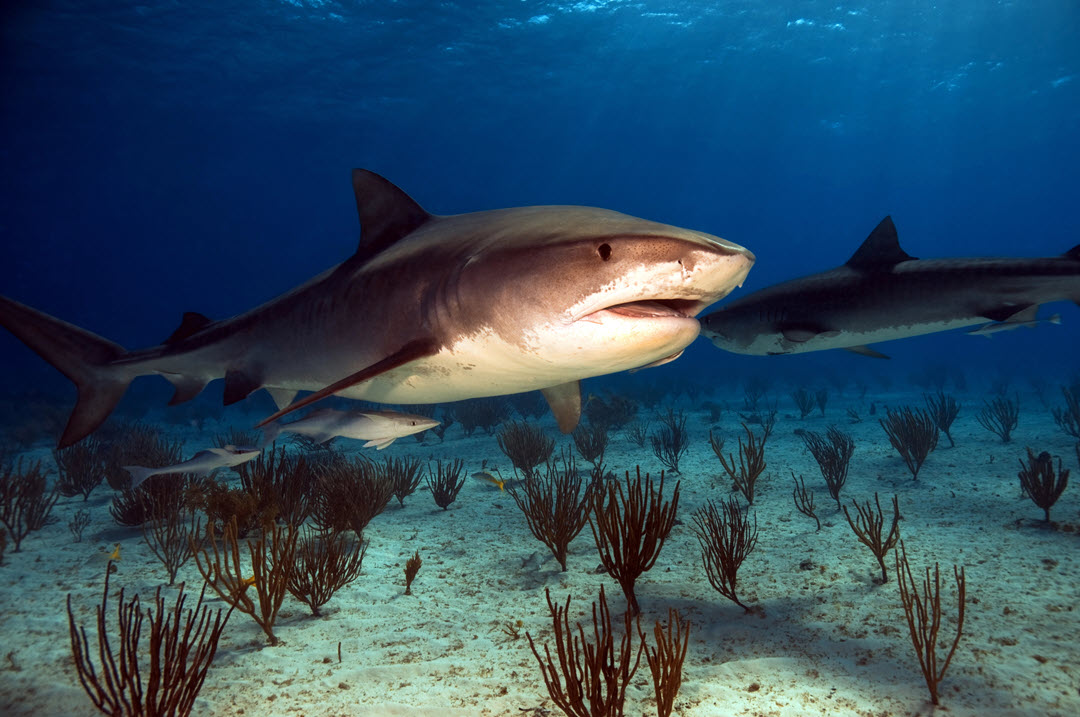
A tiger shark in the Bahamas.
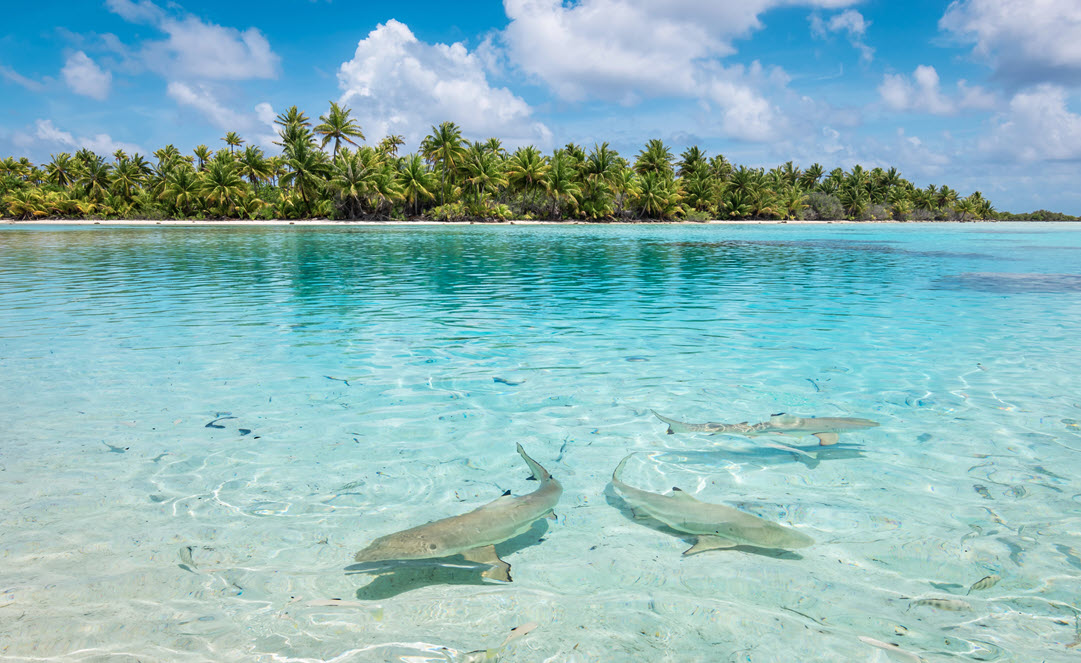
Blacktip reef sharks in a lagoon.
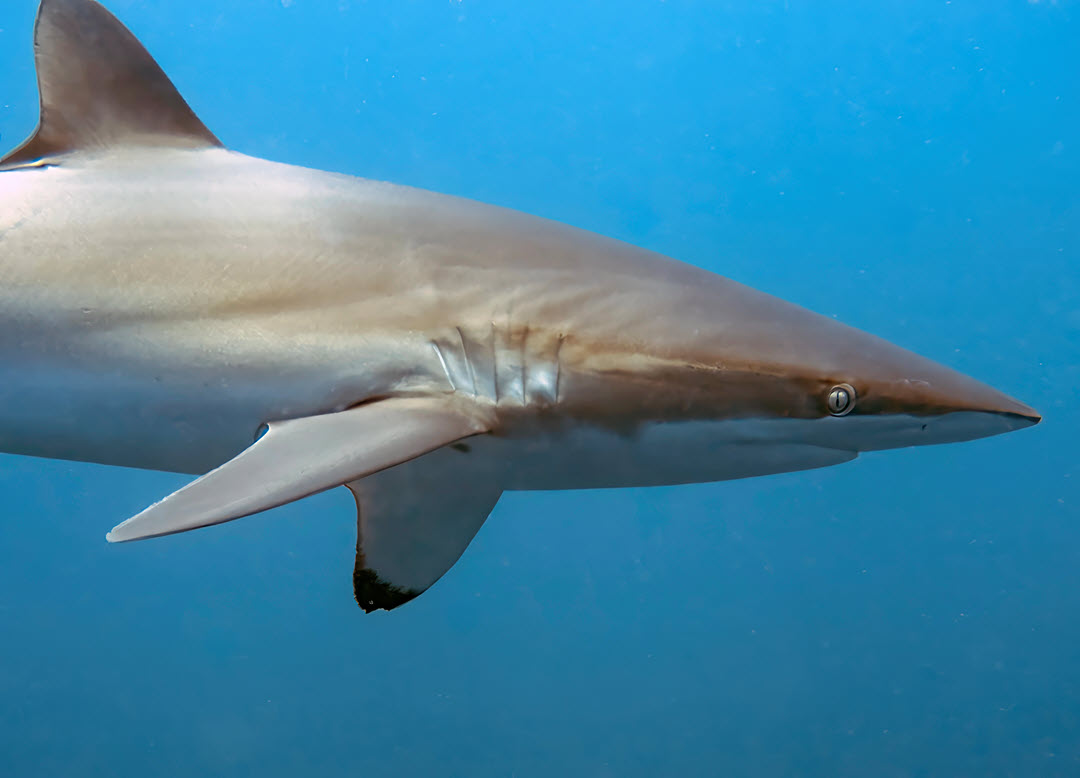
Silky Shark in the Pacific Ocean.
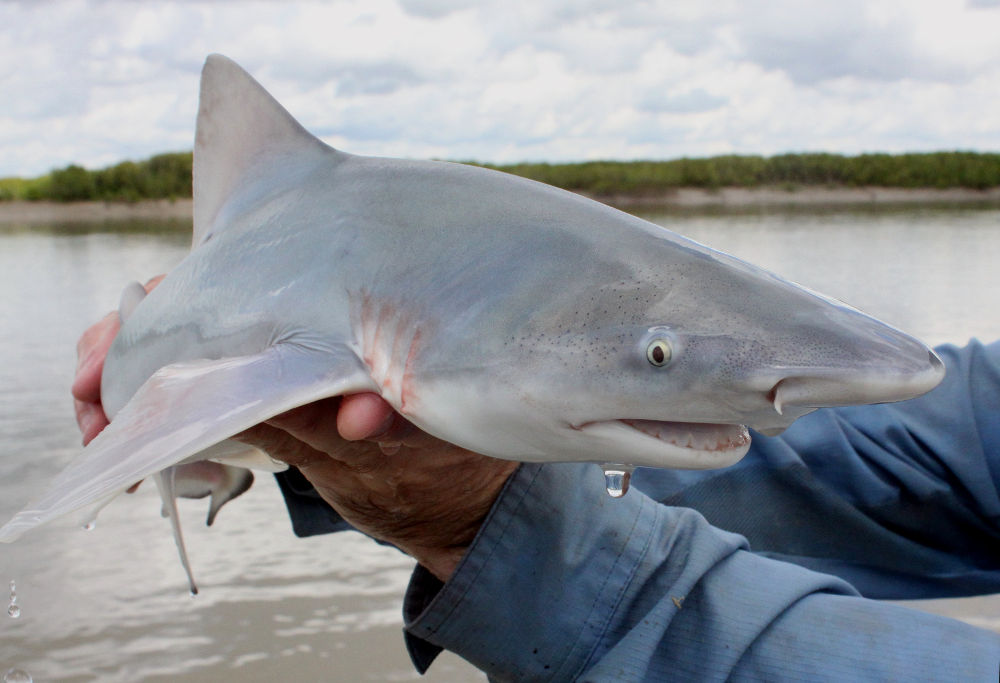
Northern River Shark (Glyphis garricki)
Northern River Shark being handled during a research tagging project. Photo: Peter M. Kyne, Charles Darwin University
SHARK PAGES
SPECIES PAGES
Location in the Water
Location answers a different question. Not what kind of water, but where in that water (water column) the shark actually spends its time — resting on the bottom, swimming near the surface, or somewhere else entirely. This applies to coastal areas, oceans, the open ocean and many other types of water.
The water column is the vertical stretch of water from the surface down to the seafloor, at any single spot in the ocean. It’s not a place on a map — it’s a way of describing depth. The water column isn’t the same everywhere. Near the shore, it might only be a few feet deep. Far out in the open ocean, it can stretch thousands of feet down before reaching the bottom.
Scientists divide the water column into zones based on depth and how much sunlight reaches them.
1. The epipelagic zone, or sunlight zone, reaches down to about 200 meters (660 feet) and gets enough light for plants like phytoplankton to grow.
2. Below that, the mesopelagic zone, or twilight zone, extends to about 1,000 meters (3,300 feet), where sunlight is too dim to support plant growth.
3. Below about 1,000 meters lies the bathypelagic zone, the midnight zone, where no sunlight reaches at all.
Location of Sharks in the Water Column
Sea Floor
Many sharks are bottom-dwellers, spending most of their time resting on or moving across the seafloor. This can happen at any depth, from a shallow sunlit bay to the darkest bathypelagic zone. Angel sharks can partially bury themselves in sand. Nurse sharks, horn sharks, bamboo sharks, catsharks, and many wobbegongs also spend much of their time on or near the bottom.
Deep Sea
The deep sea begins below the sunlit epipelagic zone and extends through the twilight and midnight zones into some of the darkest, coldest, highest-pressure environments on Earth. Many sharks have adapted to life here, often with large eyes or other sensitive sensory systems. Some, including many lanternsharks, produce their own light through bioluminescence.
Deep-sea sharks include lanternsharks, gulper sharks, sleeper sharks, frilled sharks, sixgill sharks, cookiecutter sharks, and goblin sharks. Because they’re so hard to observe, scientists still know relatively little about many of these species.
Surface
Some sharks spend much of their time near the top of the water column, in the sunlit epipelagic zone. Basking sharks, for example, are often seen swimming at the surface with their mouths open, filtering plankton from the water.
Any Depth
Some sharks don’t stay in one zone at all — they move between the sunlight, twilight, and even midnight zones as a normal part of their lives. Blue sharks and whale sharks are known to make regular deep dives before returning toward the surface. Cookiecutter sharks make dramatic daily trips, staying deep during the day and moving up toward the surface at night to feed. This pattern is called vertical migration.
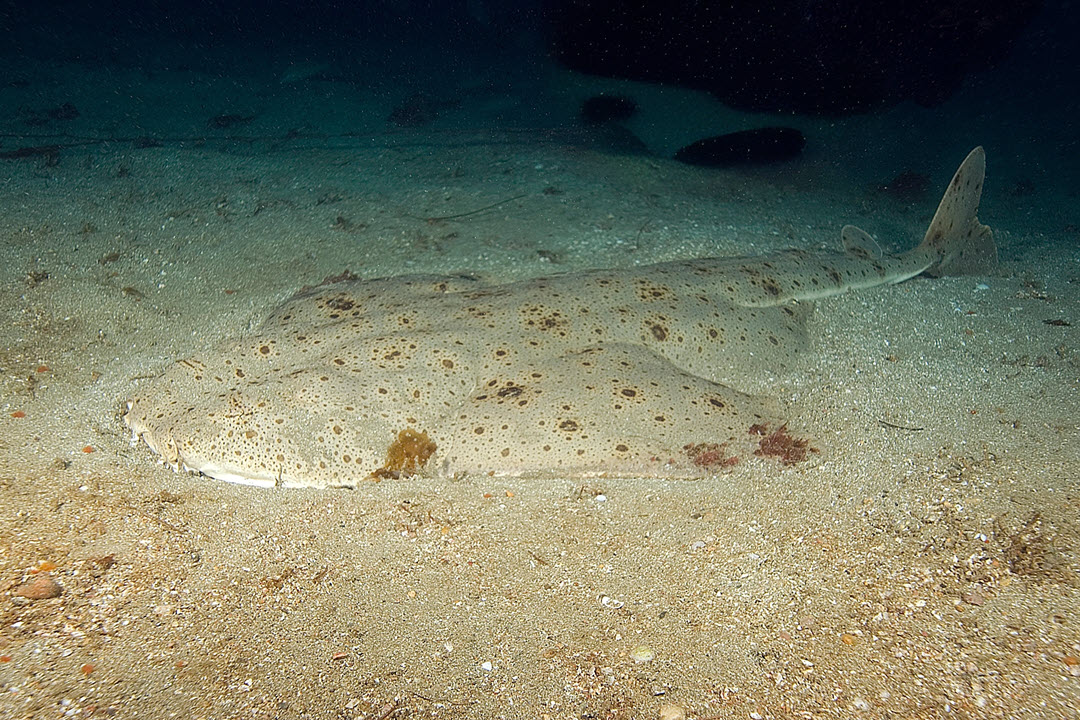
Angel shark resting on the seafloor.
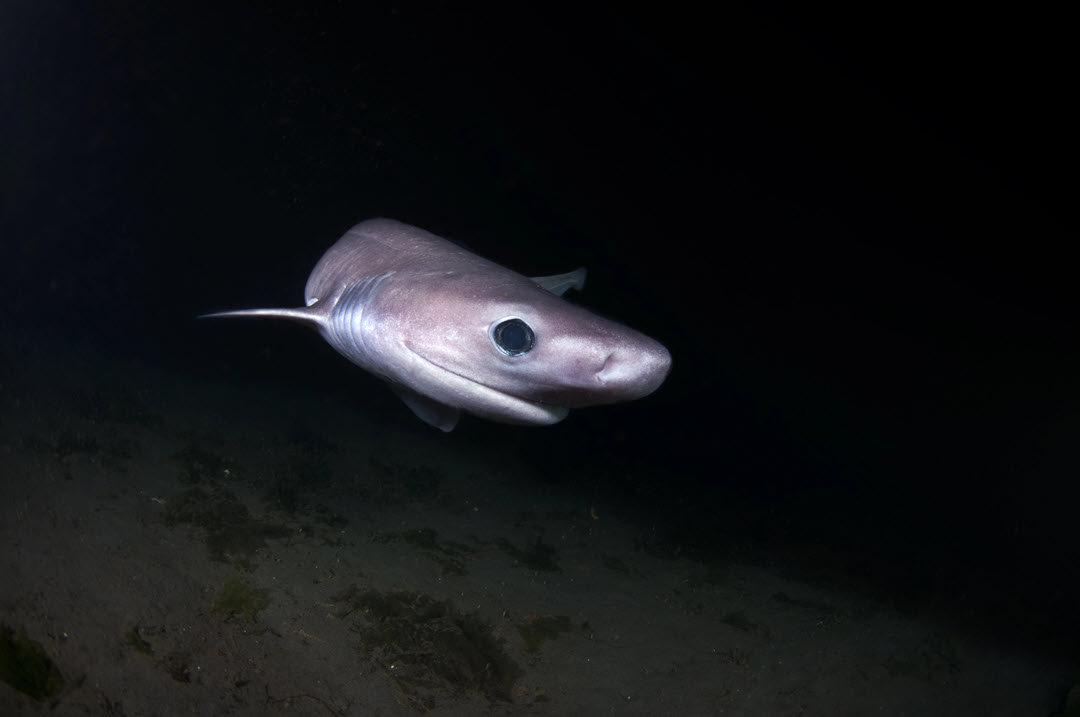
Young bluntnose sixgill shark in the deep sea.
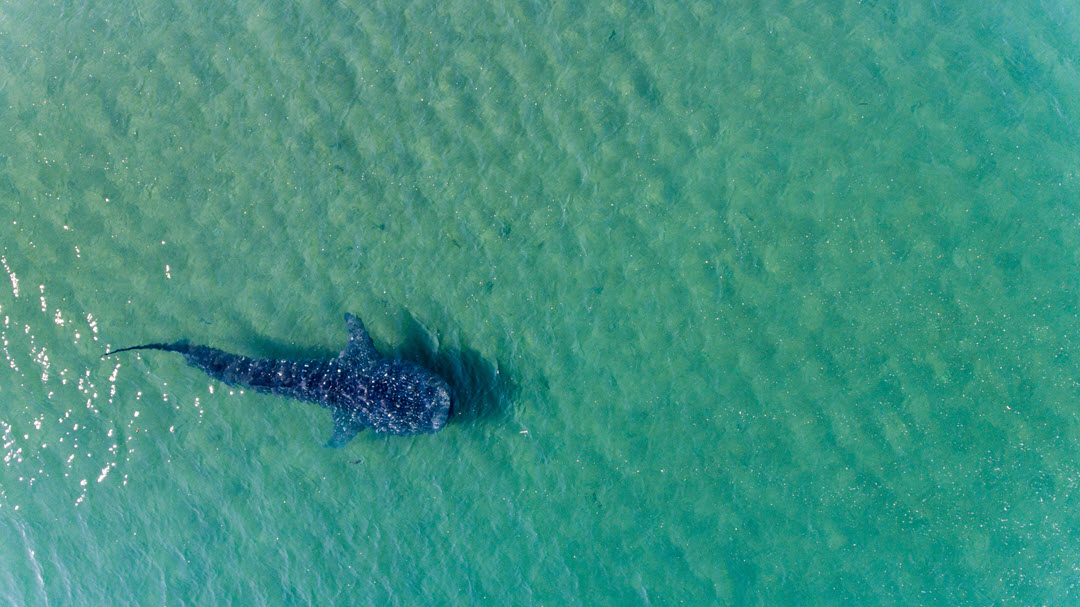
Whale shark near the surface.
Ecosystem
An ecosystem is a community of living things — plants, animals, and other organisms. It also includes the nonliving parts of their environment, like water, sunlight, and the seafloor, all interacting together.
Some ecosystems are built mostly by living things, like a coral reef or a kelp forest. Others are shaped mostly by the nonliving material of the seafloor itself, like sand, mud, or rock. That material still supports its own community of worms, mollusks, and other animals living in and on it. Ecosystem asks a specific question about a shark’s habitat: what’s actually there? Two sharks can be in the exact same Type and Location and still live in a completely different Ecosystem. One might live on a coral reef, while the other lives on a plain sandy bottom nearby.
Coral
Coral reefs are complex ecosystems built by colonies of tiny coral animals. Most occur in warm, shallow, clear tropical water where sunlight can reach the reef. Their caves, ledges, and channels create countless places for marine animals to live.
Sharks found around coral reefs include whitetip reef sharks, blacktip reef sharks, grey reef sharks, Caribbean reef sharks, nurse sharks, lemon sharks, zebra sharks, and several species of wobbegong. Coral reefs aren’t only found close to shore, either. Some reefs, called atolls, sit far out in the open ocean — so a reef shark isn’t always a coastal shark.
Kelp
Kelp forests grow in cool, nutrient-rich coastal waters. Giant kelp and other large brown algae form dense underwater forests that stretch from the seafloor toward the surface. Kelp always needs a rocky bottom to anchor to, so kelp forest habitat and rocky-bottom habitat almost always overlap.
Sharks that use kelp forests include leopard sharks, sevengill sharks, horn sharks, swell sharks, soupfin sharks, and great white sharks. Some swim through the kelp itself, while others are more commonly found along its edges.
Rocky
Rocky seafloors and rocky coastlines show up in many different settings, from kelp forests to open rocky reefs with no kelp at all. Bottom-dwelling sharks that favor rocky habitat include the Port Jackson shark and other members of the bullhead shark family. Many of the same species found in kelp forests also show up here.
Sandy Shore
Sandy shores form on open coasts and beaches where waves and currents are strong enough to carry away fine silt, leaving behind coarser, shifting sand. This constant wave action keeps the sand well-mixed and oxygen-rich. Sandy shores support burrowing crustaceans, certain mollusks, and other invertebrates adapted to a shifting, higher-energy environment.
Sharks that use open sandy shores and shelves include angel sharks, which bury themselves in the loose sand to ambush prey. Horn sharks and other bottom-associated species also hunt across these exposed sandy areas.
Mudflat
Mudflats form in sheltered, low-energy areas, usually inside bays, estuaries, or behind barrier islands, where calm water allows fine silt and clay to settle instead of washing away. That fine sediment carries much more organic material than sandy shores, often fed by nearby mangroves or salt marshes. Mudflats are exposed at low tide and covered again at high tide. Despite covering only a small share of the coastline, they’re among the most productive ecosystems in the world. Mudflat communities are typically dominated by burrowing worms and mud-dwelling mollusks, often in very high numbers, making mudflats an especially rich feeding ground.
Sharks that use mudflats tend to be species associated with sheltered estuaries and bays, including bonnethead sharks and young bull sharks feeding in these nutrient-rich, low-energy waters.
Mangroves
Mangrove forests grow along protected tropical and subtropical shorelines. Their tangled, submerged roots create sheltered areas packed with fish and other marine life, making them especially important nursery habitat for young sharks.
Sharks using mangrove habitat include lemon sharks, bull sharks, blacktip sharks, and bonnetheads, though the exact species present varies by region.
Salt Marsh
Salt marshes are coastal wetlands covered in grasses and other salt-tolerant plants, regularly flooded by the tide. They take the place of mangroves in cooler climates, since true mangrove trees can’t survive freezing temperatures. Like mangroves, salt marshes act as important nursery habitat, filter pollutants, and help protect the shoreline from erosion.
Sharks that use salt marsh habitat are generally the same coastal species found in mangroves in warmer regions. This includes bull sharks, blacktip sharks, and other sharks that use the shallow, sheltered water for feeding and shelter.
Seagrass Meadows
Seagrasses are flowering plants that grow underwater in shallow coastal seas, forming meadows across sandy and muddy seafloors. These meadows provide food and shelter for fish, sea turtles, crustaceans, and other marine animals — including young sharks.
Sharks found in and around seagrass meadows include lemon sharks, bonnetheads, blacktip sharks, and nurse sharks.
Open Water (Pelagic Ecosystem)
Open water is a real ecosystem in its own right, even though it isn’t tied to a seafloor or any plants. Scientists call it the pelagic ecosystem, and it’s actually one of the largest ecosystems on Earth. It’s built around tiny drifting plants and animals called plankton. These form the base of an entire food web that supports everything from small fish to whales. Sharks that spend their lives swimming through this open-water ecosystem fall into this category. They don’t rest on a seafloor or live around a fixed reef or forest. Blue sharks, oceanic whitetip sharks, makos, and silky sharks are all good examples of true open-water swimmers.
Abyssal Plain
The abyssal plain is a vast, flat stretch of seafloor found at extreme ocean depths, generally between 3,000 and 6,000 meters (9,800 to 19,700 feet). It covers more than half of Earth’s surface, making it one of the largest ecosystems on the planet, even though it’s also one of the least explored. Almost no food is produced there locally, so life on the abyssal plain depends on organic material drifting down from far above, called marine snow.
Sharks found on or near the abyssal plain include sleeper sharks and frilled sharks, both adapted to life in this dark, cold, high-pressure environment.
Polar
Polar ecosystems form in the cold waters of the Arctic and Antarctic, shaped by very low temperatures, sea ice, and dramatic seasonal changes in daylight. Sharks living here have adaptations that let them function in the cold, whether they stay year-round or migrate through seasonally.
Cold-water sharks include the Greenland shark, Pacific sleeper shark, spiny dogfish, porbeagle, and salmon shark.
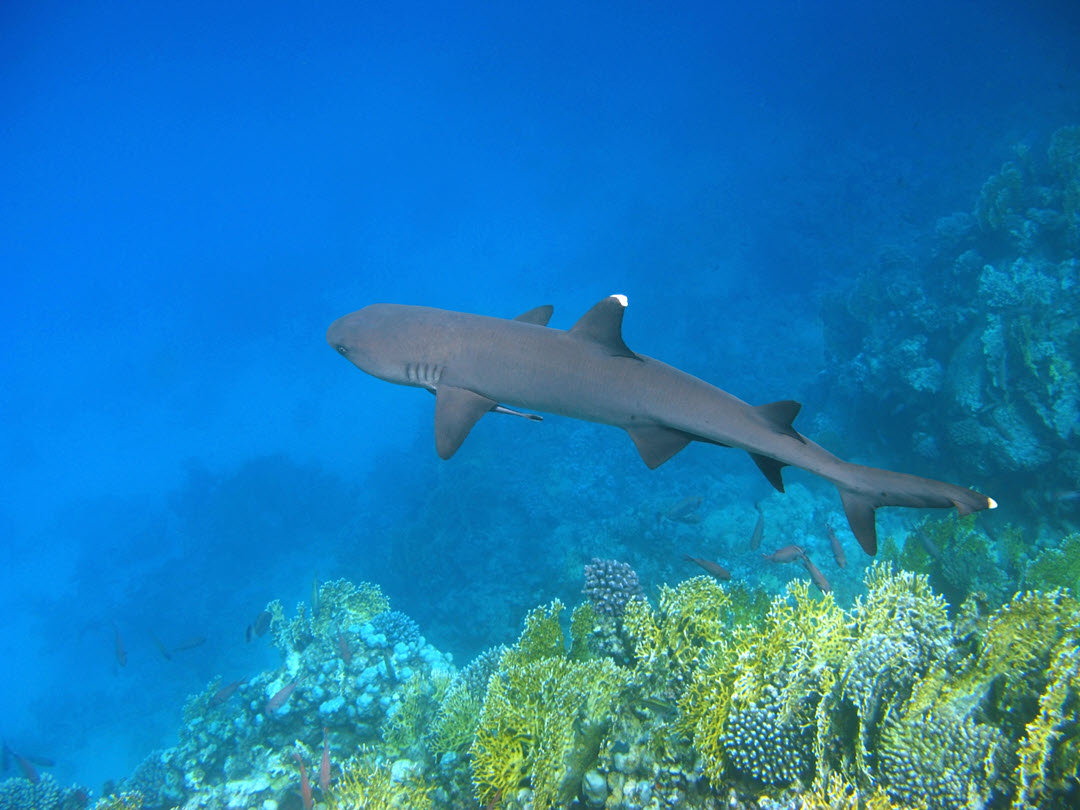
Whitetip Reef Shark swimming through a coral reef.
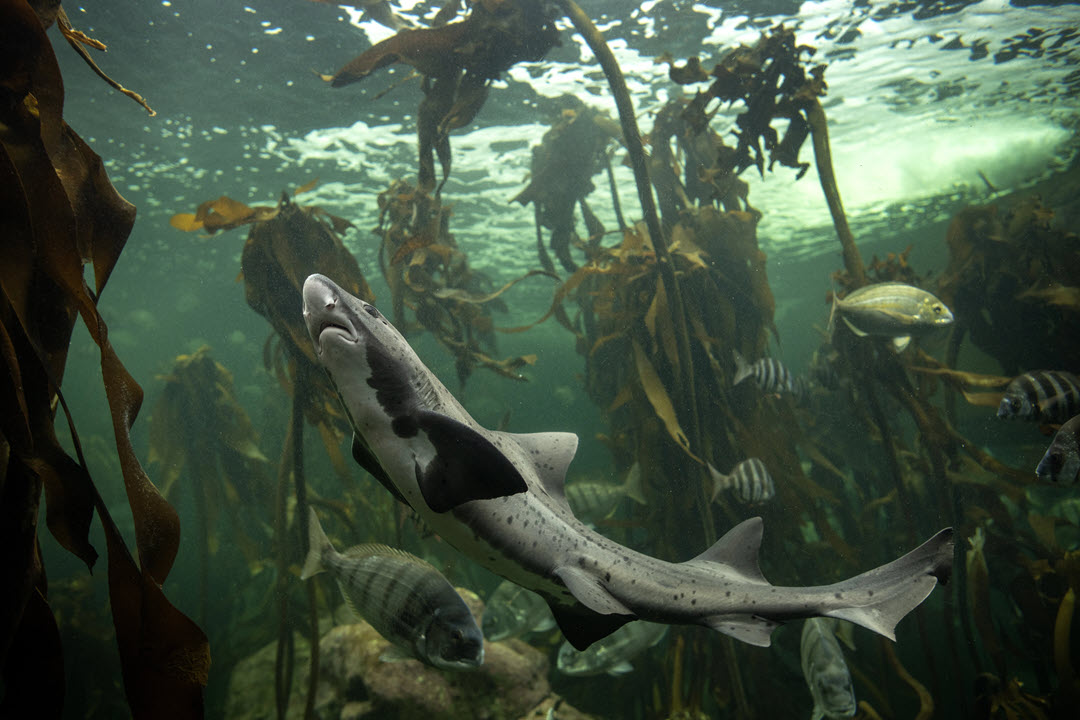
Sharptooth Houndshark in a Kelp Forest
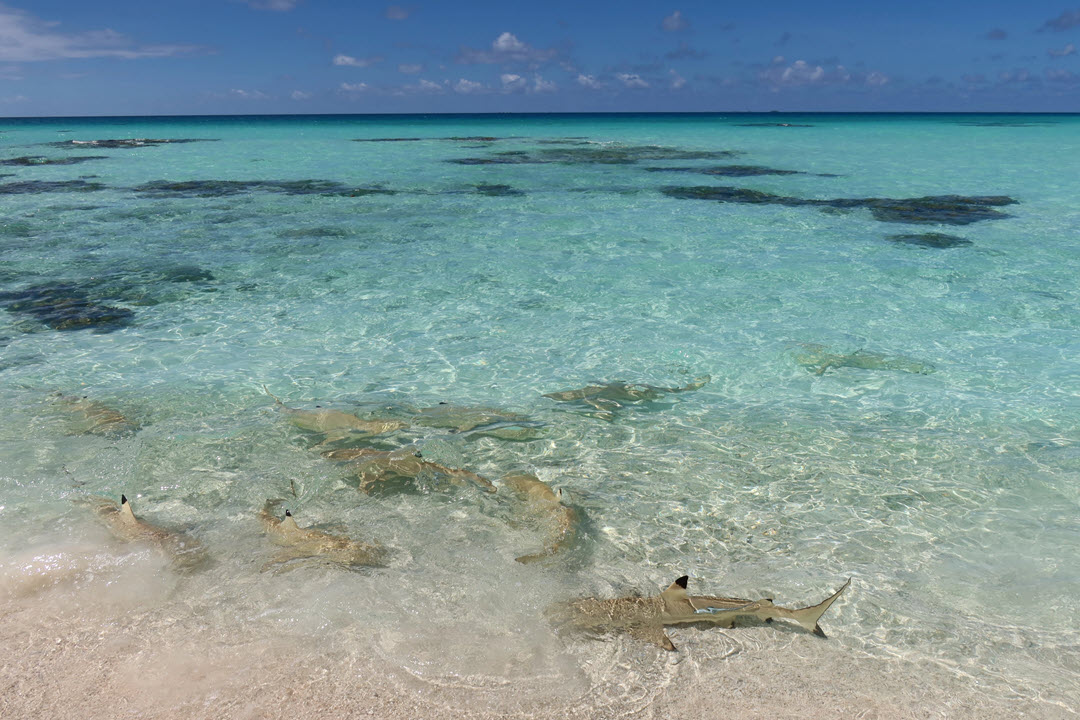
Blacktip reef sharks sandy shore.
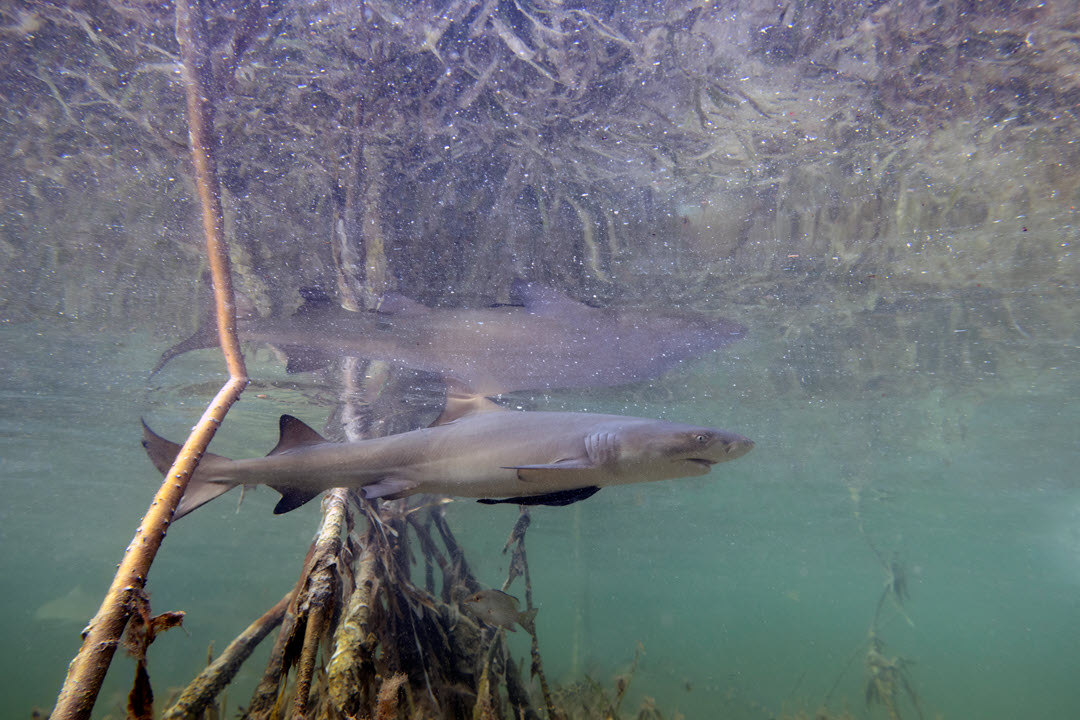
Young lemon shark swimming through a mangrove in the Bahamas.
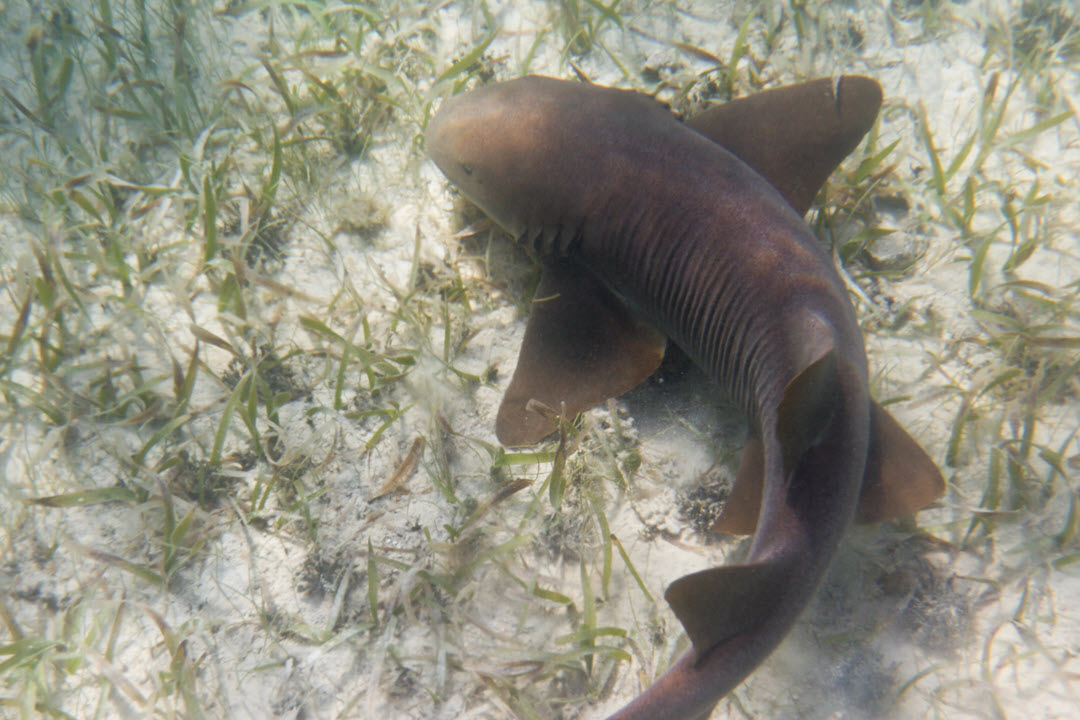
Nurse shark swimming in seagrass.
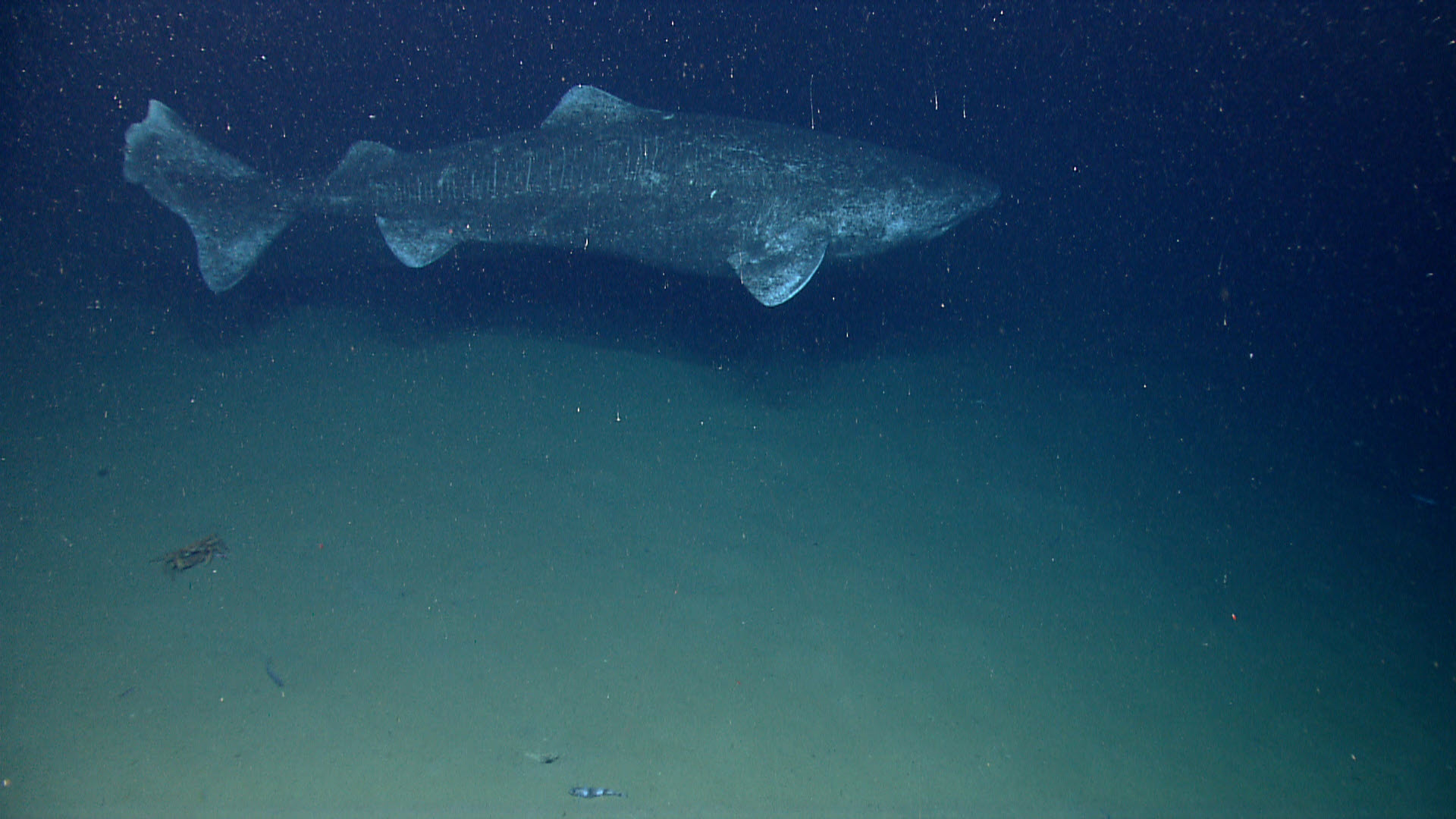
Greenland Shark | NOAA