
Zebra Shark
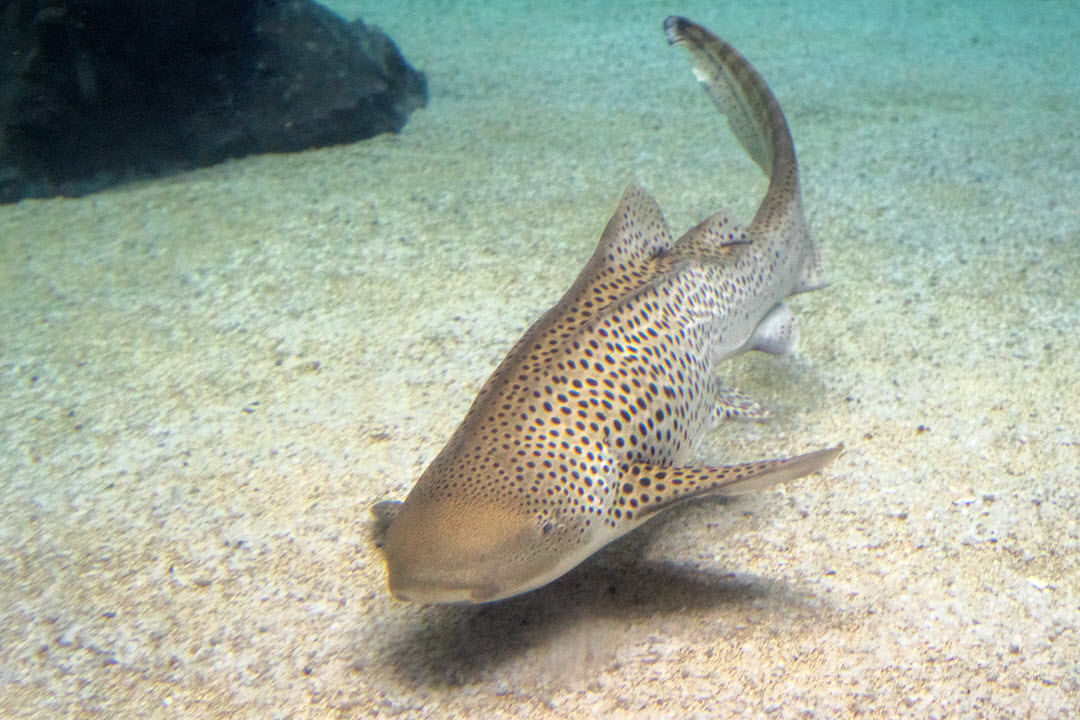
The Zebra Shark is one of the most visually striking sharks in the ocean, though it doesn’t look the same its whole life. Young Zebra Sharks are dark brown with bold white or yellow stripes, giving the species its name. As they grow, that pattern fades into a covering of dark spots on a lighter body, transforming a “zebra” into something that looks more like a leopard.
| Common Name | Zebra Shark |
| Other Common Names | Leopard Shark (Australia — not to be confused with Triakis semifasciata) |
| Scientific Name | Stegostoma tigrinum |
| Family | Stegostomatidae |
| Order | Orectolobiformes |
| Conservation Status | Endangered (IUCN) |
Because of this dramatic change, Zebra Sharks are sometimes called Leopard Sharks in parts of the world, especially Australia. This can cause real confusion, since there’s a completely different, unrelated species that goes by the name Leopard Shark in North America (Triakis semifasciata). The two aren’t closely related and don’t even live in the same ocean.
Zebra Sharks are slow, gentle bottom-dwellers found on coral reefs and sandy flats throughout the Indo-Pacific. They’re generally harmless to people and are popular among divers for their calm behavior and unusual appearance.
Today, Zebra Sharks face real conservation challenges, and their populations have declined in parts of their range due to fishing pressure and habitat loss.
What Is a Zebra Shark?
The Zebra Shark (Stegostoma tigrinum) is the only living member of its family, Stegostomatidae, within the order Orectolobiformes, or carpet sharks.
The genus name Stegostoma comes from Greek words meaning “covered mouth,” referring to the shark’s rounded snout, which partly conceals its upper jaw. The species name tigrinum is Latin for “of tigers,” referring to the bold striped pattern seen in juveniles.
The species was known scientifically as Stegostoma fasciatum for many years before taxonomists changed its accepted name to Stegostoma tigrinum in 2019.
Physical Appearance
Zebra Sharks have long, cylindrical bodies with five ridges running along their sides and a broad, flattened head with small eyes.
Newly hatched Zebra Sharks are dark brown or black with bold white or yellow stripes. This pattern likely helps camouflage them among reef shadows and may even help them resemble venomous sea snakes to potential predators. As the shark matures, this striped pattern gradually fades and is replaced by small dark spots scattered across a lighter, yellowish-brown body.
One of the Zebra Shark’s most distinctive features is its extremely long tail. The caudal fin can make up nearly half of the shark’s total body length.
Adults commonly reach about 6 to 8 feet (1.8 to 2.5 meters) long, with a maximum recorded length of about 11.6 feet (3.54 meters). Some sources report exceptional individuals reaching close to 12 feet (3.7 meters).
Where Do Zebra Sharks Live?
Zebra Sharks live throughout the tropical waters of the Indo-Pacific. Their range stretches from the Red Sea and East Africa across to New Caledonia and Fiji, and from southern Japan down to New South Wales, Australia.
They’re closely associated with coral reefs and sandy flats in warm, shallow water. FishBase records the species from the surface to about 300 feet (90 meters). They’re most often found much shallower, though, generally between 16 and 100 feet (5 to 30 meters).
Young Zebra Sharks tend to stay in shallow, protected reef habitats where food is abundant and predators are less common.
Social Behavior
Zebra Sharks are generally solitary and slow-moving, spending much of the day resting motionless on the seafloor.
They’re largely nocturnal, becoming more active at night to search for food. During the day, they’re often seen resting on sand or coral, sometimes propped up on their pectoral fins.
Zebra Sharks are docile and non-aggressive toward people. Divers can often approach them closely without disturbing them, which has made the species a popular subject for underwater photography.
What Do Zebra Sharks Eat?
Zebra Sharks feed mainly on mollusks, especially gastropods and bivalves such as snails and clams. Their diet also includes small fish, shrimp, crabs, and sea urchins.
Because many of these prey animals hide in sand or among rocks and coral, Zebra Sharks rely on strong senses rather than speed to locate a meal.
How Do Zebra Sharks Hunt?
Zebra Sharks are slow, methodical hunters that search reefs and sandy areas for hidden prey rather than chasing fast-moving animals.
They use smell, the lateral line, and the ampullae of Lorenzini to detect prey hidden in sand or tucked into crevices. Once prey is located, the shark’s small, numerous teeth are well suited for gripping and crushing hard-shelled mollusks and crustaceans.
Their flexible, muscular bodies also let them squeeze into narrow spaces between rocks and coral while searching for food.
Reproduction and Life Cycle
Unlike many sharks featured on this site, Zebra Sharks reproduce through oviparity, meaning females lay eggs rather than giving birth to live young.
Females produce large, dark egg capsules, sometimes called “mermaid’s purses,” that can measure up to about 7 inches (17 centimeters) long. These egg cases have long fibers at the corners that anchor them to rocks, coral, or the seafloor. Inside, the developing embryo is nourished by a yolk sac until it’s ready to hatch, a process that typically takes several months.
Newly hatched Zebra Sharks measure about 8 to 12 inches (20 to 30 centimeters) long and are fully independent from birth.
In a small number of documented cases, female Zebra Sharks in captivity have reproduced through parthenogenesis, producing offspring without a male. Genetic testing confirmed several of these pups had no paternal DNA at all. This unusual ability has made Zebra Sharks an important subject for reproductive research.
Zebra Sharks are thought to live around 25 to 30 years.
Evolution & Adaptations
Zebra Sharks belong to the carpet shark order, Orectolobiformes. They’re the only living species in their own family, though, Stegostomatidae, making them a genuinely unique branch of the shark family tree.
One of their most striking adaptations is their dramatic color change with age. Juvenile striping likely provides camouflage and may deter predators by resembling a banded sea snake. The adult spotted pattern, meanwhile, helps the fully grown shark blend into the dappled light and shadow of coral reefs.
Their long, flexible bodies and powerful tails let them maneuver easily through tight spaces in reef environments. Their five ridged ribs of raised skin along the body may also help reduce drag or provide some structural support.
Like all sharks, Zebra Sharks have a lateral line, which detects vibrations, and the ampullae of Lorenzini, which detect weak electrical signals produced by nearby animals. These senses are especially useful for locating prey hidden in sand or coral crevices.
The species’ documented capacity for parthenogenesis is also considered a notable evolutionary adaptation, potentially allowing females to reproduce even when no mate is available.
Why Zebra Sharks Are Important
As predators of mollusks and other bottom-dwelling invertebrates, Zebra Sharks help keep populations of snails, clams, and crustaceans in balance on the coral reefs where they live.
They’re also valuable flagship animals for reef conservation and ecotourism throughout the Indo-Pacific, drawing divers and supporting local economies built around responsible wildlife tourism.
Their unusual reproductive biology, including documented parthenogenesis, has made them important research subjects for understanding shark reproduction more broadly. This work is especially valuable for conservation breeding programs working with endangered species.
Conservation
The Zebra Shark is currently classified as Endangered by the International Union for Conservation of Nature (IUCN).
Populations have declined in parts of the species’ range due to commercial and artisanal fishing, bycatch, and the degradation of coral reef habitats. Because Zebra Sharks are closely tied to reef ecosystems, they’re especially vulnerable to habitat loss.
Conservation efforts include fishing regulations in some countries, marine protected areas, and captive breeding programs at aquariums that sometimes reintroduce young sharks into protected wild habitats.
Research & Quotes
Zebra Sharks have become an important species for reproductive research, particularly following documented cases of parthenogenesis in captive populations. Genetic testing has confirmed that some pups produced this way carry no genetic material from a father at all.
Researchers also use tagging and underwater surveys to study Zebra Shark movements, habitat use, and population trends across the Indo-Pacific, helping guide conservation planning for the species.
Because they’re generally calm around divers, Zebra Sharks have also been useful subjects for researchers studying shark behavior up close in the wild.
Zebra Sharks in Culture
Zebra Sharks are popular attractions at aquariums and a favorite among divers throughout the Indo-Pacific, thanks to their calm temperament and striking appearance.
Their name changes with age have made them an interesting example for public education. It helps people understand that a single shark species can look dramatically different at different life stages.
In parts of Australia, adults are more commonly called Leopard Sharks. There, the species has become a well-known symbol of reef diving and marine education, though the naming overlap with the unrelated North American Leopard Shark remains a common source of confusion.
Today, the Zebra Shark’s gentle nature and unusual life story have made it one of the more approachable and widely loved sharks among divers and aquarium visitors alike.
Interesting Zebra Shark Facts
- Young Zebra Sharks are striped, but adults are covered in spots instead.
- In parts of Australia, adults are commonly called Leopard Sharks — a different animal from the North American Leopard Shark.
- Their long tail can make up nearly half of their total body length.
- They spend much of the day resting motionless on the seafloor.
- They’re most active at night.
- They feed mainly on snails, clams, and other mollusks.
- They’re generally calm and non-aggressive toward divers.
- Adults commonly reach 6 to 8 feet (1.8 to 2.5 meters) long.
- The largest recorded individuals have reached about 11.6 feet (3.54 meters).
- Unlike most sharks featured on this site, Zebra Sharks lay eggs rather than giving birth to live young.
- Their egg cases are sometimes called “mermaid’s purses.”
- Newly hatched pups measure about 8 to 12 inches (20 to 30 centimeters) long.
- Some captive females have reproduced without a mate through parthenogenesis.
- They’re thought to live around 25 to 30 years.
- The Zebra Shark is currently classified as Endangered by the IUCN.
SHARK PAGES
SPECIES PAGES