
Bonnethead Shark
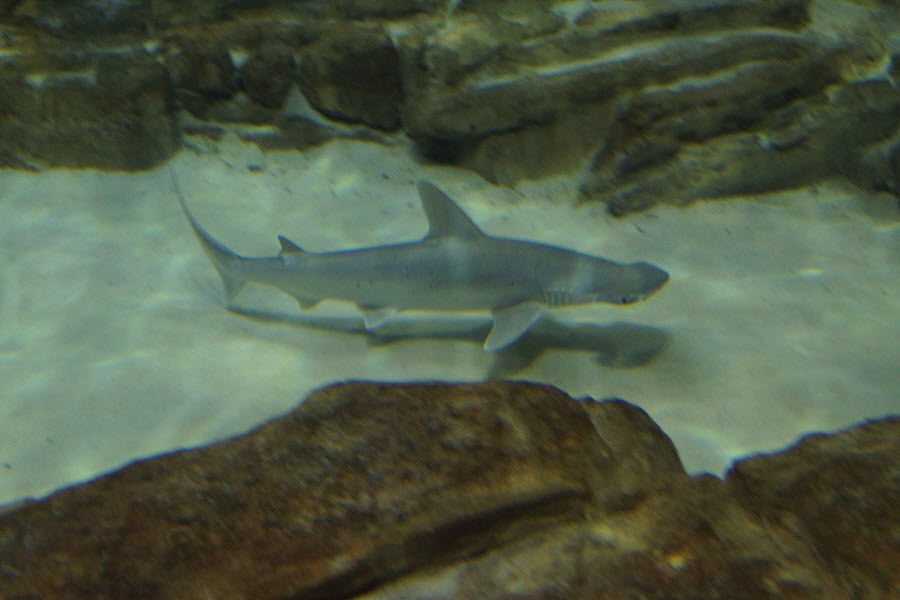
The Bonnethead Shark is the smallest member of the hammerhead shark family. Its smooth, rounded head looks more like a shovel than the wide hammer seen in larger hammerheads. Bonnetheads live in warm, shallow coastal waters, where they search seagrass beds, sandy bottoms, and bays for food.
Bonnetheads are also unusual because their diet includes both animals and seagrass. Research has shown that they can actually digest seagrass and gain nutrients from it. This makes the Bonnethead the first shark shown to use an omnivorous digestive strategy.
These small hammerheads often gather in groups and spend much of their lives in productive coastal habitats. Their unusual head shape, diet, and social behavior have made them an important species for scientists studying shark biology.
What Is a Bonnethead Shark?
The Bonnethead Shark (Sphyrna tiburo) belongs to the hammerhead shark family, Sphyrnidae, and the order Carcharhiniformes, or ground sharks. It’s the smallest living member of the hammerhead family.
The Great Hammerhead and Scalloped Hammerhead have wide, straight heads. Instead, the Bonnethead has a smooth, rounded head shaped somewhat like a shovel or bonnet. This flattened head is called a cephalofoil.
Bonnetheads are closely related to other hammerhead sharks, but they’ve developed a very different lifestyle. They’re small coastal sharks that feed heavily on crabs and other bottom-dwelling animals and also digest seagrass.
Physical Appearance
Bonnethead Sharks have slender bodies and broad, rounded heads. The front edge of the head forms a smooth semicircle, giving the shark its distinctive shovel-like appearance.
Adults are commonly about 3 to 4 feet (0.9 to 1.2 meters) long and can reach about 5 feet (1.5 meters). The largest recorded individuals weigh around 24 pounds (11 kilograms). Females are generally larger than males.
The upper body may be gray, brownish, or greenish, while the underside is much lighter. Small dark spots may also appear along the back and sides. This darker-above and lighter-below color pattern helps the shark blend into its surroundings.
The eyes sit near the outer edges of the head, giving the shark a wide field of vision. Adult males also develop a noticeable bulge along the front of the head, while females keep a smoother, more rounded head shape.
Where Do Bonnethead Sharks Live?
Bonnethead Sharks live in warm, shallow coastal waters of the western Atlantic Ocean. Sphyrna tiburo is found mainly from the southeastern United States south through the Gulf of Mexico. Its range continues through the Bahamas and parts of the Caribbean to around Belize.
They’re common in bays, estuaries, shallow lagoons, seagrass beds, sandy and muddy areas, and around some coral reefs. These habitats provide both food and protected areas for young sharks.
Bonnetheads usually remain fairly close to shore. They may move between shallow and deeper water during the day and night and may also make seasonal movements as water temperatures change. In parts of the southeastern United States, Bonnetheads move north during warmer months and return south when the water becomes cooler.
Social Behavior
Bonnethead Sharks are social compared with many other sharks. They’re often found in small groups and may sometimes gather in much larger schools.
Males and females don’t always travel together. Scientists have found that Bonnetheads often form groups made up mostly of sharks of the same sex or similar size. These groups can change during the year as the sharks move, feed, and reproduce.
Bonnetheads aren’t considered territorial. Several sharks may use the same feeding areas, especially where crabs and other prey are plentiful.
Their schooling behavior may help them move through coastal habitats and locate good feeding areas. Scientists are still studying exactly how Bonnetheads interact with one another.
What Do Bonnethead Sharks Eat?
Bonnethead Sharks eat both animals and plant material. Crabs are especially important in their diet, but they also eat shrimp, small fish, squid, octopuses, snails, clams, and other small marine animals.
They also consume seagrass. For many years, scientists assumed that Bonnetheads swallowed the grass by accident while searching for crabs and other prey. Research later showed that the sharks can actually digest seagrass and absorb nutrients from it. This means Bonnetheads are omnivores — animals that get nutrition from both plants and animals. The amount of seagrass in the diet can vary, and animal prey remains an important part of what Bonnetheads eat.
How Do Bonnethead Sharks Hunt?
Bonnetheads spend much of their feeding time searching close to the bottom for crabs and other small animals. They often patrol seagrass beds, sandy areas, and muddy bottoms where prey can hide.
The shark sweeps its broad head over the bottom while using smell, vision, its lateral line, and its electrical senses to locate prey. Studies have found that Bonnetheads often move onto shallow grass flats at night, when many small invertebrates are active. They move back into deeper water during the day.
When a Bonnethead finds a crab or other hard-shelled animal, it grabs the prey with its jaws. Its crushing teeth break the shell before it swallows the animal.
Reproduction and Life Cycle
Bonnethead Sharks give birth to live young. They reproduce through placental viviparity, which means the developing pups eventually receive nutrients from the mother through a placental connection. The pregnancy is unusually short for a shark, lasting about four to five months.
Females generally give birth in late summer or early fall. A litter may contain several pups, with reported litter sizes varying among different populations and studies. Newborn Bonnetheads are roughly 12 to 16 inches (30 to 40 centimeters) long.
The pups receive no parental care after birth. They begin life in shallow coastal habitats where they can find small prey and have some protection from larger predators.
Bonnetheads grow more quickly and mature earlier than many larger sharks. Their relatively fast reproductive cycle helps them replace lost individuals more quickly than many other hammerhead species. Still, heavy fishing can cause populations to decline.
Evolution & Adaptations
Bonnetheads belong to the hammerhead shark family, a group that developed its unusual flattened head shape millions of years ago. Hammerhead sharks are a relatively young branch of the shark family tree compared with many other shark groups. As hammerheads evolved, different species developed different head shapes, body sizes, diets, and ways of life. The Bonnethead became one of the smallest members of the family and is especially well suited to shallow coastal habitats.
The Bonnethead’s unusual head is one of its most important adaptations. The broad cephalofoil spreads its sensory organs over a larger area. This helps the shark search for animals hidden in sand, mud, and seagrass. Like other sharks, Bonnetheads have sensory organs called the ampullae of Lorenzini. These organs detect weak electrical signals produced by living animals, helping a Bonnethead locate buried crabs and other prey it can’t see. The wide spacing of the eyes also gives the shark a broad field of vision. Its flattened head may also help with turning and controlling movement as it swims close to the bottom.
Bonnetheads also have teeth that are well suited for crushing hard-shelled prey such as crabs, shrimp, and mollusks.
One of their most surprising adaptations is their digestive system. Research has shown that Bonnetheads have enzymes and other digestive abilities that let them break down seagrass and absorb nutrients from it. This makes them true omnivores rather than strict meat eaters — and it’s an adaptation unlike anything else known in sharks.
Modern DNA research has also changed what scientists know about Bonnethead evolution. Sharks that were once all classified as Sphyrna tiburo across the Americas have turned out to belong to several separate species. In 2024, scientists described a closely related species called Sphyrna alleni from the Caribbean and southwestern Atlantic. Researchers have also found genetic differences in the eastern Pacific bonnethead population. This may mean it deserves recognition as its own species, tentatively called Sphyrna vespertina, though more research is still needed to confirm this. These discoveries show that what once looked like one widespread species actually represents several different evolutionary lineages.
Why Bonnethead Sharks Are Important
Bonnethead Sharks are part of the food web in shallow coastal ecosystems. They feed on crabs, shrimp, mollusks, fish, and other small animals. This helps shape the communities that live in seagrass beds, bays, and estuaries.
Their ability to digest seagrass also makes them especially important to science. Bonnetheads have changed the way researchers think about shark diets by showing that at least some sharks can get useful nutrition from plant material.
Bonnetheads are also closely connected to seagrass meadows and other coastal habitats that support many kinds of marine life. Studying where these sharks feed, reproduce, and raise their young can help scientists better understand the health and importance of these coastal ecosystems.
Conservation
The Bonnethead Shark is currently listed as Endangered by the IUCN. Although the species remains common in some areas, populations have declined in parts of its range because of fishing.
Bonnetheads are caught in commercial and recreational fisheries and are also taken as bycatch. Their shallow coastal habitat makes them especially easy for fishing gear to reach. Loss and damage to bays, estuaries, wetlands, and seagrass meadows can also affect the places Bonnetheads use for feeding and raising their young.
Conservation measures can include limits on shark catches and protection of nursery areas. Careful management of coastal fisheries and protection of seagrass and estuary habitats also help.
Scientists only recently discovered that the traditional Bonnethead classification included more than one species. Because of this, future conservation work will also need to determine the status of these newly recognized species separately.
Research & Quotes
Bonnetheads have become important research animals because they continue to challenge old ideas about sharks. One of the best-known studies focused on their unusual diet. Researchers fed Bonnetheads a diet containing a large amount of seagrass. Then they measured whether the sharks could actually break down and use the plant material. The results showed that they could digest seagrass and absorb nutrients from it. This work provided the first clear evidence of an omnivorous digestive strategy in a shark. It changed the long-held idea that all sharks are strict carnivores.
Genetic research has produced another major discovery. Scientists studying Bonnetheads from different parts of the Americas found deep genetic differences among them. That work eventually helped reveal that sharks once grouped together under the Bonnethead name actually include several separate species.
Research on Bonnetheads now includes diet, digestion, reproduction, movement, sensory abilities, genetics, and the use of coastal habitats.
Bonnethead Sharks in Culture
Bonnetheads aren’t as famous as Great Hammerheads or Scalloped Hammerheads. But they’re familiar sharks in many coastal communities of the southeastern United States, Gulf of Mexico, Bahamas, and Caribbean.
Their small size and unusual rounded head also make them popular animals in public aquariums. Seeing a Bonnethead up close gives visitors a chance to observe the hammerhead body shape without the enormous size of some of its relatives.
The discovery that Bonnetheads can digest seagrass brought the species much wider attention. News reports sometimes called them “vegetarian sharks,” although that description is misleading because Bonnetheads still eat large amounts of animal prey. They’re omnivores, not vegetarians.
Today, the Bonnethead is a useful example of how much there is still to discover about sharks. From its plant-digesting diet to the recent discovery of hidden species, this small hammerhead keeps changing what we know. Scientists once thought all bonnetheads were a single population. It continues to reshape our understanding of shark biology.
| Common Name | Bonnethead Shark |
| Other Common Names | Bonnet Shark, Bonnetnose Shark, Shovelhead |
| Scientific Name | Sphyrna tiburo |
| Family | Sphyrnidae |
| Order | Carcharhiniformes |
| Conservation Status | Endangered (IUCN) |
Interesting Bonnethead Shark Facts
- Bonnetheads are the smallest hammerhead sharks. Adults usually grow less than 5 feet (1.5 meters) long.
- Their rounded head resembles a shovel rather than a hammer.
- They are the first sharks known to digest seagrass.
- Seagrass can make up a significant portion of their diet.
- Females are generally larger than males.
- Bonnetheads often gather in large schools.
- They prefer shallow coastal waters rich in seagrass beds.
- Their broad head improves their ability to detect prey hidden in the sand.
- They feed heavily on blue crabs and other crustaceans.
- Bonnetheads rarely pose a threat to humans.
- Scientists continue to study how their digestive system processes plant material.
SHARK PAGES
SPECIES PAGES