Great White Shark
The great white shark is one of the most famous sharks in the world.
It is a large, powerful shark with a pointed snout, strong tail, and rows of sharp teeth. Great white sharks are excellent swimmers and can travel long distances across the ocean.
They are important ocean predators, but there is much more to these sharks than their scary reputation.
What Is a Great White Shark?
A great white shark is a large shark that lives in many parts of the world’s oceans. Its scientific name is Carcharodon carcharias.
Great white sharks belong to a group called mackerel sharks. This group also includes mako sharks and several other species.
Adult great white sharks are often about 11 to 16 feet long. Females usually grow larger than males, and some great whites can grow even larger.
Great white sharks are strong predators. Their size, speed, senses, and powerful jaws help them catch many different kinds of prey.
What Do Great White Sharks Look Like?
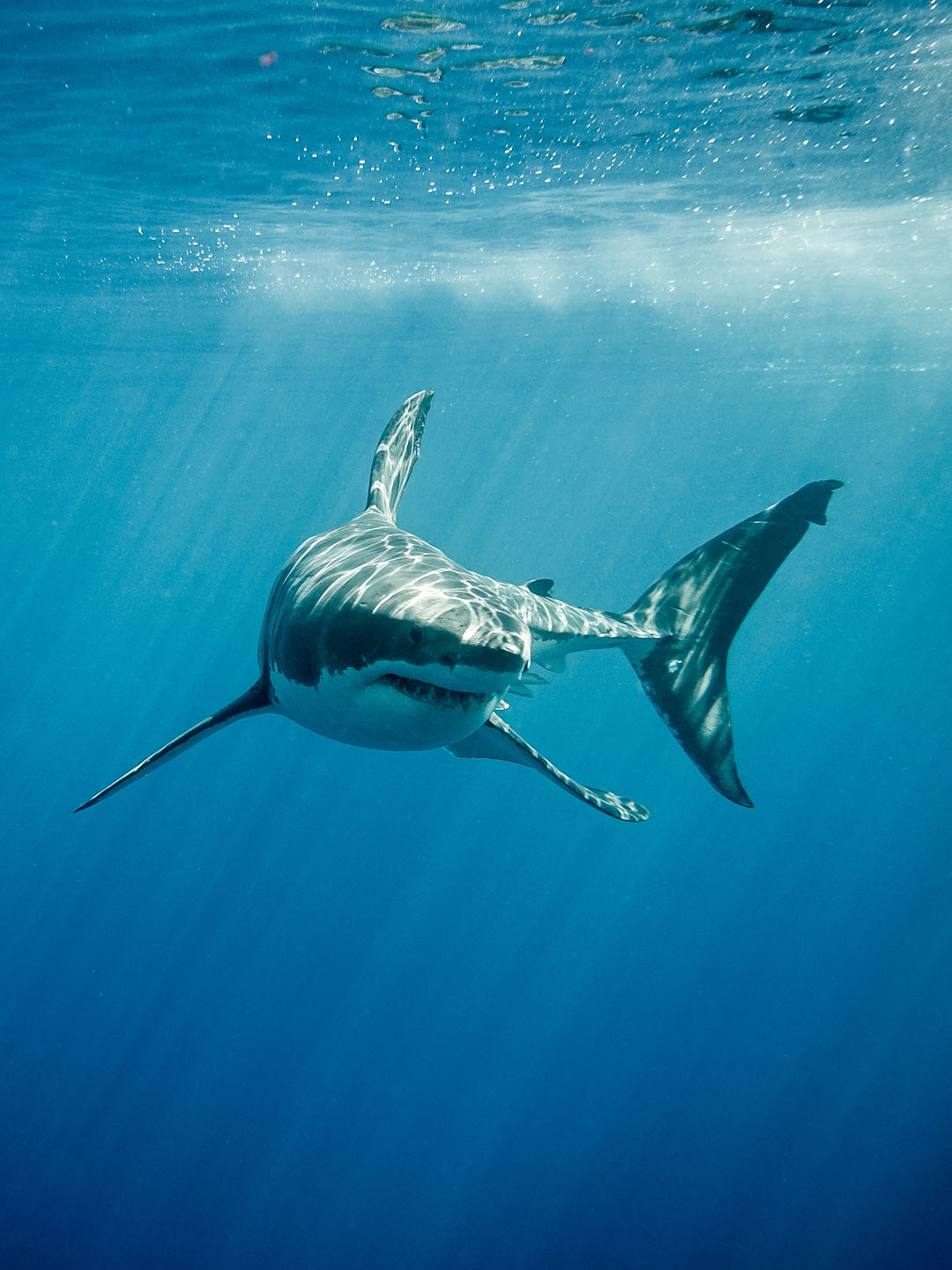
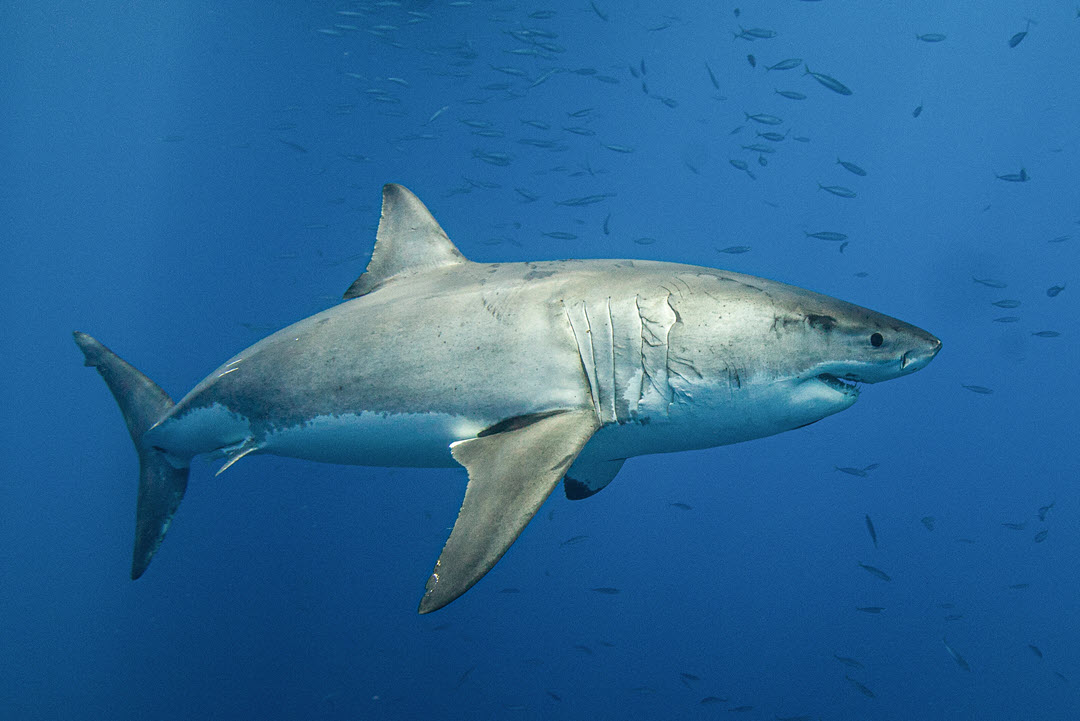
Great white sharks have large, strong bodies that are shaped for swimming through the water.
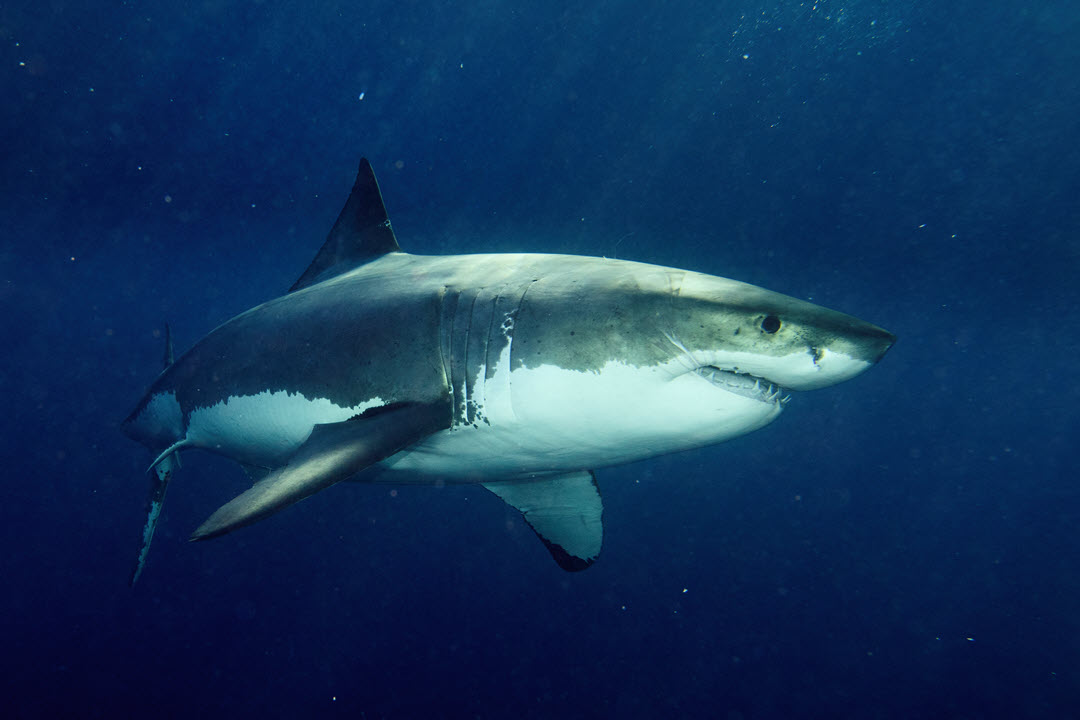
Their backs are usually gray, brownish-gray, or blue-gray. Their undersides are white. This light-and-dark coloring is called countershading.
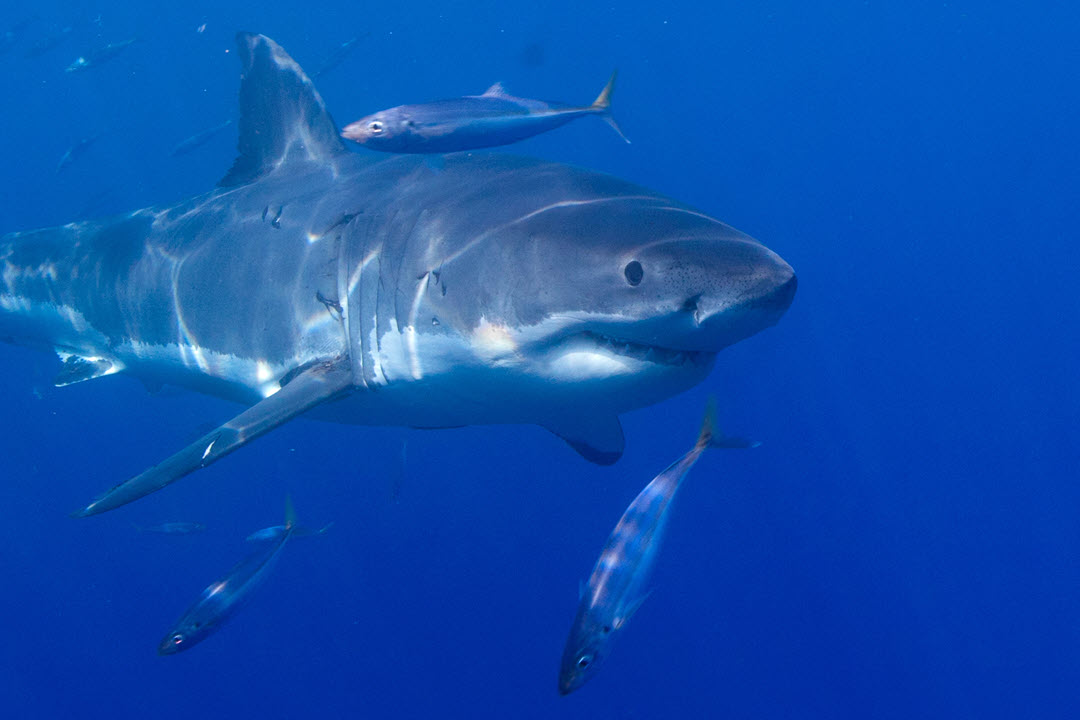
They have pointed snouts, large pectoral fins, and tall dorsal fins. Their powerful tails help them swim quickly.
Great white sharks also have large, triangle-shaped teeth with sharp, saw-like edges. They grow new teeth throughout their lives as older teeth are lost.
The white underside of the shark helped give the great white shark its name.
What Is the History of Great White Sharks?
Sharks have lived in Earth’s oceans for hundreds of millions of years. The great white shark appeared much later in shark history.
Great whites belong to a group called mackerel sharks. Scientists study fossils, living sharks, and DNA to learn how great whites and their relatives changed over time.
Fossil teeth are especially useful because shark teeth are hard and can remain in rocks for millions of years.
Great white sharks are sometimes confused with the giant extinct megalodon. Scientists now know that great whites and megalodon belonged to different shark families.
Where Do Great White Sharks Live?
Great white sharks live in many oceans around the world. They are often found in mild coastal waters where food is plentiful.
They can be found near coastlines and islands, but they also travel far out into the open ocean.
Great whites have been found near places such as North America, South Africa, Australia, New Zealand, and other parts of the world.
These sharks can make very long journeys. Some travel thousands of miles across the ocean.
Great whites also move between shallow and deep water. Scientists use tracking tags to learn where they go and how deep they dive.
Great White Shark Behavior
Great white sharks usually swim alone, but several may visit the same area when food is available.
They are curious animals that explore their surroundings using several powerful senses.
Great whites have an excellent sense of smell. They can also detect movement in the water and tiny electrical signals made by other animals.
Great white sharks may travel long distances during the year. Scientists are still learning why they visit certain places and what they do during some parts of these journeys.
What Do Great White Sharks Eat?
What a great white shark eats changes as it grows.
Young great whites eat mostly fish and other smaller animals. As they grow larger, their diet can include bigger prey.
Adult great whites may eat fish, rays, seals, sea lions, and other marine animals.
Great whites do not need to eat constantly. A large meal can provide a shark with a lot of energy.
How Do Great White Sharks Hunt?
Great white sharks use their senses to find prey. Their coloring can also make them harder to see in the water.
Great whites use different hunting strategies depending on their prey. When hunting seals and other animals near the surface, a great white may approach from deeper water below.
A great white can suddenly swim upward at high speed to catch its prey. Sometimes the shark’s speed carries its whole body out of the water. This is called breaching.
Great whites also use their powerful jaws and sharp teeth to bite and hold prey.
Reproduction and Life Cycle
Great white sharks give birth to live young called pups.
The pups develop inside their mother’s body before they are born. While developing, they feed on unfertilized eggs produced by their mother.
Scientists still have many questions about great white shark reproduction. Mating and birth are rarely seen in the wild.
Newborn great white sharks are already several feet long. After birth, they must survive on their own.
Great white sharks grow slowly and take many years to become adults. They can live for many decades.
Traits and Abilities
Great white sharks can keep parts of their bodies warmer than the surrounding water. This helps their muscles, eyes, and brain work well even in cooler seas.
They are powerful swimmers. Their strong bodies and tails allow them to make sudden bursts of speed.
They can leap completely out of the water. This behavior is called breaching and is sometimes seen when great whites are hunting.
They travel enormous distances. Tracking studies have followed great white sharks across thousands of miles of ocean.
They replace their teeth throughout their lives. New teeth move forward when older teeth are lost.
Why Great White Sharks Are Important
Great white sharks are large predators that are part of ocean communities.
They eat many kinds of animals as they grow. Their role as predators connects them to other animals throughout their habitats.
Great whites can also affect how other animals behave. Prey animals may change where they swim or feed when a large predator is nearby.
Scientists study great whites to learn about shark movement, hunting, growth, and the health of ocean habitats.
Tracking these sharks can also show scientists which parts of the ocean are especially important to them.
Why Great White Sharks Should Be Protected?
Great white sharks are listed as Vulnerable on the IUCN Red List.
Great whites can be caught accidentally in fishing gear. This accidental capture is called bycatch.
They have also been hunted by people. Today, great white sharks are protected in a number of places around the world.
Great whites grow slowly and take many years to become adults. They also produce relatively few young. This means their populations can take a long time to recover if too many sharks are killed.
Protecting great whites includes reducing bycatch, protecting important habitats, and learning more about where these sharks travel, feed, and give birth.
Great white sharks are powerful ocean predators, but they are also animals that need protection. Learning the truth about them can help replace fear with understanding.
READING LEVEL: Grade 4-5 & Above
Shark Pages
Words to Know
Breaching — when a shark leaps partly or completely out of the water
Bycatch — an animal caught by accident while people are fishing for something else
Coastal Waters — ocean waters near the coast
Countershading — coloring with a dark back and light underside that helps an animal blend into the water
Dorsal Fin — the fin on a shark’s back that helps keep it steady while swimming
Fossil — the remains or signs of a living thing from long ago that have been preserved
Habitat — the place where an animal lives
Mackerel Shark — a shark from a group that includes great white sharks, mako sharks, and several other sharks
Open Ocean — the huge area of ocean away from the coast
Predator — an animal that hunts and eats other animals
Prey — an animal that is hunted and eaten by another animal
Pup — a baby shark
Vulnerable — a conservation category for a species that faces a high risk of disappearing from the wild