Blue Shark
The blue shark is one of the most beautiful sharks in the open ocean.
Its long, slender body is a deep blue on top and bright white underneath. Blue sharks are built for life in the open sea, where they may travel thousands of miles.
They are graceful swimmers that spend much of their lives far from land
What Is a Blue Shark?
A blue shark is a medium-sized shark that lives in oceans around the world. Its scientific name is Prionace glauca.
Blue sharks belong to the requiem shark family. This large family also includes tiger sharks, bull sharks, and many other sharks.
Most adult blue sharks are about 6 to 9 feet long. Females usually grow larger than males.
The blue shark gets its name from the beautiful blue color of its back. It is one of the easiest sharks to recognize because of its color, slim body, and very long fins.
What Do Blue Sharks Look Like?
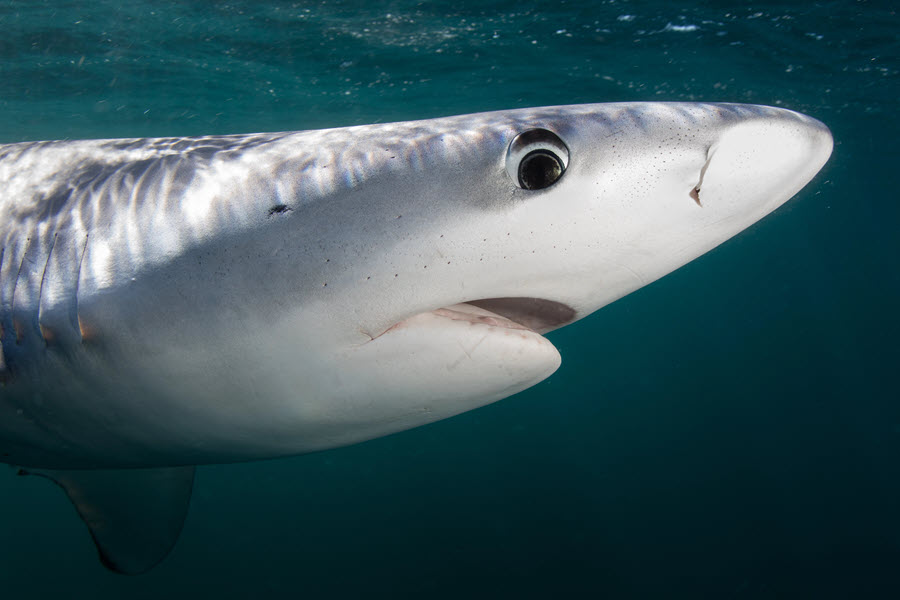
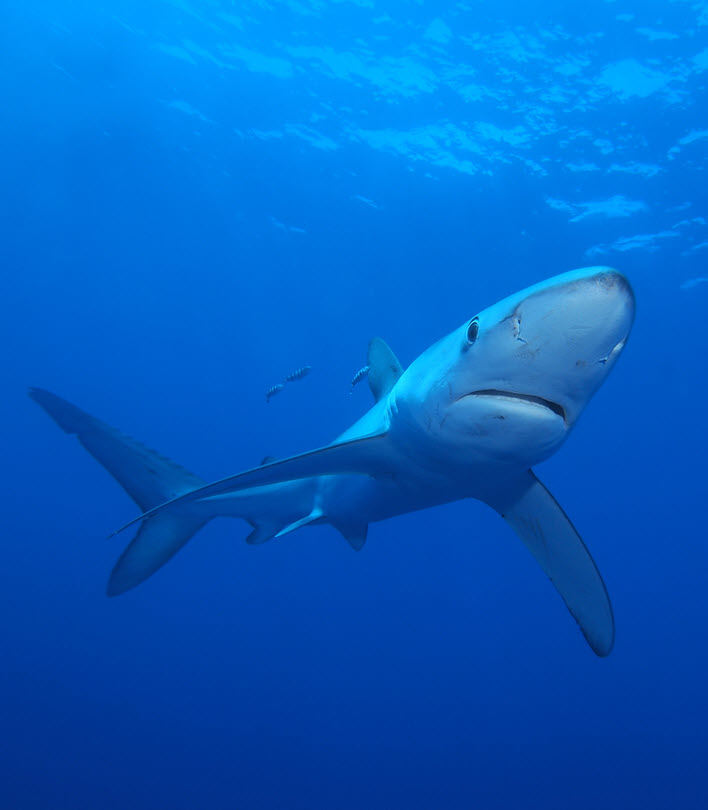
Blue sharks have long, slender bodies and pointed snouts. Their bodies are made for swimming through the open ocean.
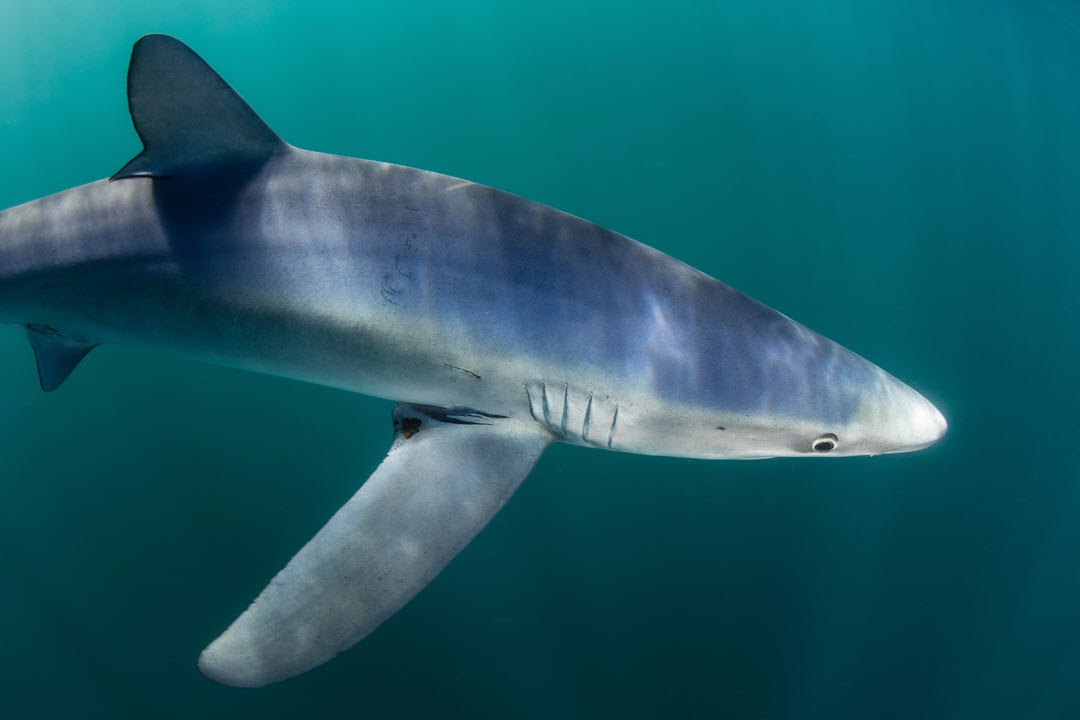
Their backs are a deep blue, their sides are a lighter blue, and their undersides are white.
Blue sharks have very long pectoral fins on the sides of their bodies. These fins can look almost like wings as the shark moves through the water.
The blue shark’s coloring can also help it blend into the ocean. From above, its dark back blends with the deep water. From below, its pale belly is harder to see against the light from the surface.
History of Blue Sharks
Sharks have lived in Earth’s oceans for hundreds of millions of years. Blue sharks are part of this very long shark history.
Blue sharks belong to a group called requiem sharks. Members of this group live in many different parts of the world’s oceans.
Scientists can learn about the history of sharks by studying fossils, especially fossil teeth. Shark teeth are hard and can sometimes remain in rocks for millions of years.
Scientists also compare living sharks to learn how different shark species are related.
Where Do Blue Sharks Live?
Blue sharks live in oceans around the world. They can be found in tropical, warm, and cooler waters.
They are especially well suited for life in the open ocean. Unlike sharks that spend much of their time near reefs or the ocean floor, blue sharks may spend long periods far from land.
Blue sharks can travel very long distances. Some cross large parts of an ocean during their lives.
They also move to different depths. They may swim near the surface and then dive hundreds of feet into deeper water.
Blue Shark Behavior
Blue sharks spend much of their time swimming through the open ocean.
They are often found alone, but they may gather where food is plentiful. Blue sharks may also be found in groups made up mostly of sharks of a similar size or sex.
They have strong senses that help them find food in the enormous open ocean. They can detect smells and movements in the water even when food is difficult to see.
Blue sharks are also great travelers. Their long bodies and fins help them move through the water while covering great distances.
What Do Blue Sharks Eat?
Blue sharks eat many kinds of ocean animals.
Squid are an important part of their diet. They also eat fish and other small sea animals.
What a blue shark eats can change depending on where it is and what food is available.
How Do Blue Sharks Hunt?
Blue sharks use their senses to search for food in the open ocean.
They can follow smells and detect movement in the water. This helps them find animals even when they cannot see them easily.
When a blue shark finds food, it uses its sharp teeth to catch and hold it.
Blue sharks may feed during the day or at night. They can also move up and down through the water to follow their food.
Reproduction and Life Cycle
Blue sharks give birth to live young called pups.
The pups grow inside their mother’s body before they are born. While they are developing, they receive nourishment through a connection to their mother.
A female blue shark can give birth to many pups at one time. Litters can sometimes contain dozens of young sharks.
Newborn blue sharks are usually less than 2 feet long. They must begin finding food and surviving on their own after birth.
As young blue sharks grow, they may travel farther and begin using different parts of the ocean.
Blue Shark Traits & Abilities
- Blue sharks really are blue. Their beautiful deep-blue backs make them one of the most colorful sharks in the ocean.
- Their fins are unusually long. Their long pectoral fins help give blue sharks their graceful shape.
- They are ocean travelers. Blue sharks can travel thousands of miles across the open sea.
- They live in a huge part of the world’s oceans. Blue sharks are found in more parts of the world than many other shark species.
- They can have many pups. A female blue shark may give birth to dozens of young at one time.
Why Blue Sharks Are Important
Blue sharks are predators in the open ocean.
They eat animals such as squid and fish, and they may also become food for larger ocean predators. This makes them an important part of the open-ocean community.
Blue sharks travel across huge areas. Scientists can study their journeys to learn how sharks use different parts of the ocean.
Tracking blue sharks can also help scientists discover which ocean areas are important for feeding, traveling, and raising young.
Why Blue Sharks Shoud Be Protected
Scientists have listed blue sharks as Near Threatened, which means they could face extinction in the future.
Fishing is one of the biggest dangers to blue sharks. Huge numbers are caught around the world.
Some blue sharks are caught on purpose. Many others are caught as bycatch while people are fishing for tuna, swordfish, and other animals.
Blue sharks travel across the waters of many different countries and through the open ocean. This can make protecting them difficult because no single country can protect them everywhere they go.
People can help blue sharks by managing fishing carefully, reducing bycatch, and protecting important ocean habitats.
Blue sharks spend much of their lives in a part of our planet that most people never see. Protecting them helps protect the amazing world of the open ocean.
Shark Pages
Words to Know
Bycatch — an animal caught by accident while people are fishing for something else
Fossil — the remains or signs of a living thing from long ago that have been preserved
Habitat — the place where an animal lives
Near Threatened — a species that could face extinction in the future it its population declines or threats increase.
Open Ocean — the huge area of ocean away from the coast
Pectoral Fins — the fins on the sides of a shark that help it control its movement
Predator — an animal that hunts and eats other animals
Pup — a baby shark
Requiem Shark — a shark from a large family that includes blue sharks, tiger sharks, bull sharks, and many other sharks
Tropical — describing warm parts of the world near the equator