Hammerhead Shark
Hammerhead sharks have one of the strangest and most amazing heads in the ocean.
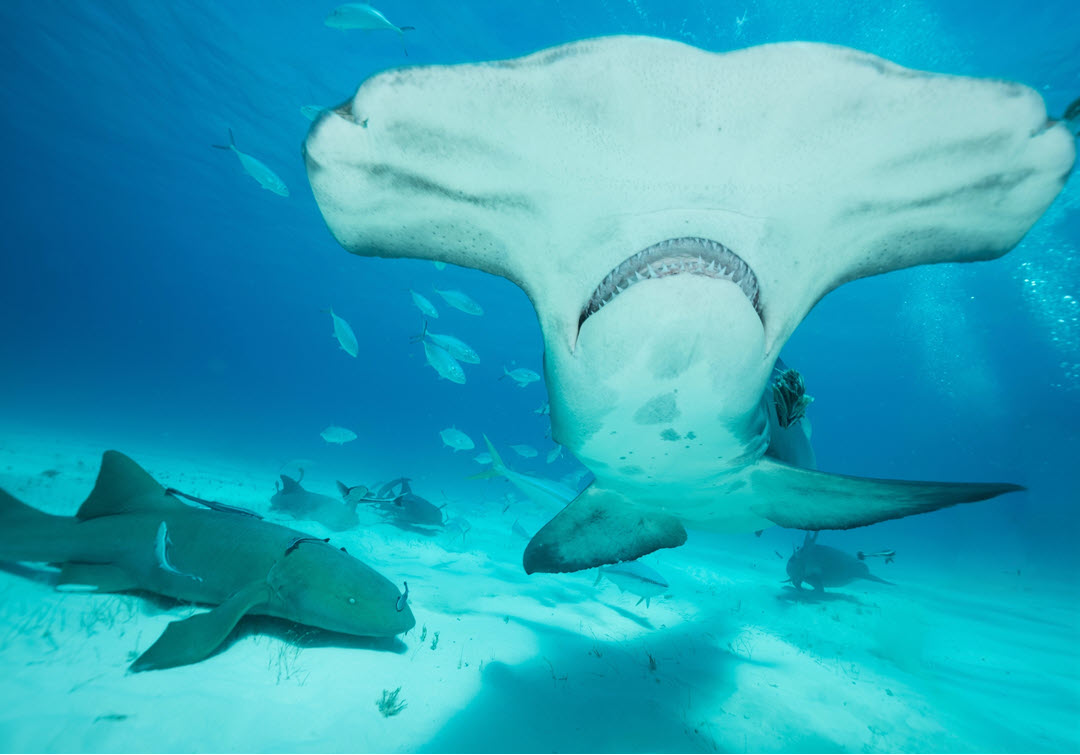
Their heads stretch out sideways, giving them the shape of a hammer. Their eyes sit near the ends of this wide head.
There are several species of hammerhead shark. They come in different sizes and live in warm oceans around the world.
What Is a Hammerhead Shark?
A hammerhead shark is a shark with a wide, flattened head. Scientists call this special head shape a cephalofoil.
There are several species of hammerhead. They include the great hammerhead, scalloped hammerhead, smooth hammerhead, and bonnethead.
Hammerheads can be very different in size. Some are fairly small, while the great hammerhead can grow to more than 15 feet long.
All hammerheads belong to the hammerhead shark family, called Sphyrnidae.
What Do Hammerhead Sharks Look Like?
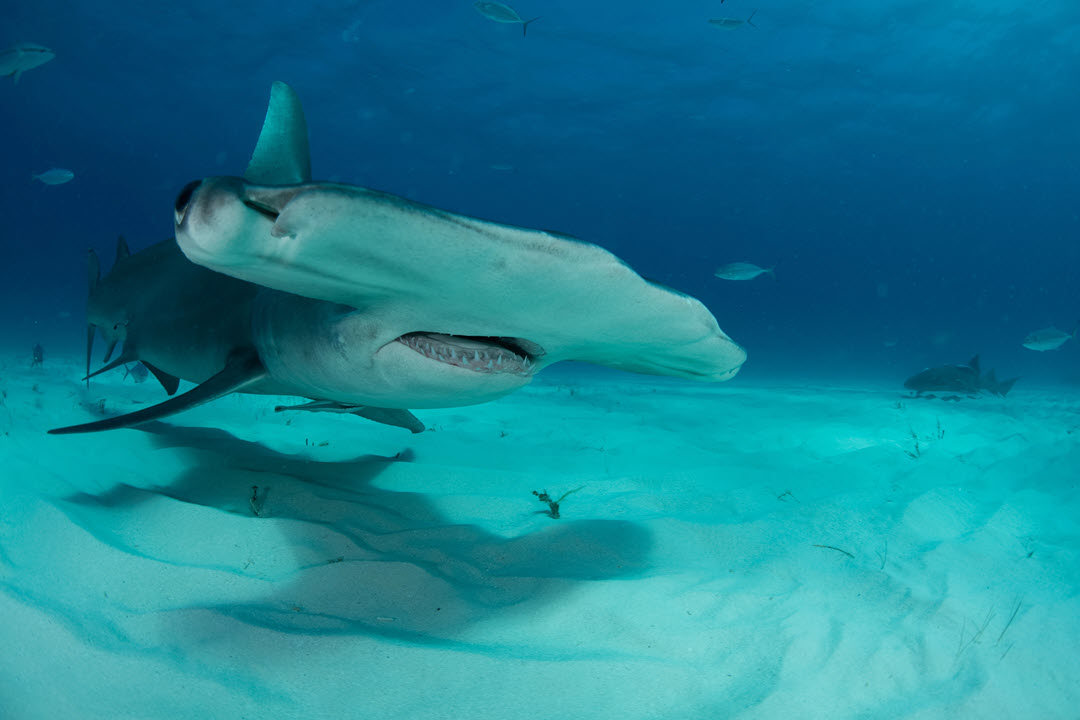
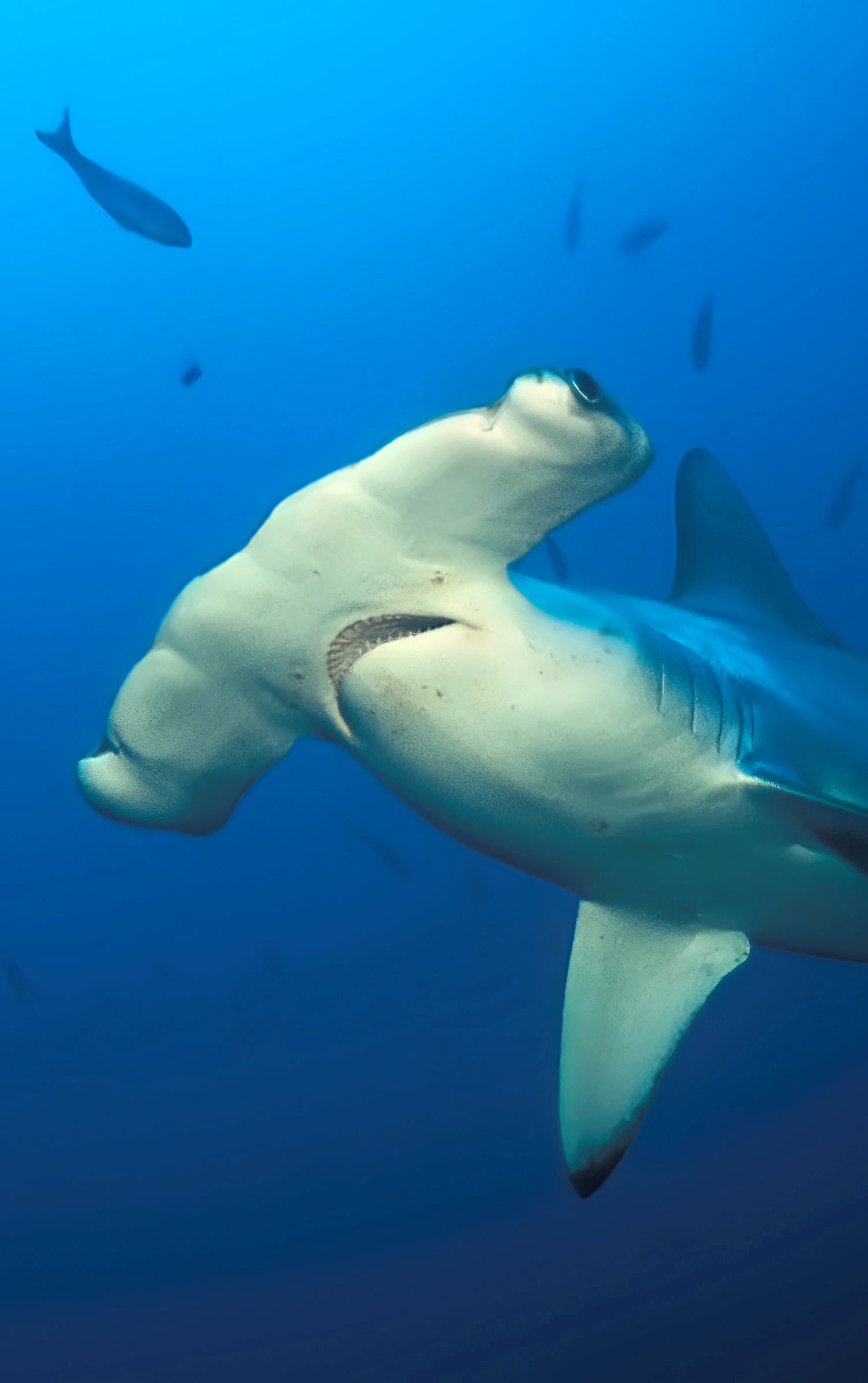
It is easy to recognize a hammerhead shark. Its head stretches far out to both sides, with an eye near each end.
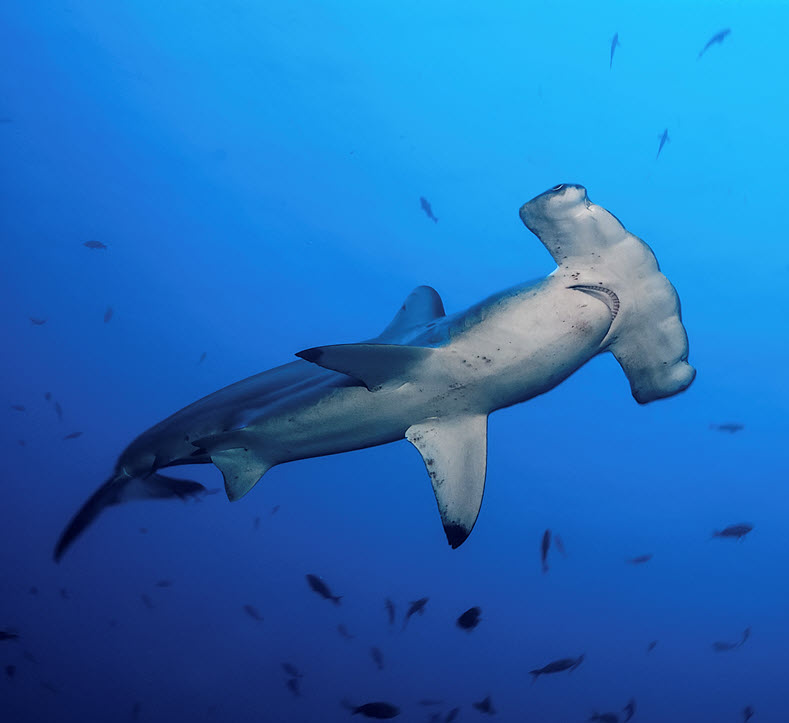
Different hammerhead species have slightly different head shapes. A scalloped hammerhead has small curves along the front of its head. A great hammerhead has a much straighter front edge.
Most hammerheads are gray, gray-brown, or olive on top and lighter underneath.
They have tall dorsal fins on their backs and strong tails that push them through the water.
Their wide heads may look strange, but they are useful. They help hammerheads sense their surroundings, find food, and move through the water.
History of Hammerhead Sharks
Sharks have lived in Earth’s oceans for hundreds of millions of years. Hammerhead sharks appeared much later in shark history.
Over time, the ancestors of today’s hammerheads developed wider and wider heads. This unusual shape gave them new ways to sense the world around them and search for food.
Scientists study fossils and DNA to learn about the history of hammerhead sharks and how the different species are related.
Today, hammerheads are one of the easiest shark groups to recognize.
Where Do Hammerhead Sharks Live?
Hammerhead sharks live mainly in tropical and warm ocean waters around the world.
Depending on the species, they may live near coastlines, around coral reefs and islands, or farther out in the open ocean.
Some hammerheads travel long distances. They may move to different areas during different times of the year.
Hammerheads can also swim at different depths. They may spend time near the surface and then travel into deeper water.
Hammerhead Shark Behavior
Hammerhead sharks can behave very differently depending on the species.
Some often swim alone. Others can gather in large groups called schools. Scalloped hammerheads are especially famous for forming large schools.
Some hammerheads travel long distances between feeding areas and other important habitats.
Their wide heads hold special sense organs that can detect tiny electrical signals made by other animals. Spreading these sensors across a wide head may help hammerheads search the ocean floor for hidden food.
What Do Hammerhead Sharks Eat?
Hammerhead sharks eat many kinds of sea animals. Their food can include fish, squid, octopuses, crabs, and other sharks.
Stingrays are an important food for some large hammerheads.
Different hammerhead species do not all eat the same things. Their diets depend on their size, habitat, and the food available to them.
How Do Hammerhead Sharks Hunt?
Hammerheads use their strong senses to search for food.
Their wide heads help them detect tiny electrical signals made by animals. This can be especially useful when a fish or ray is hidden under sand.
Some hammerheads use their heads while catching prey. A great hammerhead may push a stingray against the ocean floor with its wide head before biting it.
Their eyes are spread far apart, which also gives them a wide view of the water around them.
Reproduction and Life Cycle
Hammerhead sharks give birth to live young called pups.
The pups grow inside their mother’s body before they are born. As they develop, they receive nourishment through a connection to their mother.
The number of pups born at one time depends on the hammerhead species.
Baby hammerheads are born looking like small versions of adults. Their heads already have the hammer-like shape.
Young hammerheads may spend their early lives in shallow coastal areas where they can find food and grow.
Traits and Abilities
Their heads really are shaped like hammers. Scientists call the hammerhead’s unusual head a cephalofoil.
Their eyes are far apart. An eye near each end of the head gives a hammerhead a wide view of its surroundings.
Their wide heads help them find hidden food. Hammerheads can detect tiny electrical signals made by animals, including prey hiding beneath the sand.
Some form huge schools. Large groups of scalloped hammerheads can sometimes be seen swimming together.
There are several kinds of hammerhead. The hammerhead family includes species with different sizes, head shapes, habitats, and behaviors.
Why Hammerhead Sharks Are Important
Hammerhead sharks are predators in many ocean habitats.
They eat fish, rays, squid, and other animals. This makes them an important part of the ocean communities where they live.
Hammerheads are also important to scientists. Their unusual heads can help researchers learn how shark senses work and how body shapes can change over time.
Scientists also track hammerheads to learn where they travel and which places are important for feeding and raising young.
Why Hammerhead Sharks Should Be Protected
Several hammerhead species are in serious trouble. The great hammerhead and scalloped hammerhead are both listed as Critically Endangered on the IUCN Red List.
Fishing is one of the biggest dangers to hammerhead sharks. Some are caught on purpose, while others are caught by accident in fishing gear.
Hammerheads have also been heavily hunted for their fins.
Many hammerheads grow slowly and take years to become adults. If too many are killed, their populations can have a difficult time recovering.
Protecting hammerheads includes reducing harmful fishing, protecting important habitats, and protecting places where young sharks grow.
Hammerhead sharks are unlike any other sharks on Earth. Protecting them helps keep these remarkable animals swimming in our oceans.
READING LEVEL: Grades 4-5 & Above
Shark Pages
Words to Know
Cephalofoil — the wide, flattened head of a hammerhead shark
Coastal Waters — ocean waters near the coast
Critically Endangered — facing an extremely high risk of disappearing from the wild
DNA — material inside living things that carries information about how they grow and develop
Dorsal Fin — a fin on a shark’s back that helps keep it steady while swimming
Habitat — the place where an animal lives
Open Ocean — the huge area of ocean away from the coast
Predator — an animal that hunts and eats other animals
Prey — an animal that is hunted and eaten by another animal
Pup — a baby shark
School — a group of fish or sharks swimming together
Species — a group of similar living things
Tropical — describing warm parts of the world near the equator