
List of Sharks
Shark Family: Superorder – Selachimorpha
This List of Sharks is organized by major shark groups to make it easier to explore the incredible diversity of sharks. Each section introduces a shark group, highlights representative species, and provides a list of additional species or families in that group. At the end of the group list, you’ll also find a comprehensive alphabetical list of all known shark species.
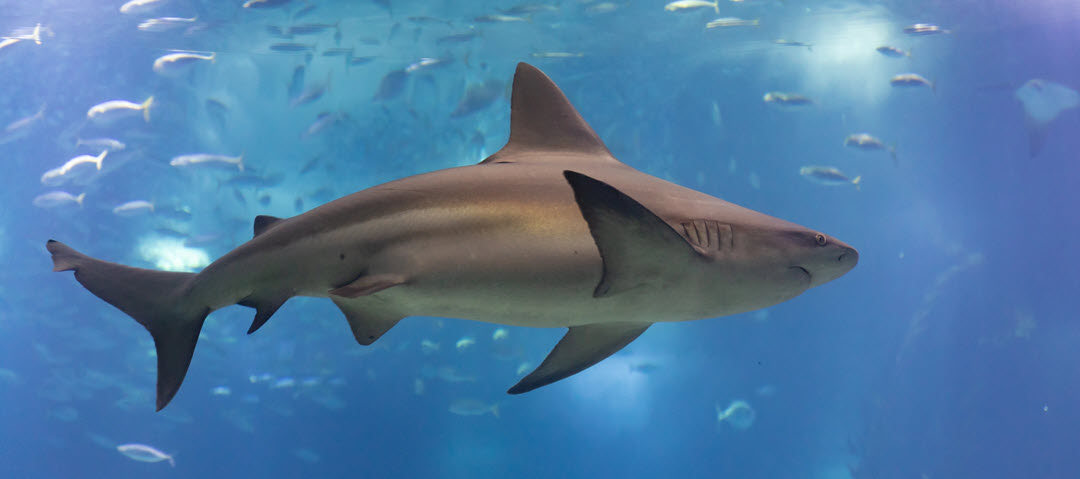
Galapagos Shark
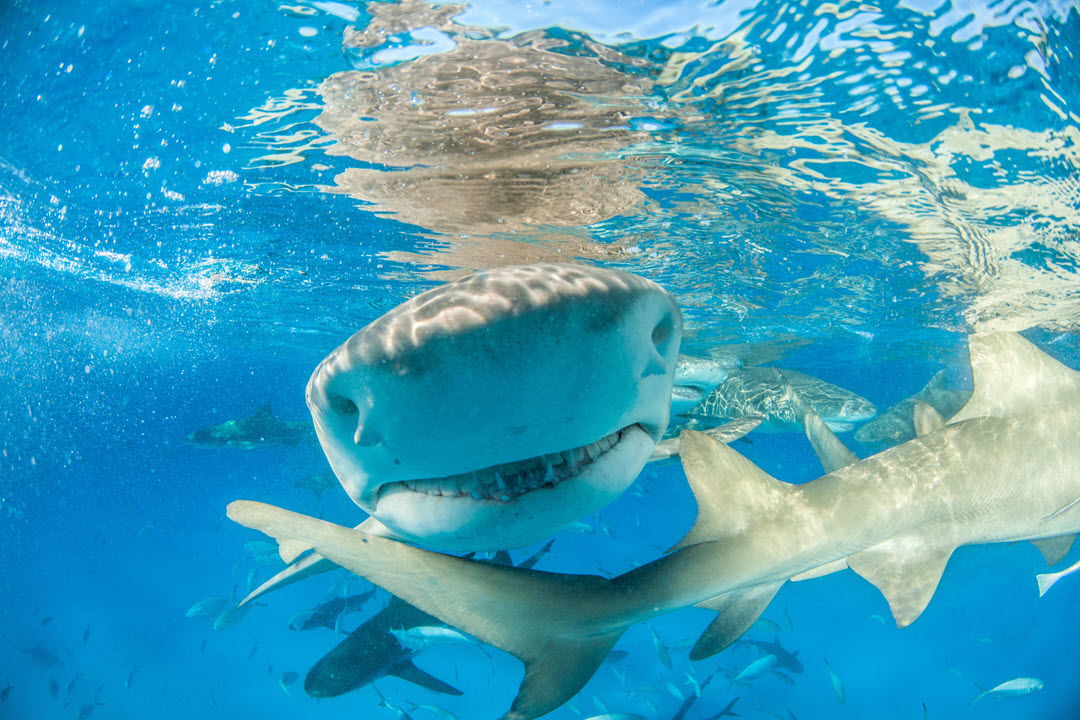
Lemon Shark
SHARK PAGES
SPECIES PAGES
Shark Scientific Classification
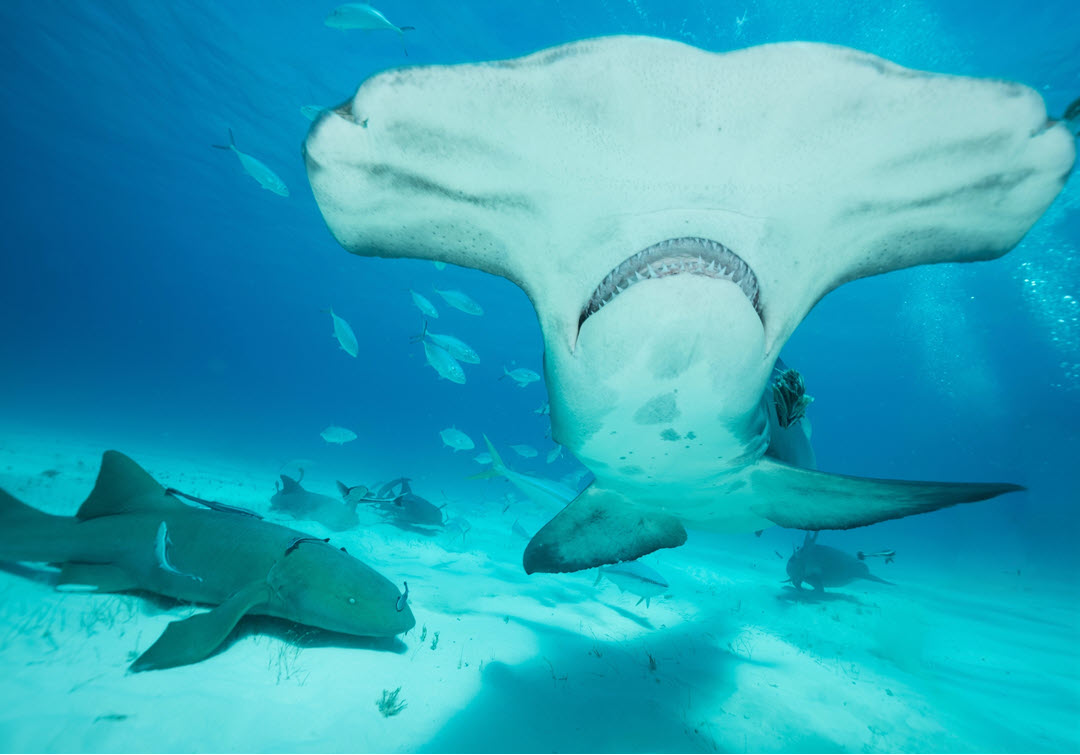
Scalloped Hammerhead Shark
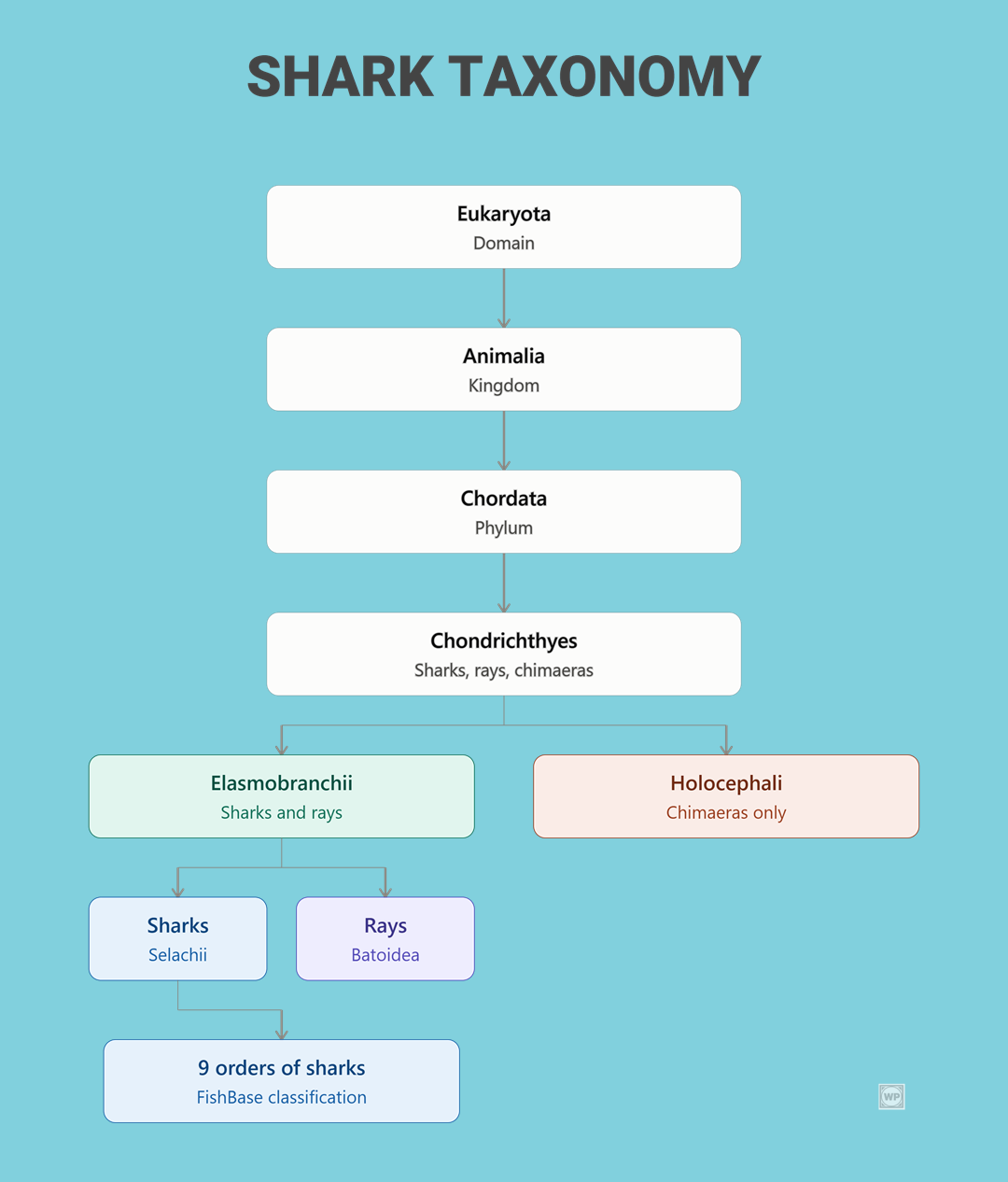
Shark Orders
Although there are hundreds of known shark species, they can be organized into a relatively small number of major groups based on their evolutionary relationships, anatomy, and shared characteristics. Some groups include fast-swimming ocean predators, while others are made up of bottom-dwelling sharks, deep-sea specialists, or ancient lineages that have changed little over millions of years. Understanding these groups makes it easier to recognize how different shark species are related and why they have evolved such a remarkable variety of forms, behaviors, and habitats.
These groups, also known as Orders, are:
- Ground Sharks – the shark order Carcharhiniformes, currently divided into 12 living families: Requiem Sharks, Tiger Sharks, Hammerhead Sharks, Houndsharks, Weasel Sharks, Barbeled Houndsharks, Finback Catsharks, False Catsharks, Catsharks, Deepwater Catsharks, Coloured Catsharks, and Bristle Catsharks.
- Mackerel Sharks
- Carpet Sharks
- Dogfish Sharks
- Bullhead Sharks
- Cow & Frilled Sharks
- Angel Sharks
- Sawsharks
- Bramble Sharks
Our list of sharks includes representative species from each of these shark groups.
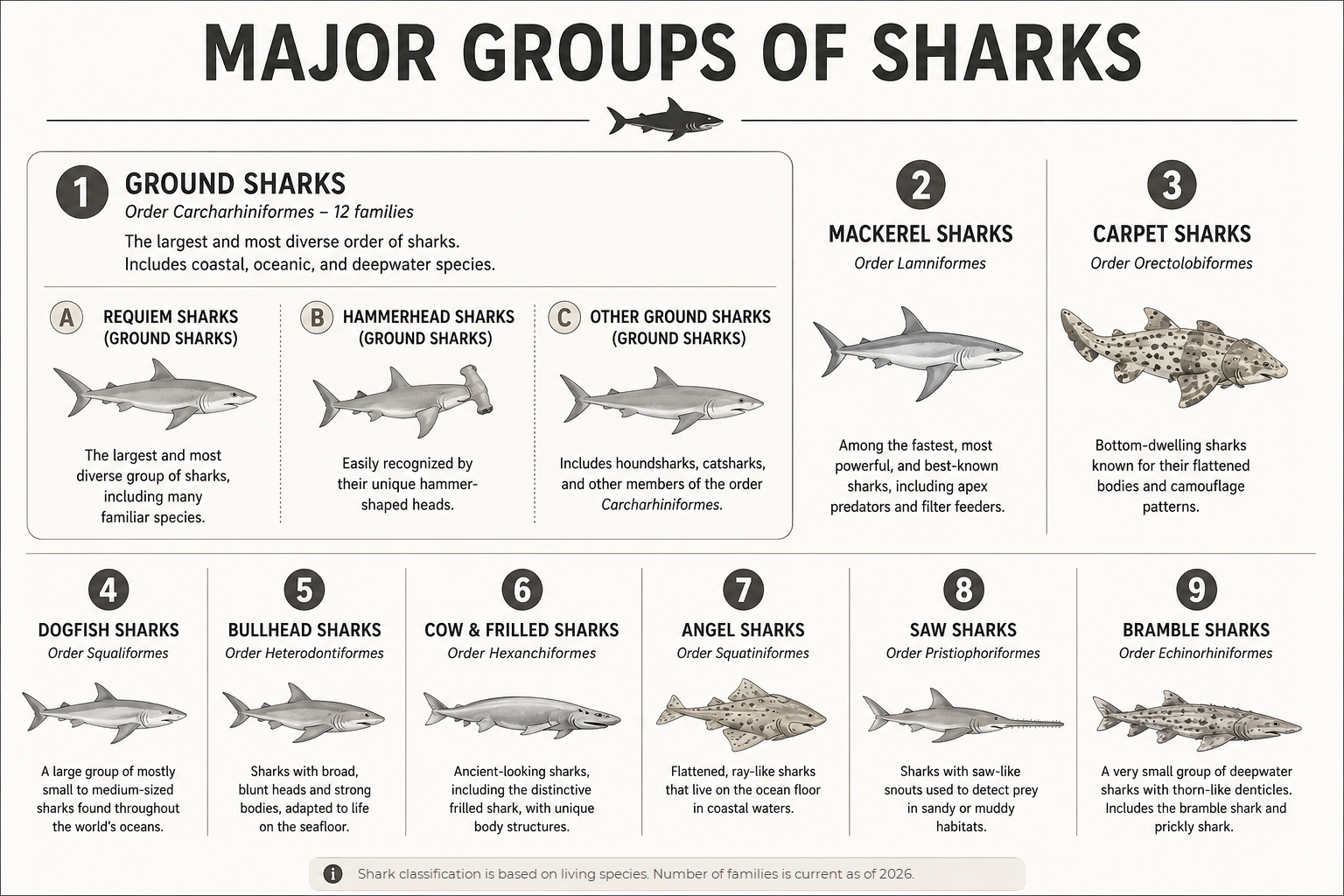
List of Sharks by 9 Major Groups
1. Ground Sharks
a. Requiem Sharks
Family: Carcharhinidae
Origin of Name: The origin of the name “requiem shark” is uncertain, and no single explanation has been universally accepted by scientists. The most widely cited theory is that early naturalists adopted the French word requin, meaning “shark,” which was later anglicized to requiem. Despite the similarity to the English word requiem, the name is not thought to have any connection to funeral services or memorials. Today, “requiem sharks” refers to the large family Carcharhinidae, which includes many of the world’s best-known coastal sharks, such as bull sharks, blacktip sharks and lemon sharks.
Requiem sharks are one of the largest and most diverse groups of sharks, with more than 50 living species found in tropical and temperate oceans around the world. They are active, streamlined predators that inhabit a wide range of marine environments, including coral reefs, coastal waters, estuaries, and the open ocean. Many of the world’s best-known sharks belong to this family, making requiem sharks one of the most familiar groups to divers, anglers, and ocean enthusiasts.
Representative Requiem Shark Species
The following species represent the diversity of the requiem shark family and are among its best-known members.
Bull Shark (Carcharhinus leucas)
One of the few shark species capable of living in both saltwater and freshwater, the bull shark is found in tropical and subtropical rivers, estuaries, and coastal oceans around the world. Its stocky body, powerful bite, and adaptability make it one of the most successful requiem sharks.
Blacktip Shark (Carcharhinus limbatus)
Recognized by the distinctive black markings on its fins, the blacktip shark is a fast-swimming coastal species commonly found over shallow reefs and sandy shorelines. It is well known for its spectacular spinning leaps while feeding on schools of fish.
Oceanic Whitetip Shark (Carcharhinus longimanus)
Once among the most abundant sharks in the open ocean, the oceanic whitetip spends nearly its entire life far from shore. Its long, rounded fins with white tips make it one of the easiest pelagic sharks to identify.
Silvertip Shark (Carcharhinus albimarginatus)
The silvertip shark inhabits coral reefs, offshore islands, and continental slopes throughout the Indo-Pacific. It is recognized by the bright white margins along its fins and is considered one of the dominant predators of healthy reef ecosystems.
Other Requiem Sharks
The requiem shark family includes many additional species found throughout the world’s tropical and temperate oceans, including:
- Bignose Shark (Carcharhinus altimus)
- Blacknose Shark (Carcharhinus acronotus)
- Blacktip Reef Shark (Carcharhinus melanopterus)
- Copper Shark (Carcharhinus brachyurus)
- Creek Whaler (Carcharhinus fitzroyensis)
- Dusky Shark (Carcharhinus obscurus)
- Galapagos Shark (Carcharhinus galapagensis)
- Graceful Shark (Carcharhinus amblyrhynchoides)
- Grey Reef Shark (Carcharhinus amblyrhynchos)
- Hardnose Shark (Carcharhinus macloti)
- Night Shark (Carcharhinus signatus)
- Pigeye Shark (Carcharhinus amboinensis)
- Sandbar Shark (Carcharhinus plumbeus)
- Silky Shark (Carcharhinus falciformis)
- Spinner Shark (Carcharhinus brevipinna)
- Spottail Shark (Carcharhinus sorrah)
- Whitetip Reef Shark (Triaenodon obesus)
- Lemon Shark (Negaprion brevirostris)
- Sicklefin Lemon Shark (Negaprion acutidens)
- Finetooth Shark (Carcharhinus isodon)
- Smalltail Shark (Carcharhinus porosus)
- Pondicherry Shark (Carcharhinus hemiodon)
- and many more…
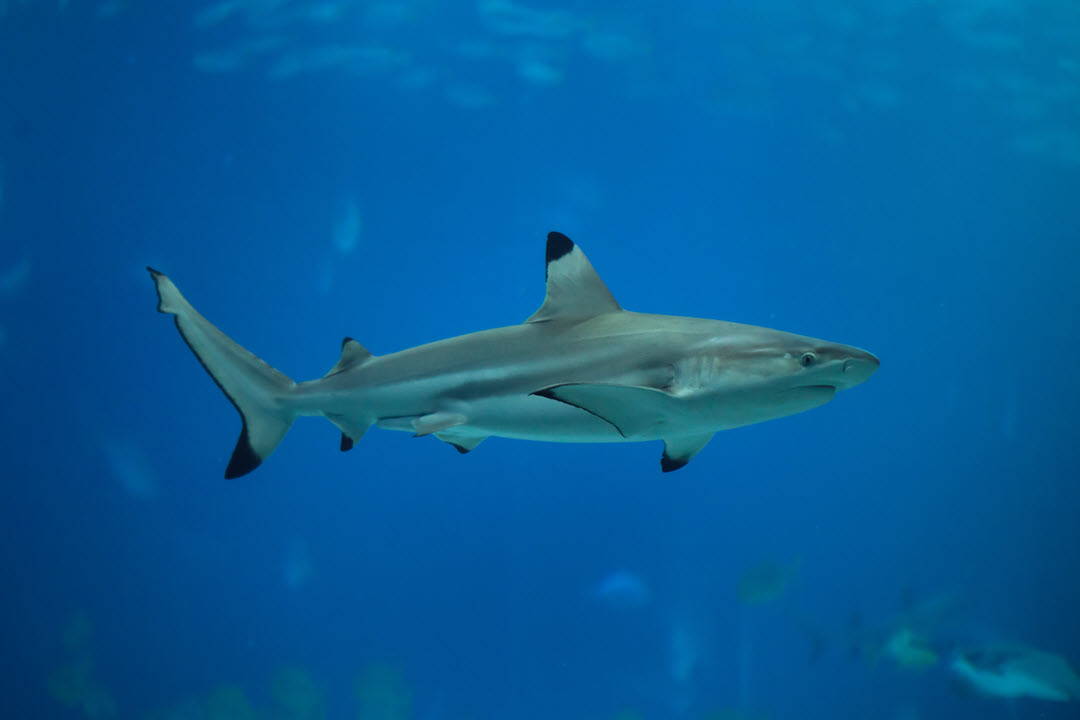
Blacktip Reef Shark
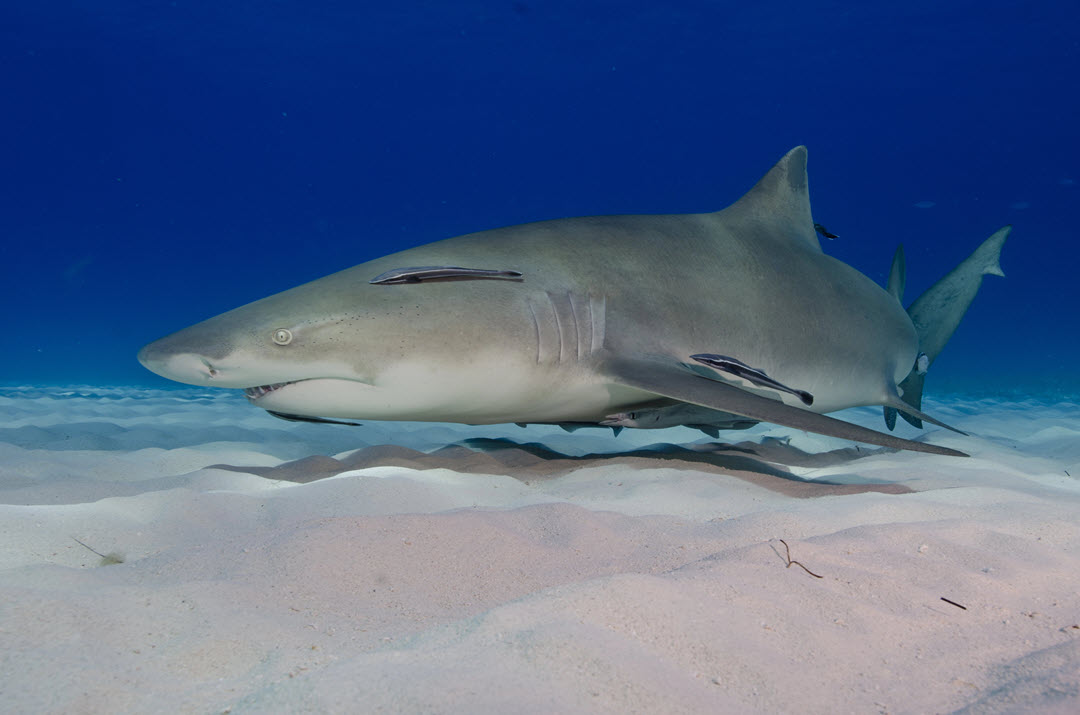
Lemon Shark
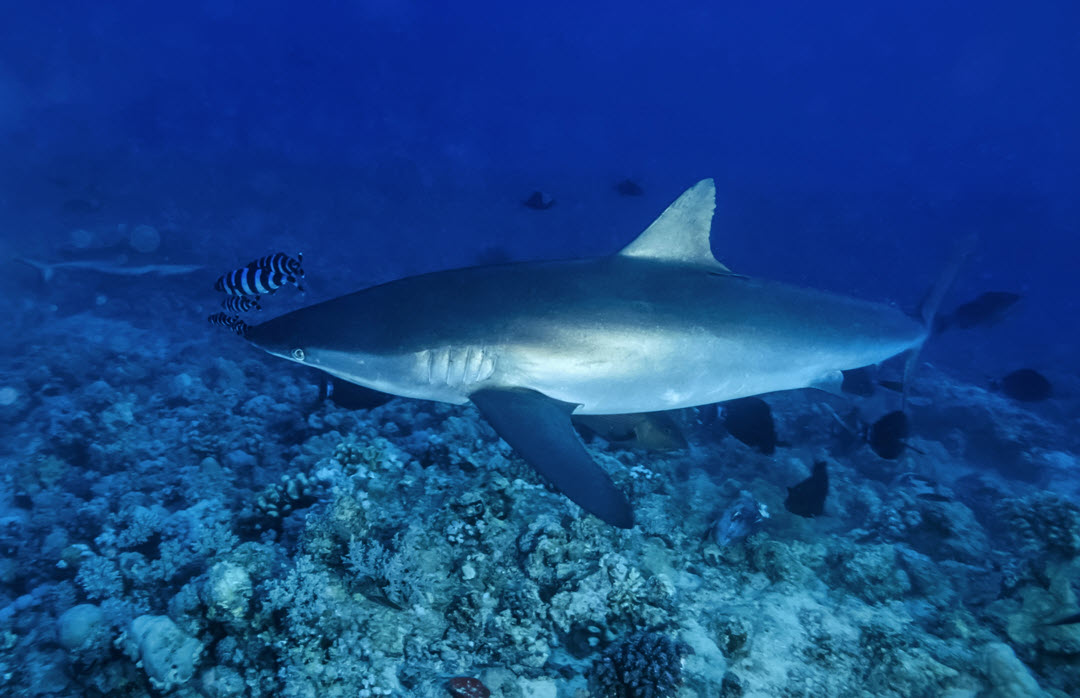
Silky Shark
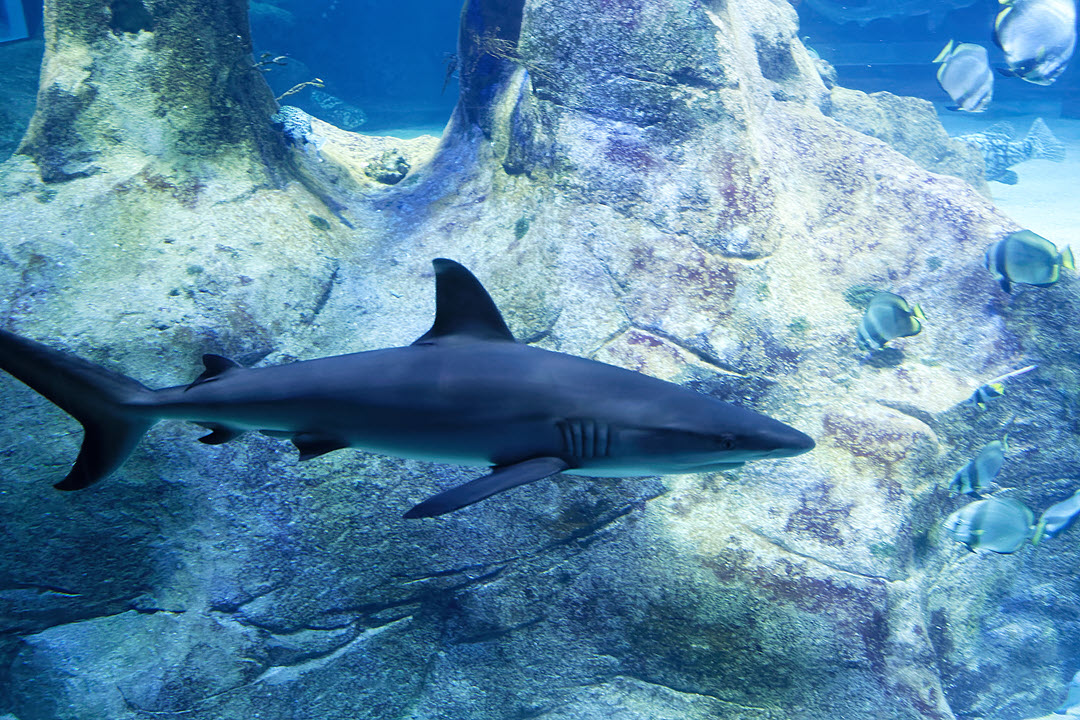
Grey Reef Shark
b. Hammerhead Sharks
Family: Sphyrnidae
Origin of Name: Hammerhead sharks are named for their distinctive hammer-shaped heads, known scientifically as a cephalofoil. This broad, flattened head resembles the head of a hammer and helps improve the shark’s vision, maneuverability, and ability to detect prey using specialized sensory organs. The name is purely descriptive and has been used for centuries to distinguish these unique sharks from all other shark groups.
Although all hammerhead sharks share their unmistakable head shape, they vary considerably in size and behavior. Some species, such as the scalloped hammerhead, gather in large schools during the day before hunting alone at night. Others are more solitary and roam vast coastal habitats in search of fish, rays, squid, and crustaceans. Unfortunately, many hammerhead species have experienced significant population declines due to overfishing and the shark fin trade, making them among the most threatened shark groups in the world.
Representative Species
The following five species represent the diversity of the hammerhead shark family.
Great Hammerhead (Sphyrna mokarran)
The largest hammerhead species, the great hammerhead can exceed 20 feet (6 meters) in length. It is a powerful apex predator that frequently hunts stingrays, using its broad head to pin prey against the seafloor before delivering a bite. The species is listed as Critically Endangered by the IUCN.
Scalloped Hammerhead (Sphyrna lewini)
Known for the curved indentation along the front edge of its head, the scalloped hammerhead is famous for forming large schools around seamounts and oceanic islands. It is widely distributed throughout tropical and warm temperate oceans and is also classified as Critically Endangered.
Smooth Hammerhead (Sphyrna zygaena)
The smooth hammerhead lacks the central notch found on the scalloped hammerhead, giving its head a smoother appearance. It inhabits temperate and subtropical waters worldwide and is known to migrate long distances following seasonal changes in water temperature.
Bonnethead (Sphyrna tiburo)
The bonnethead is the smallest hammerhead species, rarely exceeding 5 feet (1.5 meters) in length. Found in shallow coastal waters of the Americas, it feeds primarily on crabs, shrimp, mollusks, and small fish. It is also one of the few sharks known to regularly consume seagrass.
Winghead Shark (Eusphyra blochii)
The winghead shark possesses the widest head relative to body size of any hammerhead species. Native to the shallow coastal waters of the Indo-Pacific region, its unusually broad cephalofoil provides exceptional sensory coverage while searching for prey.
Other Hammerhead Sharks
The hammerhead family also includes several additional species:
- Scoophead Shark (Sphyrna media)
- Smalleye Hammerhead (Sphyrna tudes)
- Carolina Hammerhead (Sphyrna gilberti)
- Whitefin Hammerhead (Sphyrna couardi)
- Shovelbill Shark (Sphyrna alleni)
- Scalloped Bonnethead (Sphyrna corona)
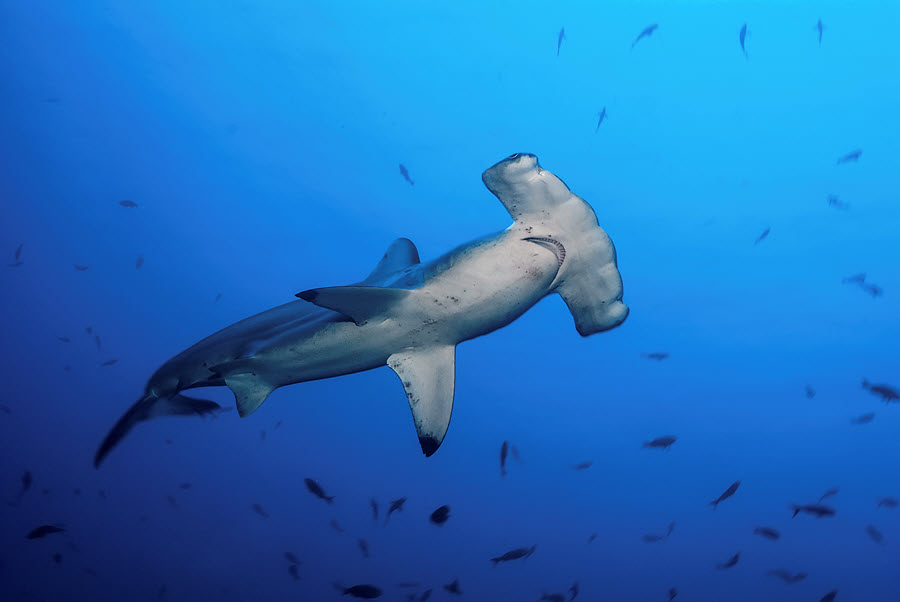
Hammerhead Shark
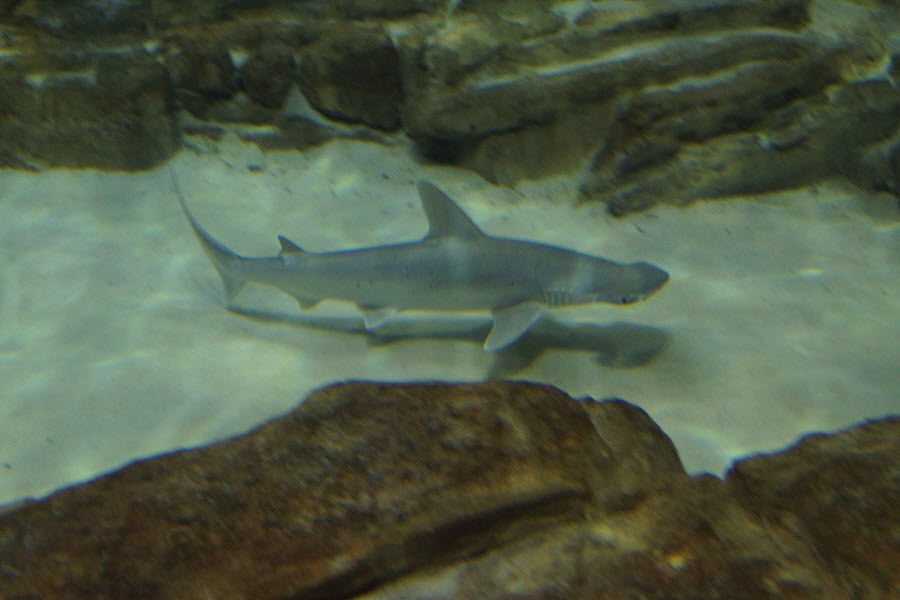
Bonnethead Shark
c. Other Ground Sharks
Order: Carcharhiniformes
Origin of Name: The name “ground sharks” comes from the scientific order Carcharhiniformes, traditionally known as the ground sharks. Despite the name, these sharks are not limited to the ocean floor. Instead, “ground shark” is a historical scientific classification for the largest and most diverse order of sharks.
Ground sharks are the largest group of sharks, containing nearly half of all living shark species. While requiem sharks and hammerhead sharks are the best-known members of this order, many other families belong here as well, including tiger sharks, catsharks, houndsharks, weasel sharks, false catsharks, finback catsharks, and several other specialized groups. Together, they occupy an extraordinary range of habitats, from shallow coastal waters to the continental shelf and the deep ocean. Their incredible diversity makes them one of the most successful shark groups on Earth.
Representative Ground Sharks
Because ground sharks are such a large and diverse group, the following species represent the major families included in this section.
Tiger Shark (Galeocerdo cuvier)
One of the largest ground sharks, the tiger shark is a powerful predator found in tropical and warm-temperate waters around the world. It is known for the dark vertical stripes of younger sharks and its remarkably varied diet.
Leopard Shark (Triakis semifasciata)
Easily identified by its dark saddle markings and spots, the leopard shark inhabits shallow bays and estuaries along the Pacific coast of North America.
Snaggletooth Shark (Hemipristis elongata)
A distinctive weasel shark found in tropical coastal waters of the Indo-Pacific. Its strongly curved, serrated upper teeth give the species its unusual common name.
Barbeled Houndshark (Leptocharias smithii)
A slender shark found in shallow coastal waters of the eastern Atlantic. It is the only living species in the family Leptochariidae and is distinguished by small barbels near its nostrils.
Graceful Catshark (Proscyllium habereri)
A small finback catshark found in the western Pacific. It lives near the seafloor and feeds on small fishes and invertebrates.
False Catshark (Pseudotriakis microdon)
A large, soft-bodied deepwater shark found in oceans around the world. Despite its name, it is not a true catshark and belongs to its own family, Pseudotriakidae.
Small-Spotted Catshark (Scyliorhinus canicula)
A small bottom-dwelling shark found in the northeastern Atlantic and Mediterranean Sea. It is one of the best-known catsharks and is common in coastal waters.
Black Roughscale Catshark (Apristurus melanoasper)
A deepwater catshark found along continental slopes in parts of the Atlantic. Like many members of its family, it spends its life far below the shallow coastal habitats occupied by better-known sharks.
Marbled Catshark (Atelomycterus macleayi)
A small Australian shark with distinctive dark spots and saddle-like markings. It inhabits shallow tropical waters and is a representative of the coloured catshark family.
Bristle Shark (Dichichthys melanobranchus)
A small deepwater ground shark representing Dichichthyidae, one of the more recently recognized families within the ground shark order.
Other ground sharks include:
- Tiger Sharks (Galeocerdonidae)
- Houndsharks (Triakidae)
- Weasel Sharks (Hemigaleidae)
- Barbeled Houndsharks (Leptochariidae)
- Finback Catsharks (Proscylliidae)
- False Catsharks (Pseudotriakidae)
- Catsharks (Scyliorhinidae)
- Deepwater Catsharks (Pentanchidae)
- Coloured Catsharks (Atelomycteridae)
- Bristle Sharks (Dichichthyidae)
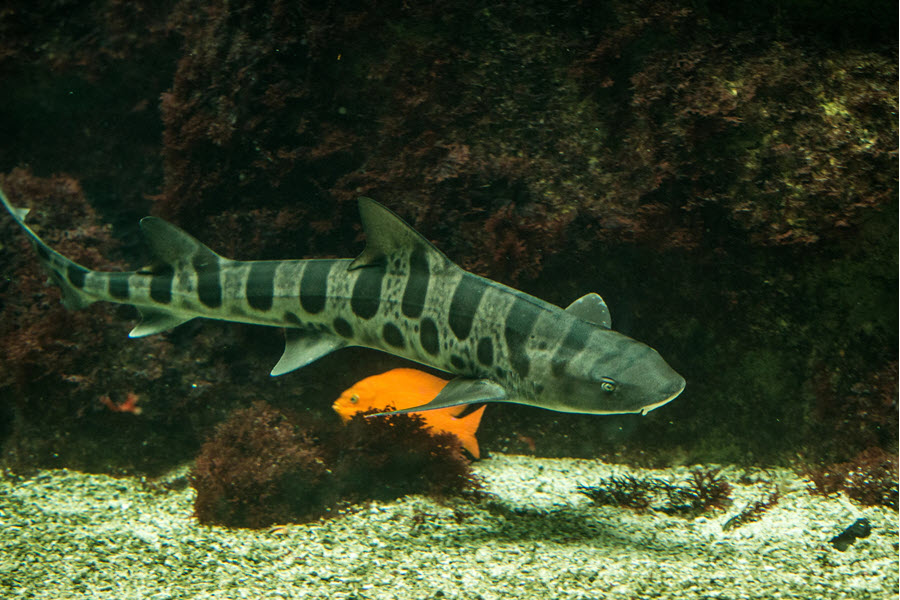
Leopard Shark
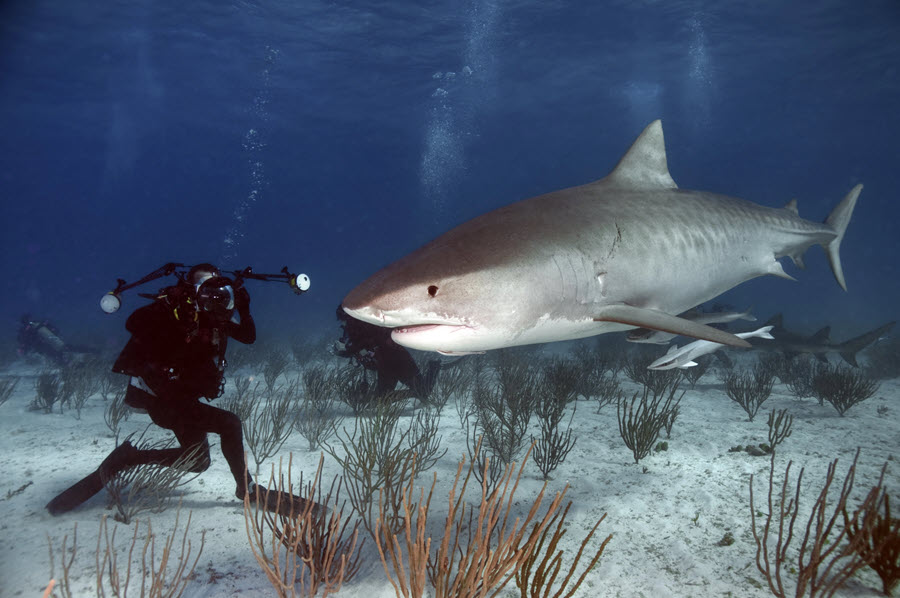
Tiger Shark
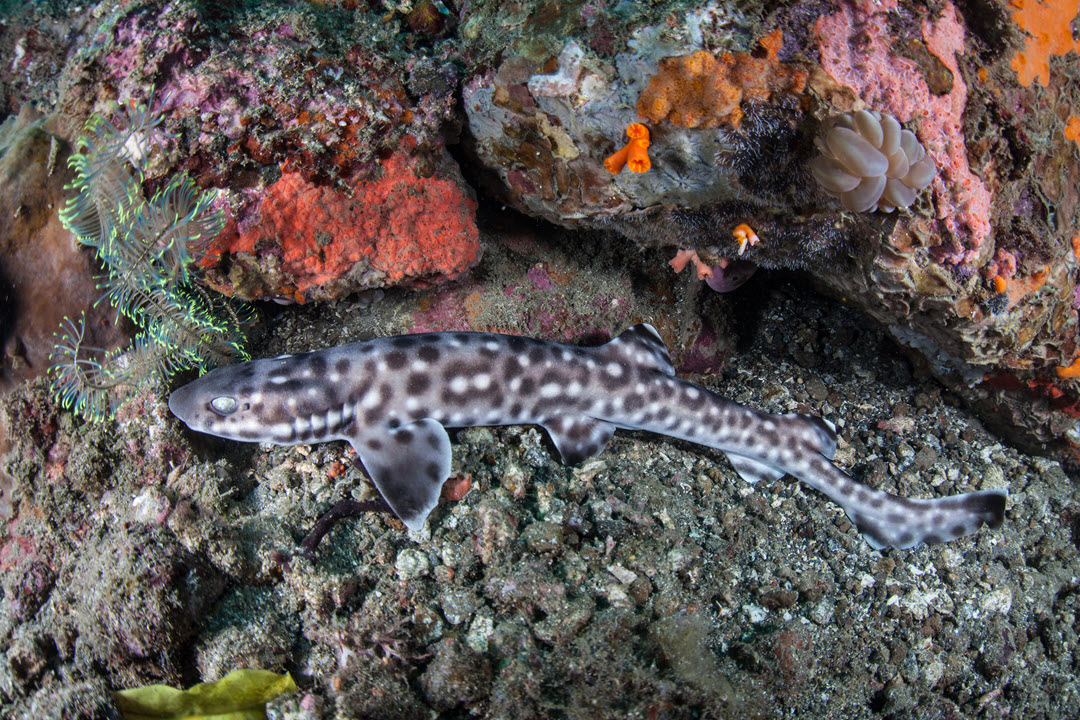
Coral Catshark (Coulored Catshark)
2. Mackerel Sharks
Order: Lamniformes
Origin of Name: The name “mackerel sharks” is the common name used for sharks in the order Lamniformes. This diverse group includes great white sharks, mako sharks, basking sharks, thresher sharks, goblin sharks, sand tiger sharks, and several other distinctive species.
Mackerel sharks are among the fastest, most powerful, and best-known sharks in the world. Found in oceans from tropical waters to cold temperate seas, this diverse group includes apex predators, deep-sea specialists, and even the second-largest fish on Earth. Despite their differences in size and behavior, mackerel sharks share evolutionary traits that distinguish them from other shark groups.
Representative Species
The following five species represent the remarkable diversity of mackerel sharks.
Great White Shark (Carcharodon carcharias)
Perhaps the world’s most famous shark, the great white is a powerful apex predator found in temperate and subtropical oceans worldwide. It feeds on a wide variety of prey, including fish, rays, other sharks, seals, sea lions, and other marine animals.
Shortfin Mako Shark (Isurus oxyrinchus)
The shortfin mako is widely regarded as one of the fastest sharks in the world. Its streamlined body and remarkable agility make it an efficient predator of fast-swimming prey, including tuna and other fishes.
Basking Shark (Cetorhinus maximus)
The basking shark is the second-largest fish in the world, reaching lengths of more than 40 feet (12 meters). Despite its enormous size, it is a filter feeder that consumes zooplankton and other tiny organisms from the water.
Goblin Shark (Mitsukurina owstoni)
The goblin shark is a rare deep-sea species recognized by its long, flattened snout and highly protrusible jaws. Living hundreds to thousands of feet below the ocean surface, it is one of the most unusual sharks alive today.
Common Thresher Shark (Alopias vulpinus)
The common thresher shark is instantly recognizable by its exceptionally long upper tail fin, which can be as long as the rest of its body. It uses this powerful tail like a whip to stun schools of fish before capturing them.
Other Mackerel Sharks
The mackerel shark order also includes several other remarkable species, including:
- Longfin Mako Shark (Isurus paucus)
- Porbeagle Shark (Lamna nasus)
- Salmon Shark (Lamna ditropis)
- Bigeye Thresher Shark (Alopias superciliosus)
- Pelagic Thresher Shark (Alopias pelagicus)
- Sand Tiger Shark (Carcharias taurus)
- Smalltooth Sand Tiger Shark (Odontaspis ferox)
- Crocodile Shark (Pseudocarcharias kamoharai)
- Megamouth Shark (Megachasma pelagios)
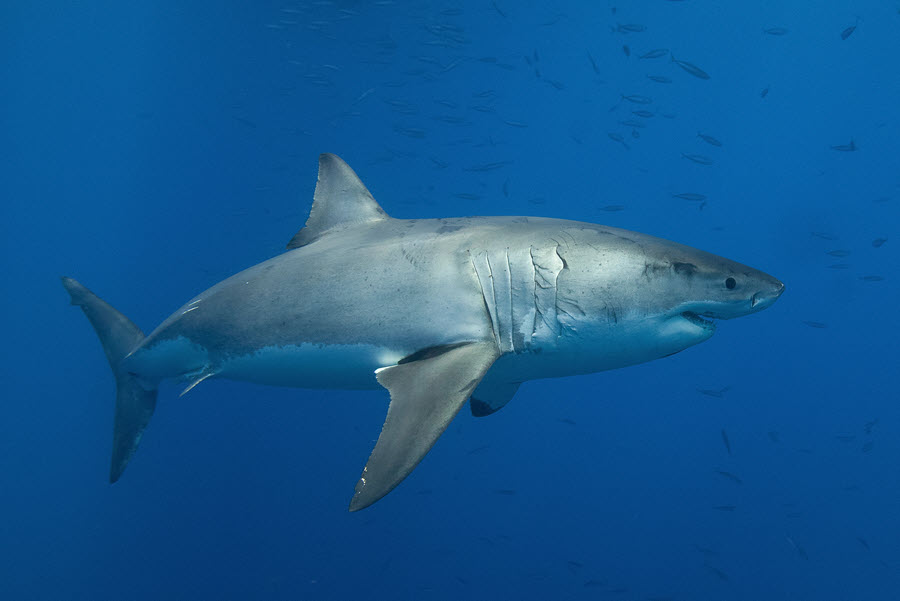
The Great White Shark is a mackerel shark.
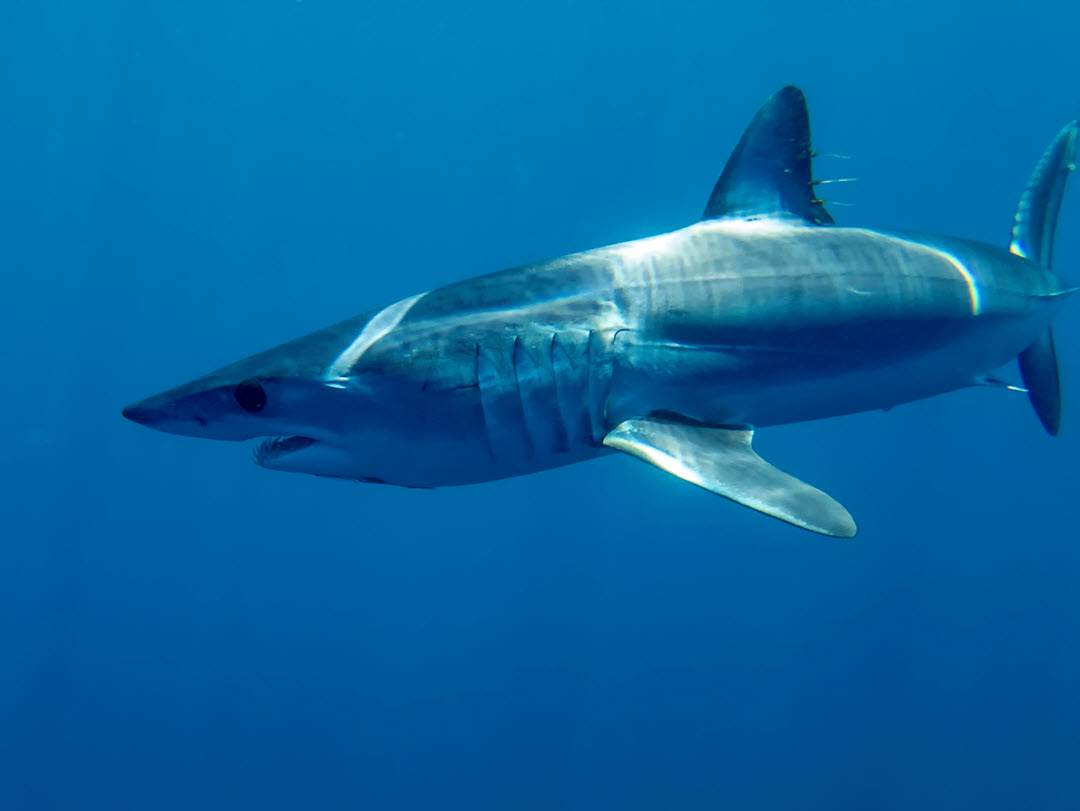
Short Fin Mako
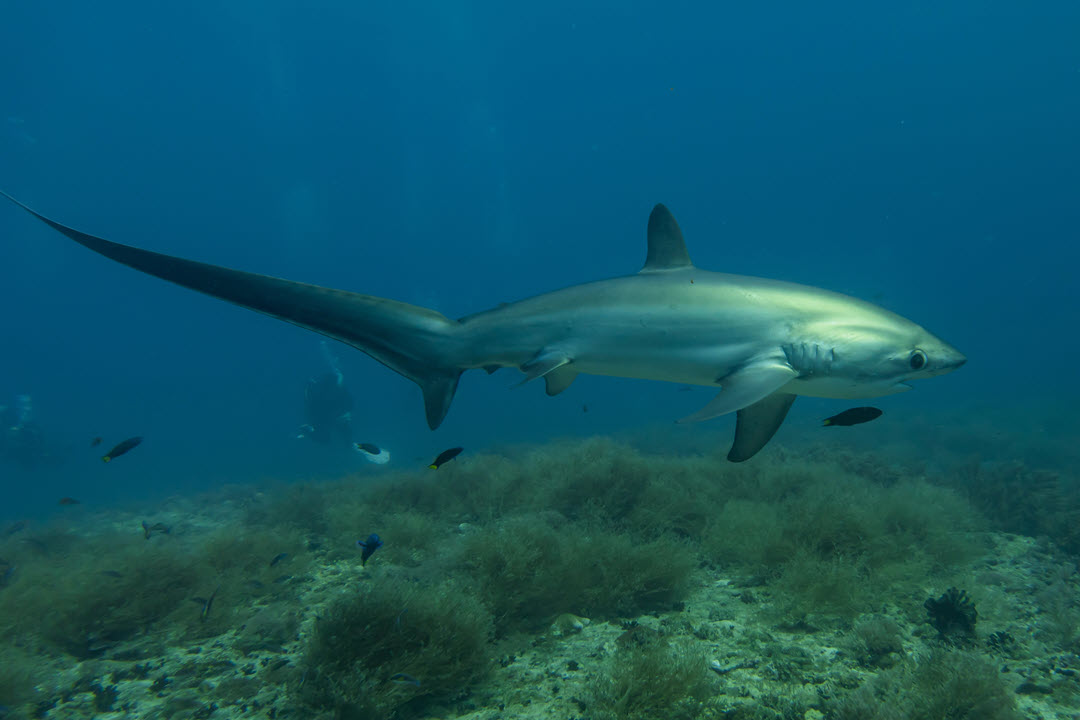
Thresher Shark
3. Carpet Sharks
Order: Orectolobiformes
Origin of Name: Carpet sharks get their name from the ornate patterns and mottled markings found on many species, especially wobbegongs. Their intricate spots, stripes, and blotches resemble the decorative designs of woven carpets. Many carpet sharks are also bottom-dwelling species that rest on the seafloor, where their camouflage helps them blend into reefs, rocks, and sandy bottoms.
Carpet sharks are a diverse group of mostly bottom-dwelling sharks known for their unique body shapes, striking patterns, and specialized hunting strategies. Found primarily in tropical and warm temperate oceans, carpet sharks inhabit coral reefs, rocky coastlines, sandy seafloors, and shallow coastal waters. While many species rely on camouflage to blend into their surroundings, the group also includes the whale shark—the largest fish on Earth.
Unlike the fast-swimming mackerel sharks or active requiem sharks, many carpet sharks spend much of their time resting on the seafloor. Their broad, flattened bodies and excellent camouflage allow them to ambush unsuspecting prey such as fish, crustaceans, octopuses, and other invertebrates. Some species, including nurse sharks, are slow-moving scavengers and predators, while others, such as the whale shark, are gentle filter feeders that consume plankton. This remarkable variety makes carpet sharks one of the most distinctive and diverse shark groups.
Representative Species
The following five sharks represent the diversity of the carpet shark order.
Whale Shark (Rhincodon typus)
The whale shark is the largest fish in the world, reaching lengths of more than 60 feet (18 meters). Despite its enormous size, it is a gentle filter feeder that consumes plankton, small fish, and fish eggs while swimming slowly through tropical oceans. Its distinctive pattern of white spots and stripes makes every individual unique.
Zebra Shark (Stegostoma tigrinum)
The zebra shark is a slow-moving reef species recognized by the bold stripes of juveniles, which gradually change into the spotted pattern seen in adults. It spends much of its time resting on the seafloor and feeds on mollusks, crustaceans, and small fish hidden among coral reefs.
Wobbegong Shark (Orectolobus species)
Wobbegongs, often called “carpet sharks,” are masters of camouflage. Their flattened bodies, intricate patterns, and skin flaps around the mouth allow them to blend almost perfectly with the rocky reef and seafloor. Rather than chasing prey, they lie motionless and ambush fish that swim within striking distance.
Nurse Shark (Ginglymostoma cirratum)
The nurse shark is a slow-moving bottom dweller found throughout the tropical Atlantic and eastern Pacific Oceans. Unlike many sharks, it often rests on the seafloor during the day and becomes more active at night, feeding on crustaceans, mollusks, and small fish using powerful suction.
Epaulette Shark (Hemiscyllium ocellatum)
Native to the shallow coral reefs of Australia and New Guinea, the epaulette shark is famous for its ability to “walk” across the seafloor using its muscular fins. It can also survive for short periods in water with very low oxygen levels, allowing it to explore isolated tide pools where other sharks cannot survive.
Other Carpet Sharks
Other members of the carpet shark group include bamboo sharks and blind sharks, and many additional species of wobbegong.
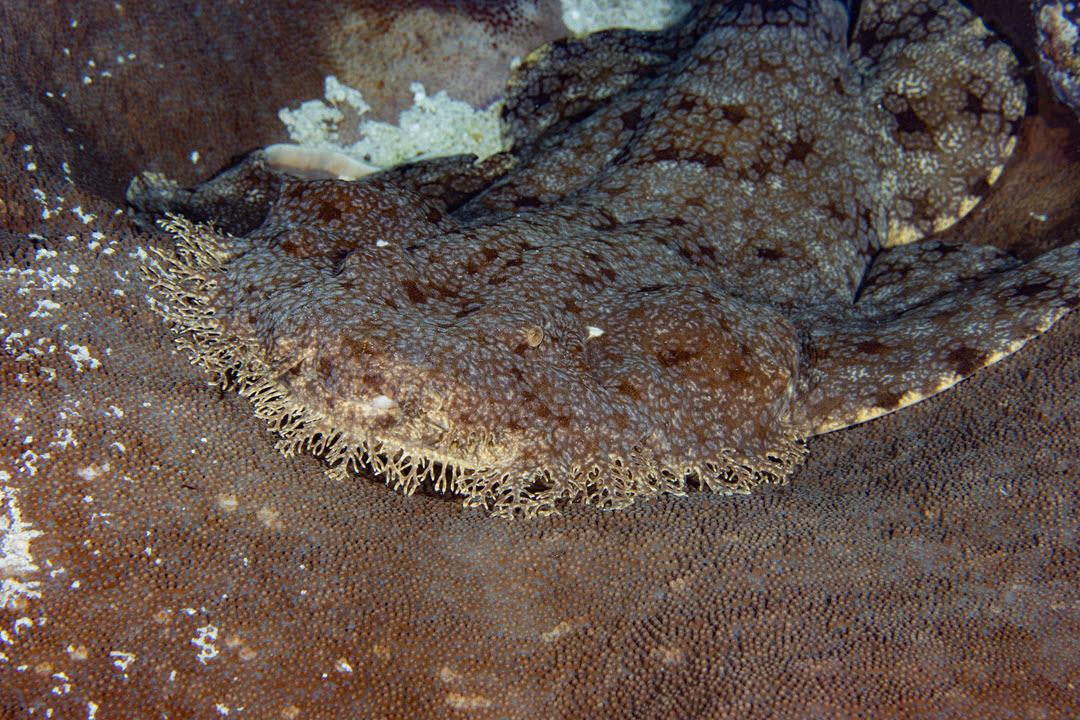
Wobbegong Shark
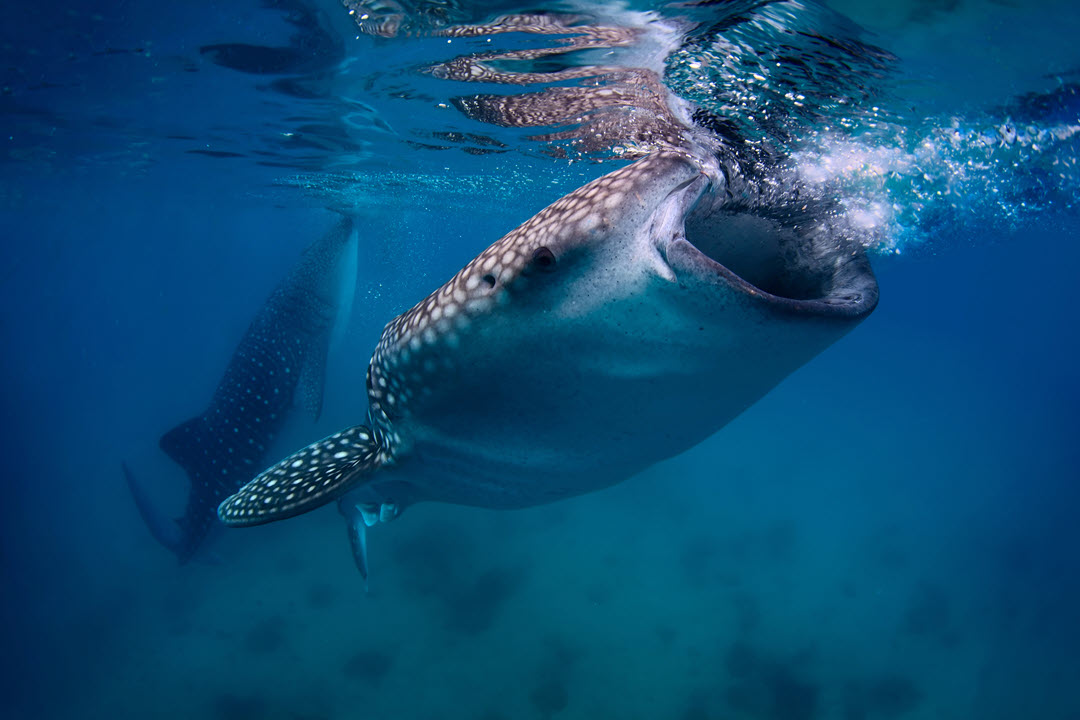
Whale shark feeding
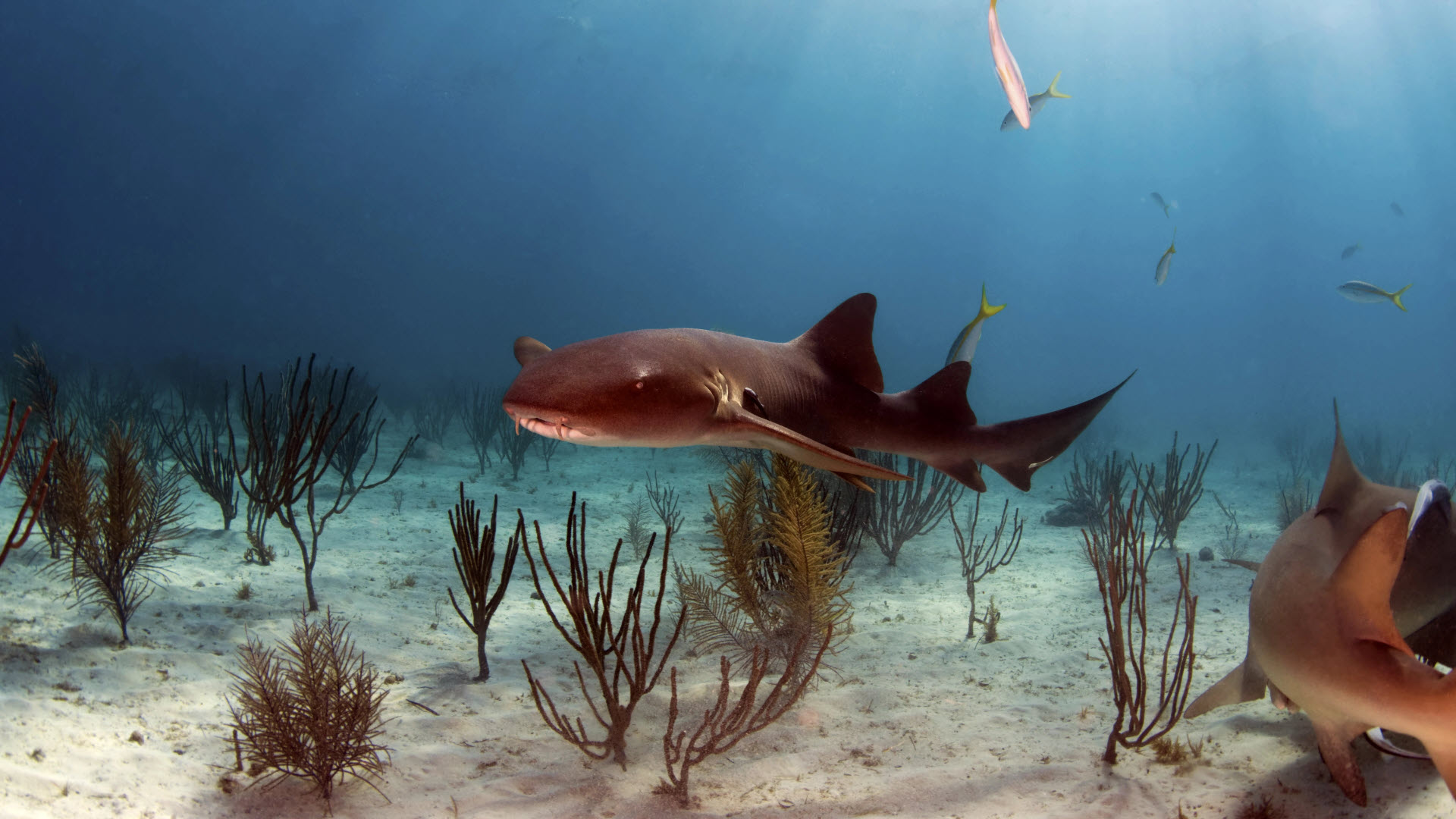
Nurse Shark
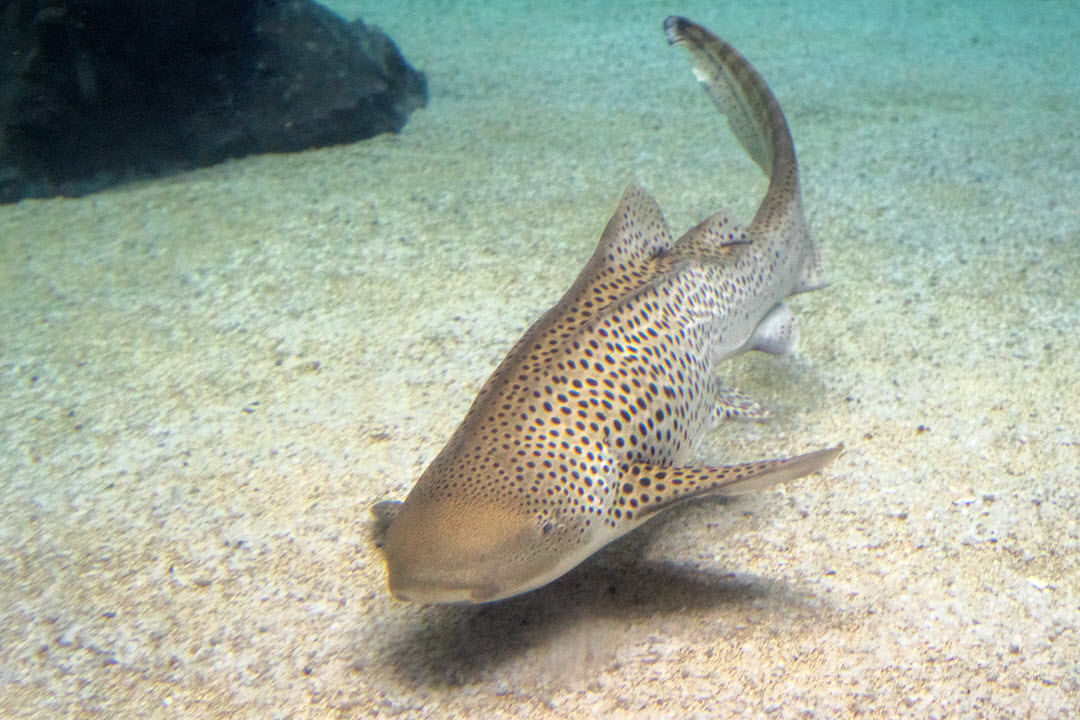
Zebra Shark
4. Dogfish Sharks
Order: Squaliformes
Origin of Name: The name “dogfish” has been used for centuries, but its exact origin is uncertain. One popular explanation is that early fishermen observed these sharks hunting in groups, much like packs of dogs. Another theory suggests the name refers to their persistent feeding behavior or the resemblance of some species’ teeth to those of dogs. Today, the term “dogfish sharks” refers to several families within the order Squaliformes, many of which inhabit deep or cold ocean waters.
Dogfish sharks are a diverse group of generally small to medium-sized sharks found throughout the world’s oceans. While the spiny dogfish is the best-known member, the group also includes sleeper sharks, lanternsharks, kitefin sharks, gulper sharks, and rough sharks. Many species inhabit deep water, where they have evolved remarkable adaptations such as slow metabolisms, large light-sensitive eyes, and, in some species, light-producing organs called photophores.
Representative Dogfish Sharks
Spiny Dogfish (Squalus acanthias)
One of the world’s most widespread shark species, the spiny dogfish is recognized by the venomous spines located in front of each dorsal fin. It often forms large schools and inhabits cool coastal waters.
Greenland Shark (Somniosus microcephalus)
One of the largest and slowest-moving sharks, the Greenland shark lives in the icy waters of the Arctic and North Atlantic and is believed to be the longest-lived vertebrate on Earth, with some individuals exceeding 250 years of age.
Kitefin Shark (Dalatias licha)
A deep-sea predator recognized by its broad fins and dark coloration. It is one of the few sharks known to prey on other sharks and rays.
Portuguese Dogfish (Centroscymnus coelolepis)
A common deep-water shark found on continental slopes around the world. It feeds primarily on fishes, squid, and other deep-sea animals.
Velvet Belly Lanternshark (Etmopterus spinax)
A small deep-sea shark capable of producing light with specialized organs called photophores. This bioluminescence helps camouflage the shark from predators below.
Other Dogfish Shark Families
- Dogfish Sharks (Squalidae)
- Sleeper Sharks (Somniosidae)
- Lanternsharks (Etmopteridae)
- Kitefin Sharks (Dalatiidae)
- Gulper Sharks (Centrophoridae)
- Rough Sharks (Oxynotidae)
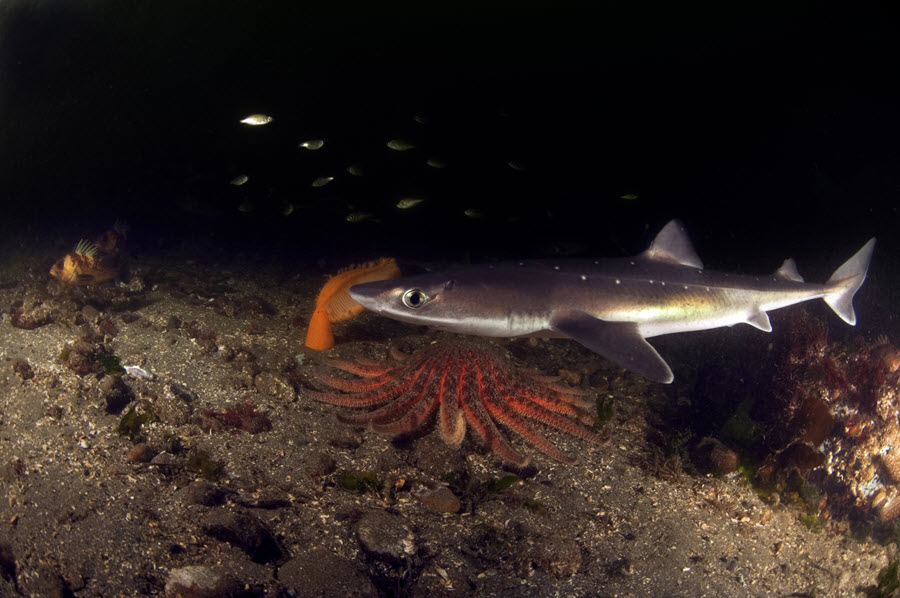
Spiny Dogfish Shark
5. Bullhead Sharks
Order: Heterodontiformes
Origin of Name: Bullhead sharks are named for their broad, blunt heads, which resemble the shape of a bull’s head. Their heavy bodies and prominent ridges above the eyes give them a sturdy appearance that distinguishes them from most other sharks. The group belongs to the order Heterodontiformes, whose members are among the most primitive living sharks.
Bullhead sharks are small, bottom-dwelling sharks found in temperate and tropical coastal waters. They spend much of their time resting on the seafloor, where they feed on hard-shelled prey such as sea urchins, crabs, mollusks, and other bottom-dwelling invertebrates. Unlike many fast-swimming sharks, bullhead sharks rely on strong jaws and crushing teeth rather than speed to capture their food.
Representative Bullhead Sharks
Port Jackson Shark (Heterodontus portusjacksoni)
Native to southern Australia, the Port Jackson shark is easily recognized by the dark harness-like markings across its body. It feeds primarily on sea urchins, mollusks, and crustaceans.
Horn Shark (Heterodontus francisci)
Found along the Pacific coast of North America, the horn shark has short spines in front of each dorsal fin and powerful jaws for crushing shellfish and sea urchins.
Crested Bullhead Shark (Heterodontus galeatus)
An Australian species distinguished by the prominent ridges above its eyes. It inhabits rocky reefs and feeds on a variety of bottom-dwelling animals.
Galapagos Bullhead Shark (Heterodontus quoyi)
Found around the Galápagos Islands and nearby Pacific waters, this species inhabits rocky reefs and shallow coastal habitats.
Japanese Bullhead Shark (Heterodontus japonicus)
Native to the western Pacific, this species is recognized by its brown markings and preference for rocky coastal environments.
Other Bullhead Sharks
- Mexican Horn Shark (Heterodontus mexicanus)
- White-Spotted Bullhead Shark (Heterodontus ramalheira)
- Zebra Bullhead Shark (Heterodontus zebra)
- Oman Bullhead Shark (Heterodontus omanensis)
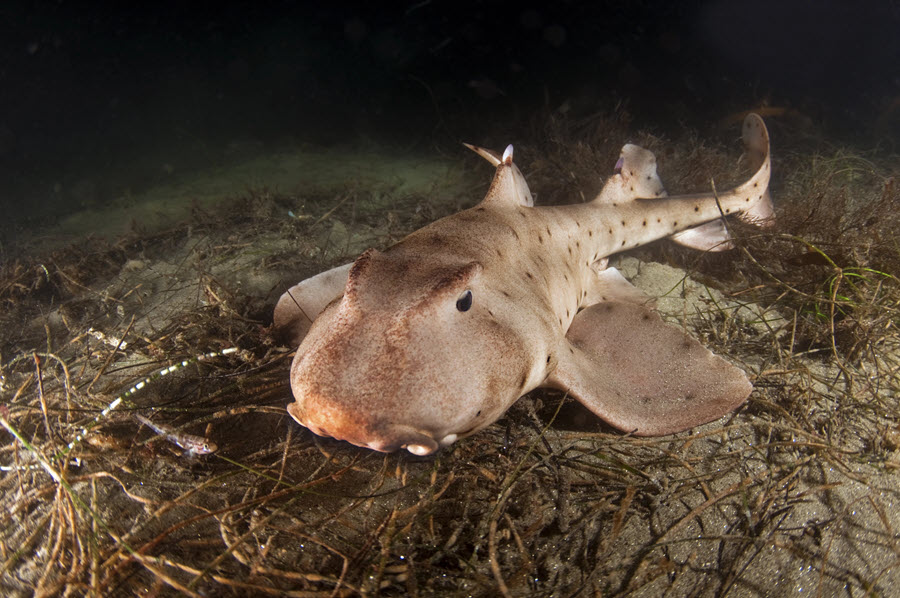
A Horn Shark is a member of the bullhead shark group.
6. Cow & Frilled Sharks
Order: Hexanchiformes
Origin of Name: The name “cow shark” is believed to have originated from the broad, blunt head and slow, heavy-bodied appearance of these sharks, which early naturalists thought resembled a cow. The name “frilled shark” comes from the six pairs of frilly gill slits that give the shark its distinctive appearance. Together, cow sharks and frilled sharks make up the ancient shark order Hexanchiformes, one of the oldest surviving lineages of living sharks.
Cow and frilled sharks are among the most ancient groups of living sharks, with a lineage that dates back more than 190 million years. Unlike most modern sharks, which have five gill slits, members of this order possess six or seven gill slits on each side of their heads—a unique characteristic that makes them easy to identify. Today, only a handful of living species remain, inhabiting deep offshore waters, continental slopes, and occasionally shallow coastal environments around the world.
Cow and frilled sharks have changed relatively little over millions of years and retain several primitive features that have been lost in more modern shark groups. Most species are slow-moving predators that feed on fish, rays, cephalopods, crustaceans, and even marine mammals. While they are generally associated with deep water, some species regularly enter shallow bays and coastal waters, where they become some of the largest predators in their environment.
Representative Species
The following five species represent the diversity of the cow and frilled shark order.
Bluntnose Sixgill Shark (Hexanchus griseus)
The bluntnose sixgill shark is the largest living cow shark and one of the largest predatory sharks in the world, reaching lengths of more than 16 feet (5 meters). Found in deep oceans worldwide, it occasionally ventures into shallow coastal waters at night to hunt fish, rays, squid, and other sharks.
Bigeye Sixgill Shark (Hexanchus nakamurai)
Smaller than its bluntnose relative, the bigeye sixgill shark inhabits deep tropical and subtropical waters throughout the Atlantic, Indian, and Pacific Oceans. It is recognized by its large green eyes and slender body, adaptations for life in dimly lit deep-sea environments.
Sharpnose Sevengill Shark (Heptranchias perlo)
The sharpnose sevengill shark is a slender deep-water species found along continental slopes worldwide. It preys primarily on fish, squid, and crustaceans and is one of the few living sharks with seven gill slits.
Broadnose Sevengill Shark (Notorynchus cepedianus)
Unlike many cow sharks, the broadnose sevengill shark frequently inhabits shallow coastal waters, estuaries, and bays. It is a powerful predator that feeds on fish, rays, seals, dolphins, and even other sharks, making it one of the dominant predators in many coastal ecosystems.
Frilled Shark (Chlamydoselachus anguineus)
Often called a “living fossil,” the frilled shark is one of the most unusual sharks alive today. Its long, eel-like body, frilled gill slits, and primitive appearance closely resemble sharks that lived millions of years ago. It inhabits deep waters around the world, where it ambushes fish and squid.
Other Cow & Frilled Sharks
The cow shark and frilled shark order includes only a small number of living species, including:
- Southern African Frilled Shark (Chlamydoselachus africana)
- Atlantic Sixgill Shark (Hexanchus vitulus)
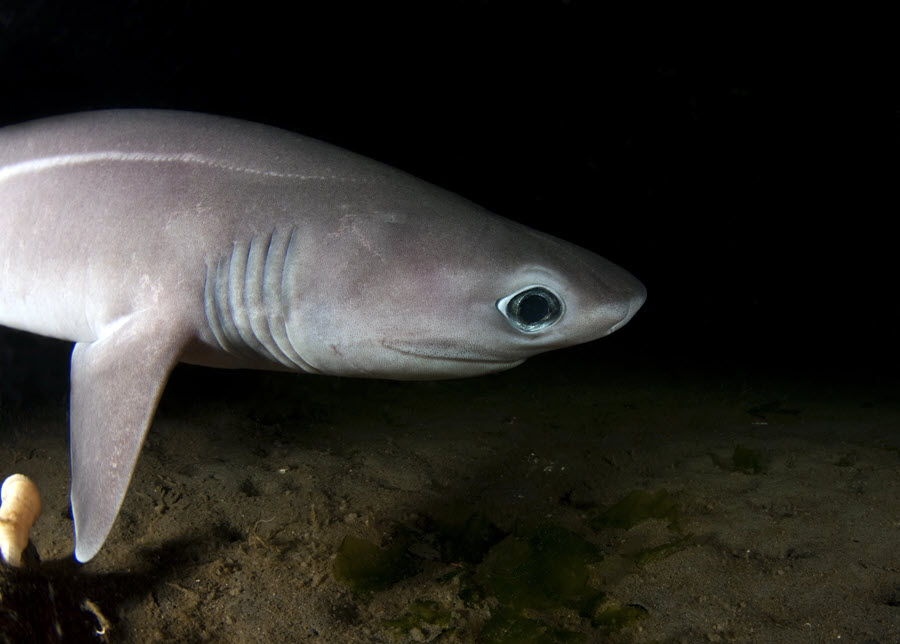
A young Sixgill Shark
7. Angel Sharks
Order: Squatiniformes
Origin of Name: Angel sharks are named for their broad, wing-like pectoral fins, which give them the appearance of an angel with outstretched wings when viewed from above. Although they closely resemble rays, angel sharks are true sharks belonging to the order Squatiniformes. Their flattened bodies and wing-like fins are adaptations for life on the seafloor, where they lie partially buried while waiting to ambush passing prey.
Angel sharks are a unique group of bottom-dwelling sharks that closely resemble rays because of their broad, flattened bodies and wide pectoral fins. Despite their appearance, angel sharks are true sharks and belong to their own distinct order. They inhabit sandy and muddy seafloors in coastal waters and on continental shelves, where they spend much of their time partially buried beneath the sediment, waiting for prey to pass overhead.
Unlike fast-swimming sharks that actively pursue their prey, angel sharks are ambush predators. Their excellent camouflage allows them to remain almost invisible until they rapidly lunge upward to capture passing fish, squid, crustaceans, and other bottom-dwelling animals. Although once widespread throughout many of the world’s temperate and tropical oceans, numerous angel shark species have experienced dramatic population declines due to bottom trawling, habitat degradation, and overfishing. Today, several species are considered among the most threatened sharks in the world.
Representative Species
The following five species represent the diversity of the angel shark order.
Angel Shark (Squatina squatina)
Often called the common or European angel shark, this species was once widespread throughout the northeastern Atlantic Ocean and the Mediterranean Sea. Due to severe overfishing and habitat loss, it is now listed as Critically Endangered and has disappeared from much of its historic range.
Pacific Angel Shark (Squatina californica)
The Pacific angel shark inhabits the coastal waters of California and Baja California, where it buries itself in sandy seafloors near reefs and kelp forests. It feeds primarily on fish, squid, and crustaceans and is one of the best-studied angel shark species.
Japanese Angel Shark (Squatina japonica)
Found in the coastal waters of Japan, Korea, Taiwan, and eastern China, the Japanese angel shark prefers sandy and muddy bottoms where it lies concealed while waiting to ambush prey.
Sawback Angel Shark (Squatina aculeata)
Recognized by the row of enlarged thorn-like denticles along its back, the sawback angel shark inhabits the eastern Atlantic Ocean and parts of the Mediterranean Sea. It is also classified as Critically Endangered due to extensive fishing pressure.
Clouded Angel Shark (Squatina nebulosa)
The clouded angel shark is native to the western Pacific, including the coastal waters of Japan, China, and Taiwan. Its mottled coloration provides excellent camouflage against sandy and rocky seafloors, allowing it to ambush unsuspecting prey.
Other Angel Sharks
The angel shark order also includes many additional species, including:
- Argentine Angel Shark (Squatina argentina)
- Chilean Angel Shark (Squatina armata)
- Australian Angel Shark (Squatina australis)
- Indonesian Angel Shark (Squatina legnota)
- African Angel Shark (Squatina africana)
- Smoothback Angel Shark (Squatina oculata)
- Mexican Angel Shark (Squatina mexicana)
- Ocellated Angel Shark (Squatina tergocellatoides)
- Taiwan Angel Shark (Squatina formosa)
- Hidden Angel Shark (Squatina caillieti)
- And many more…
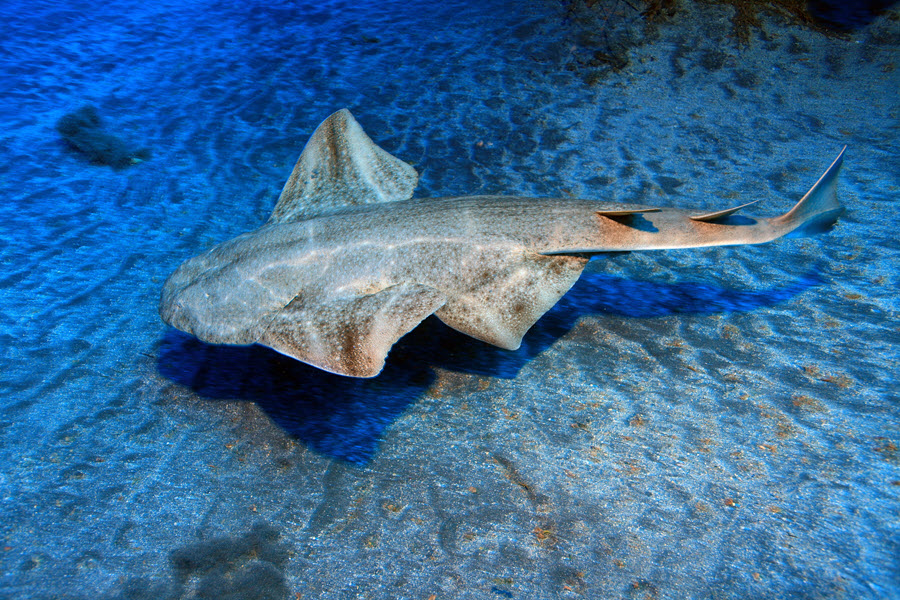
Angel Shark
8. Sawsharks
Order: Pristiophoriformes
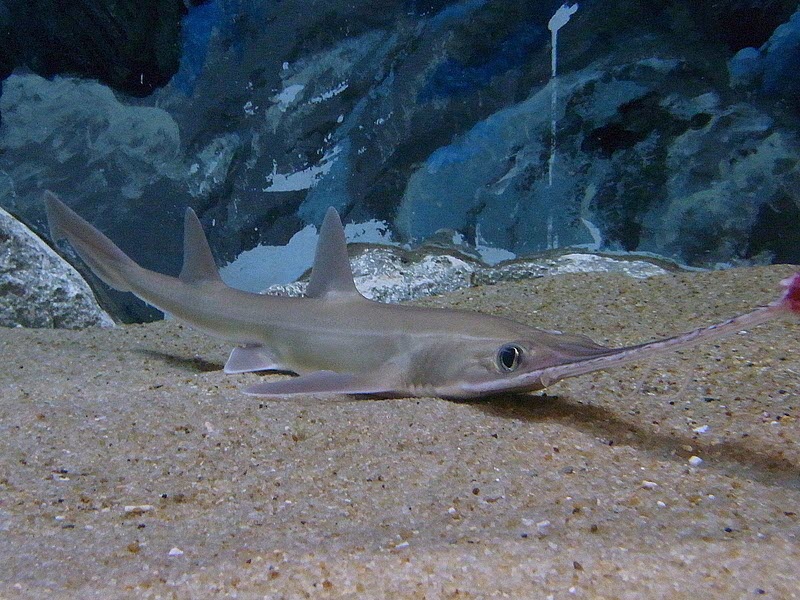
Origin of Name: Sawsharks are named for their long, flattened snouts, called rostrums, which are lined with sharp, tooth-like projections that resemble the blade of a saw. The order name Pristiophoriformes is derived from the Greek pristis (“saw”) and phoros (“bearing”), meaning “saw-bearing.” Although they resemble sawfish, sawsharks are true sharks that evolved this distinctive adaptation independently.
Sawsharks are a small group of bottom-dwelling sharks recognized by their long, flattened snouts lined with sharp, tooth-like projections that resemble the blade of a saw. Although they are often confused with sawfish, sawsharks are true sharks and belong to their own distinct order. They are found primarily on continental shelves and upper continental slopes in the Atlantic, Indian, and Pacific Oceans, where they inhabit sandy and muddy seafloors.
The elongated snout, known as a rostrum, is one of the sawshark’s most specialized adaptations. It contains thousands of sensory organs capable of detecting the weak electrical signals produced by hidden prey. When a fish or crustacean is located, the sawshark rapidly swings its rostrum from side to side to stun or injure its prey before capturing it. Many species also possess a pair of barbels beneath the snout that help detect food buried in the sediment.
Representative Species
The following five species represent the diversity of the sawshark order.
Common Sawshark (Pristiophorus cirratus)
The common sawshark is the best-known member of the group and is found along the southern coast of Australia. It inhabits sandy continental shelf habitats where it feeds on small fish, squid, and crustaceans hidden within the seafloor.
Japanese Sawshark (Pristiophorus japonicus)
Native to the western Pacific Ocean, the Japanese sawshark occurs in the coastal waters of Japan, Korea, and China. It hunts along sandy and muddy bottoms, using its highly sensitive rostrum to detect prey concealed beneath the sediment.
Bahamas Sawshark (Pristiophorus schroederi)
The Bahamas sawshark inhabits deep waters of the western Atlantic Ocean near the Bahamas. Living at depths of several hundred meters, it remains one of the least frequently observed sawshark species.
Tropical Sawshark (Pristiophorus delicatus)
The tropical sawshark is found in northern Australia and nearby waters, where it inhabits warm continental shelf environments. It is one of the smaller members of the group and primarily feeds on small bottom-dwelling fishes and invertebrates.
Sixgill Sawshark (Pliotrema warreni)
Unlike most sawsharks, which have five gill slits, the sixgill sawshark has six gill slits, making it one of the most distinctive members of the order. Native to the southwestern Indian Ocean, it inhabits deeper coastal waters off southern Africa.
Other Sawsharks
The sawshark order also includes several additional species, including:
- African Dwarf Sawshark (Pristiophorus nancyae)
- Kaja’s Sixgill Sawshark (Pliotrema kajae)
- Anna’s Sixgill Sawshark (Pliotrema annae)
- Shortnose Sawshark (Pristiophorus nudipinnis)
- Longnose Sawshark (Pristiophorus lanceolatus)
- Philippine Sawshark (Pristiophorus lanae)
Sawsharks vs. Sawfish
Sawsharks are often mistaken for sawfish, but they are very different animals. Sawsharks are true sharks, while sawfish are actually rays. An easy way to tell them apart is that sawsharks have barbels (whisker-like sensory organs) on their rostrum, while sawfish do not. Sawsharks also have their gill slits on the sides of their heads like other sharks, whereas sawfish have gill openings underneath their bodies, like all rays.
9. Bramble Sharks
Order: Echinorhiniformes
Origin of Name: Bramble sharks get their name from the large, thorn-like denticles scattered across their bodies. These rough projections resemble the thorns or prickles of a bramble. The scientific name Echinorhinus also refers to this distinctive skin: echinos comes from Greek for “spiny” or “sea urchin,” while rhinus refers to a shark.
Bramble sharks are a very small and unusual group of sharks found mainly in deep ocean waters. FishBase places them in their own order, Echinorhiniformes, with a single living family, Echinorhinidae. Unlike the much larger shark orders, the group contains only two living species: the Bramble Shark and the Prickly Shark.
These sharks have stout bodies, short snouts, two small dorsal fins positioned far back on the body, and no anal fin. Their most noticeable feature is their unusually rough skin, which is covered with large thorn-like denticles. Bramble sharks are generally slow-moving sharks associated with the seafloor, particularly along continental and island shelves and slopes. Although primarily deep-water animals, the Bramble Shark has occasionally been recorded in relatively shallow water.
Representative Species
Because there are only two living species, both represent the bramble shark order.
Bramble Shark (Echinorhinus brucus)
The Bramble Shark is a large, heavy-bodied shark distinguished by enormous thorn-like denticles scattered irregularly over its skin. It can reach about 10 feet (3.1 meters) in length and occurs in the Atlantic, Mediterranean, Indian, and western Pacific Oceans. It is usually found in deep water along continental and island shelves and upper slopes, where it feeds on smaller sharks, bony fishes, and crabs.
Prickly Shark (Echinorhinus cookei)
The Prickly Shark is the other living member of the order. Like the Bramble Shark, it has a stout body covered with conspicuous thorn-like denticles. It occurs primarily in the Pacific Ocean and can grow considerably larger than many people would expect from such a little-known deep-water shark—FishBase records a maximum length of about 13 feet (4 meters).
Bramble Shark Family
- Bramble Sharks (Echinorhinidae)
- Bramble Shark (Echinorhinus brucus)
- Prickly Shark (Echinorhinus cookei)
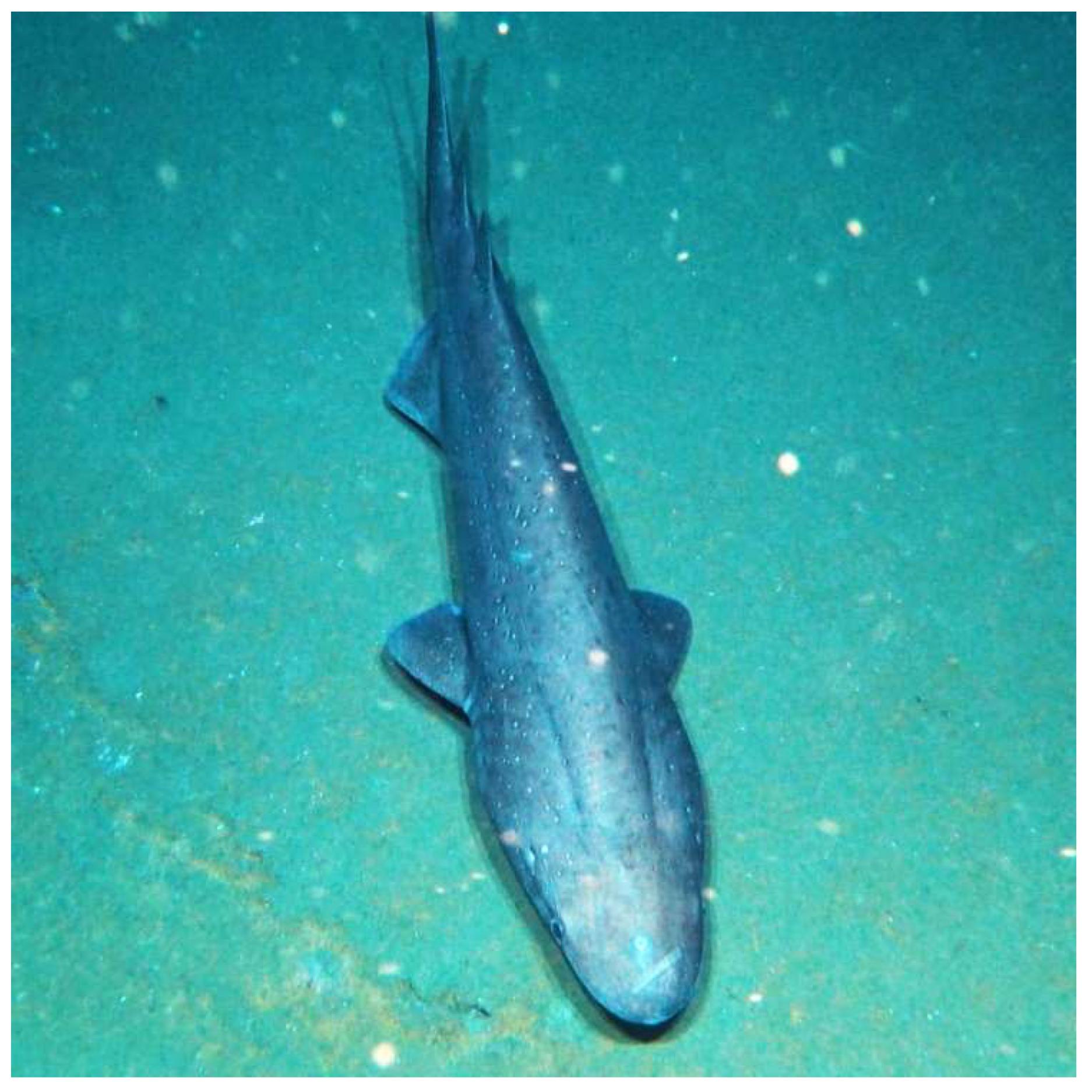
Bramble Shark
First Record of Bramble Sharks, Echinorhinus brucus (Echinorhiniformes, Echinorhinidae), in the United Arab Emirates
License: CC BY 4.0
Article Shark Taxonomy & Reference Sources
FishBase — https://www.fishbase.org/
World Register of Marine Species (WoRMS) — https://www.marinespecies.org/
IUCN Red List of Threatened Species — https://www.iucnredlist.org/