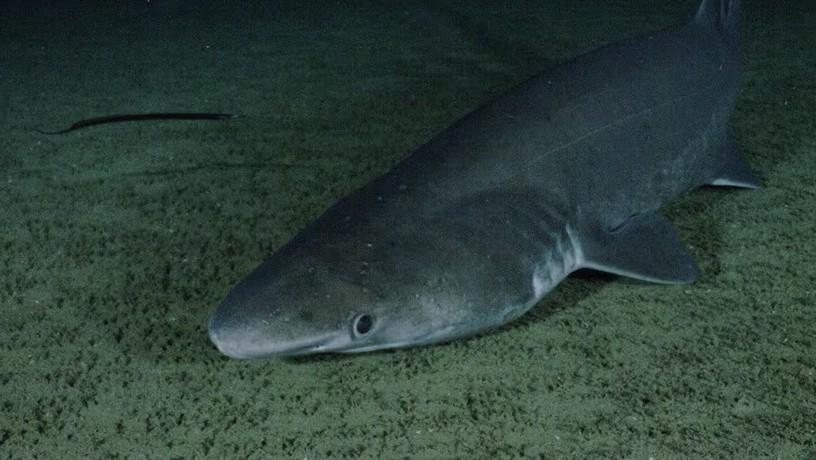
Types of Sharks
Sharks are a diverse group of fishes with hundreds of living species. Scientists organize living sharks into nine major groups, called orders. Sharks within each order share important anatomical and evolutionary characteristics, although they may differ greatly in size, appearance, habitat, and behavior.
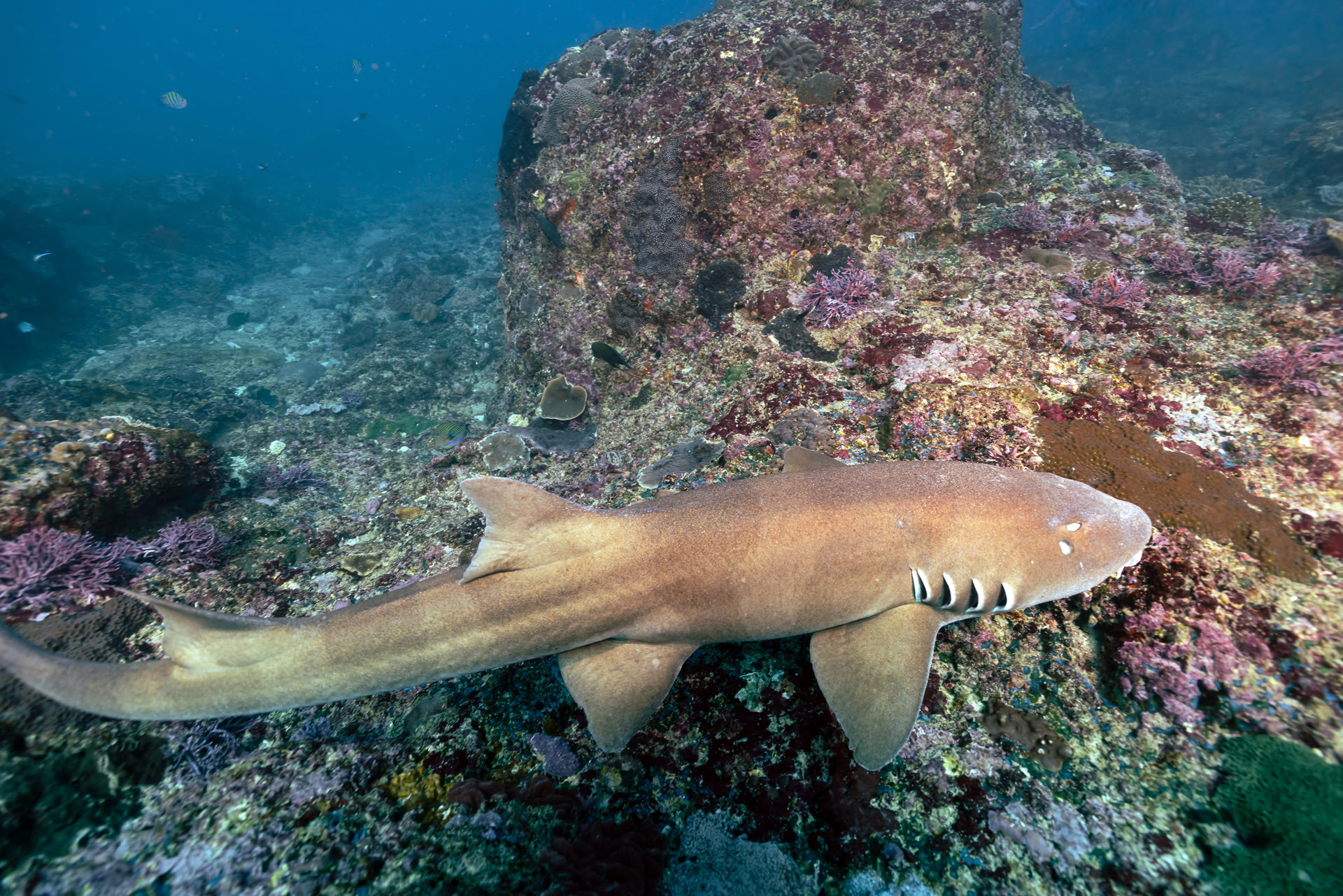
Grey Bamboo Shark – Bali
SHARK PAGES
Ground Sharks
Ground sharks belong to the order Carcharhiniformes, the largest and most diverse order of living sharks. They occur throughout much of the world’s oceans, from warm tropical reefs and shallow coastal waters to the open ocean and deep sea.
Most ground sharks have five pairs of gill slits, two dorsal fins without spines, an anal fin, and a mouth positioned behind the front of the eyes. One of their most distinctive features is a protective membrane called a nictitating membrane that can cover the eye.
The group includes sharks with remarkably different appearances and ways of life. Hammerhead sharks have broad, flattened heads, while catsharks are generally smaller and often live near the seafloor. Requiem sharks include many of the streamlined sharks commonly seen in coastal and tropical waters.
Sharks in this group include: tiger shark, bull shark, blue shark, blacktip reef shark, oceanic whitetip shark, scalloped hammerhead, great hammerhead, leopard shark, small-spotted catshark, and chain catshark.
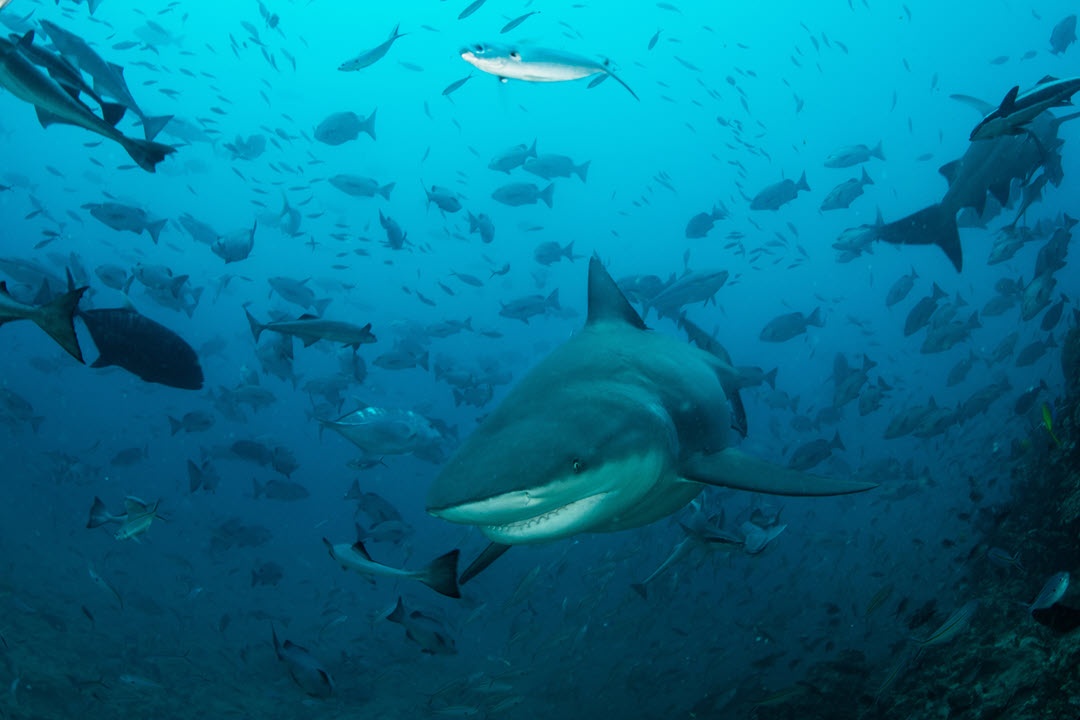
Bull Shark – Fiji
Mackerel Sharks
Mackerel sharks belong to the order Lamniformes. This group includes some of the world’s most familiar sharks, but its members range from powerful open-ocean swimmers to unusual deep-water species.
Mackerel sharks have five pairs of gill slits, two dorsal fins, an anal fin, and no nictitating membrane over the eyes. Their mouths extend behind the eyes, and many species have relatively large mouths and prominent teeth.
The sharks in this order can look very different from one another. Some, such as great white and mako sharks, have streamlined bodies adapted for active swimming. Others have highly specialized forms. The goblin shark has a long flattened snout and protrusible jaws, while the basking shark is a huge filter feeder that consumes tiny organisms from the water.
Sharks in this group include: great white shark, shortfin mako, longfin mako, basking shark, goblin shark, sand tiger shark, bigeye sand tiger shark, common thresher, bigeye thresher, and pelagic thresher.
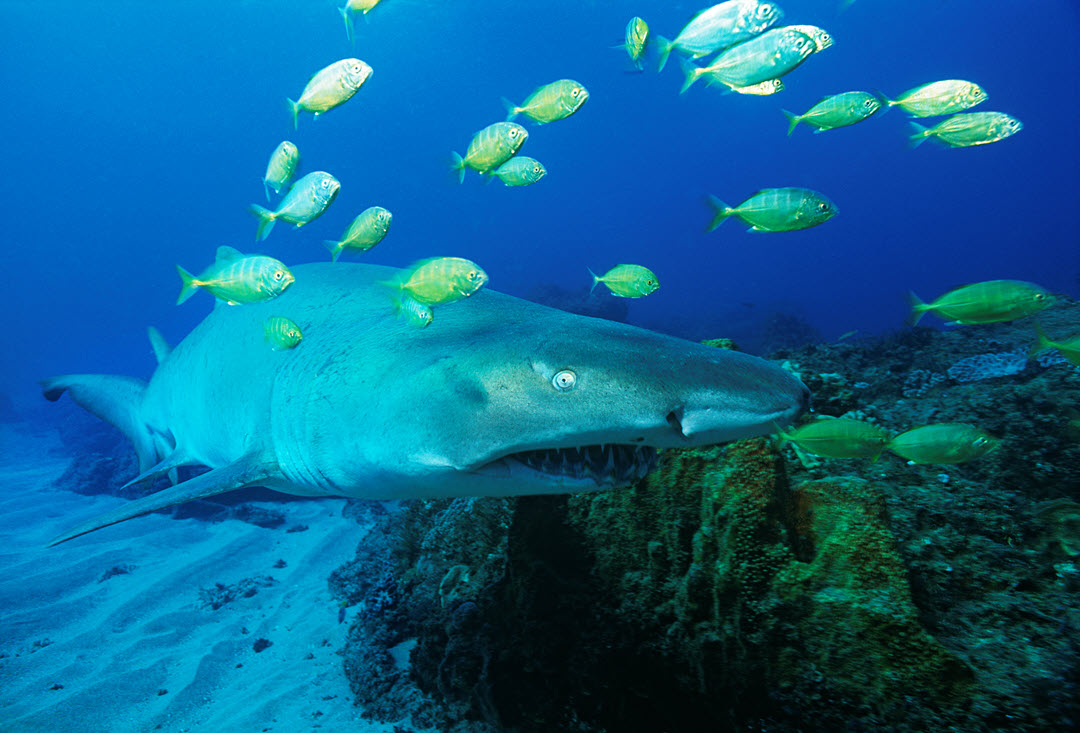
Sand Tiger Shark – South Africa
Carpet Sharks
Carpet sharks belong to the order Orectolobiformes. Most occur in warm tropical and subtropical waters, particularly in the Indo-Pacific region, although individual species occupy a variety of marine habitats.
Members of this group have five pairs of gill slits, two dorsal fins without spines, and an anal fin. Their mouths are located in front of or close to the eyes. Many also have barbels—small sensory structures near the mouth that help them investigate their surroundings.
Carpet sharks display an extraordinary range of forms. Wobbegongs have flattened bodies and intricate patterns that help them blend into the seafloor. Bamboo and epaulette sharks are relatively small bottom-dwellers, while the whale shark is the largest living fish and feeds by filtering plankton and other small organisms from the water.
Sharks in this group include: whale shark, tawny nurse shark, nurse shark, zebra shark, tasseled wobbegong, spotted wobbegong, ornate wobbegong, brownbanded bamboo shark, whitespotted bamboo shark, and epaulette shark.
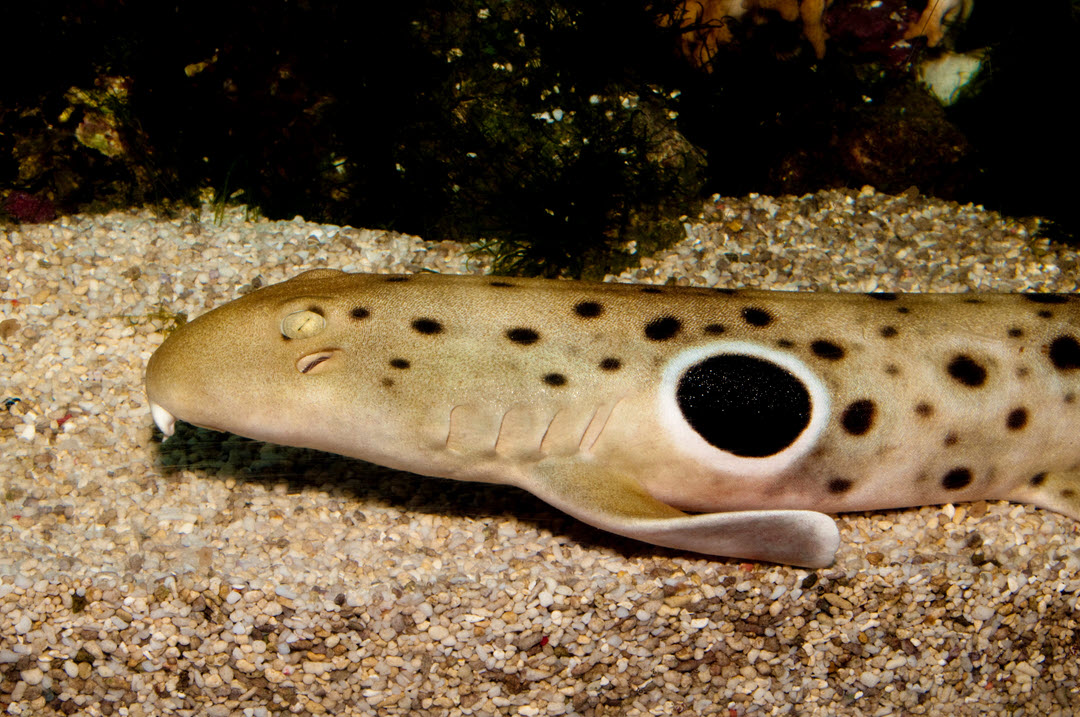
Epaulette Shark
Dogfish Sharks
Dogfish sharks belong to the order Squaliformes. They are an extremely diverse group found throughout the world’s oceans, and many species live in deep water along continental slopes and in other habitats far below the surface.
These sharks have five pairs of gill slits and two dorsal fins but lack an anal fin. Many species have a spine in front of each dorsal fin, although this feature is not present in every member of the order.
Dogfish sharks include some particularly unusual deep-sea species. Lanternsharks can produce their own light through bioluminescent organs called photophores. The group also includes sleeper sharks, which contain some very large cold-water species, as well as the tiny dwarf lanternshark, one of the smallest known sharks.
Sharks in this group include: spiny dogfish, Greenland shark, Pacific sleeper shark, Portuguese dogfish, cookiecutter shark, kitefin shark, velvet belly lanternshark, dwarf lanternshark, black dogfish, and gulper shark.
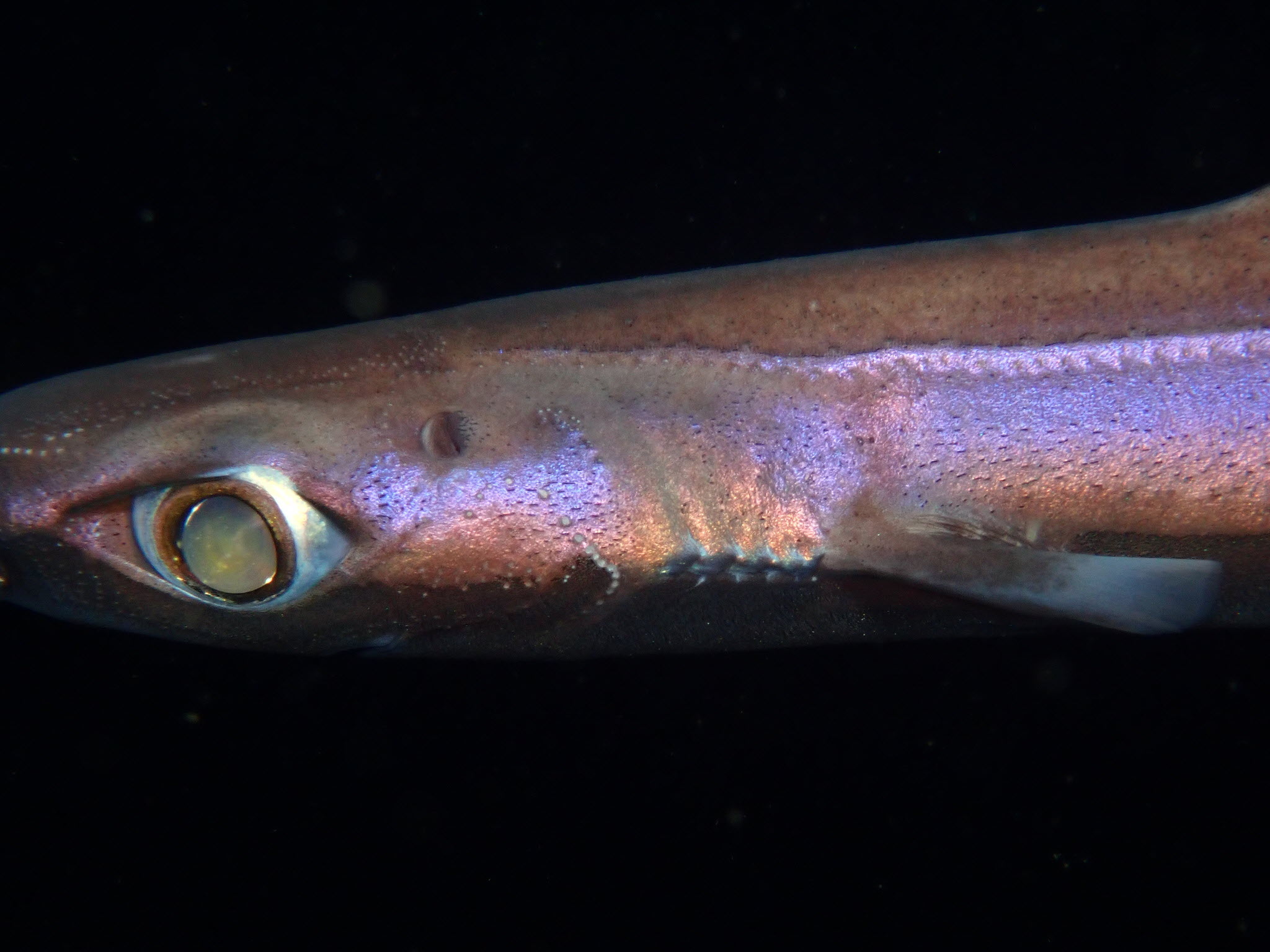
Bullhead Sharks
Bullhead sharks belong to the order Heterodontiformes, a small group of bottom-dwelling sharks found mainly in warm and temperate coastal waters of the Pacific and Indian oceans.
They have broad heads, blunt snouts, prominent ridges above their eyes, five pairs of gill slits, and two dorsal fins, each with a strong spine. They also have an anal fin. Their unusual head shape gives the group its common name.
Bullhead sharks are also known for having different kinds of teeth in different parts of their mouths. Small pointed teeth at the front help grasp food, while broad flattened teeth farther back can crush hard-shelled prey such as crabs, sea urchins, and mollusks. This combination of different tooth shapes is reflected in the scientific name *Heterodontus*, meaning “different teeth.”
Sharks in this group include: horn shark, Port Jackson shark, zebra bullhead shark, Japanese bullhead shark, Mexican hornshark, Galapagos bullhead shark, Oman bullhead shark, whitespotted bullhead shark, small bullhead shark, and crested bullhead shark.
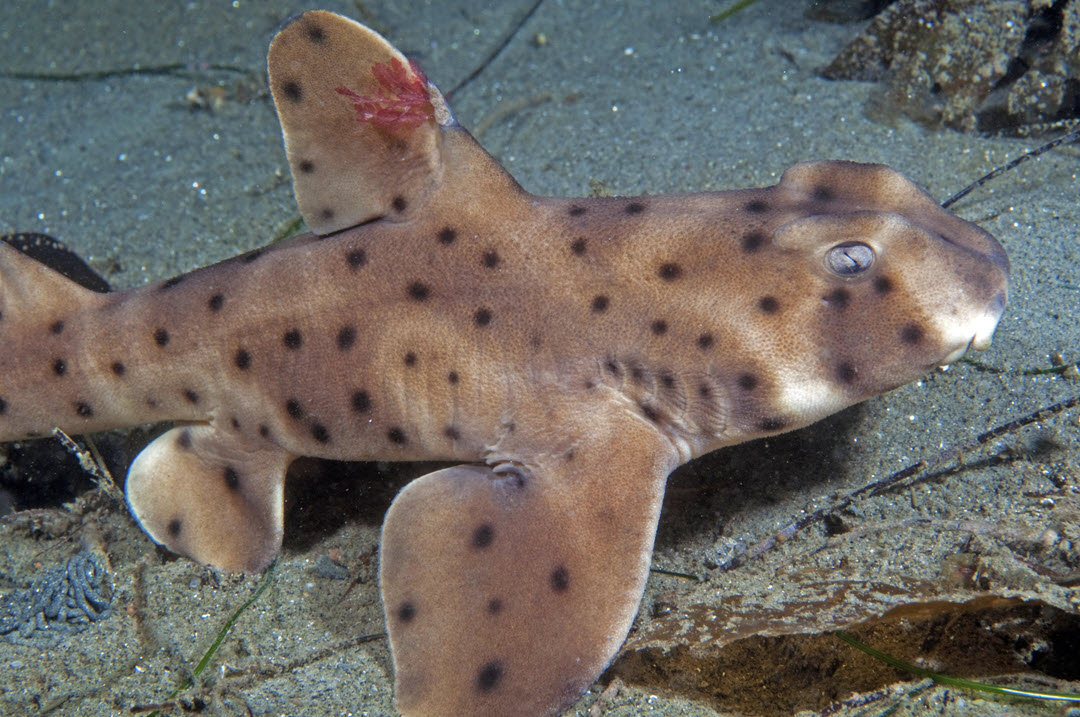
Horn Shark
Cow and Frilled Sharks
Cow and frilled sharks belong to the order Hexanchiformes, an ancient branch of living sharks. Most inhabit deep water, although some species regularly enter shallower coastal areas.
Unlike most modern sharks, which have five pairs of gill slits, members of this order have six or seven pairs. They also have only one dorsal fin, positioned far back on the body. These characteristics help distinguish them from other living shark groups.
The order contains two very different forms. Cow sharks have relatively robust bodies and include sixgill and sevengill sharks. Frilled sharks have long, slender, eel-like bodies and distinctive frilled gill openings. Despite their unusual appearance, they are true sharks and represent a highly distinctive lineage.
Sharks in this group include: bluntnose sixgill shark, bigeyed sixgill shark, Atlantic sixgill shark, broadnose sevengill shark, sharpnose sevengill shark, frilled shark, southern African frilled shark, Taiwan sixgill shark, Indonesian sixgill shark, and Indian Ocean sixgill shark.

Angel Sharks
Angel sharks belong to the order Squatiniformes. They have broad, flattened bodies and enlarged pectoral fins, giving them an appearance that can resemble rays.
Unlike rays, however, angel sharks have their gill slits on the sides of the head rather than underneath the body. Their mouths are positioned near the front of the head, and their eyes and spiracles are located on top.
Angel sharks spend much of their time on or partly buried in sandy or muddy seafloors. Their flattened bodies and coloration allow them to blend into their surroundings. From this concealed position, they can rapidly capture fishes and other animals that pass close by.
Sharks in this group include: angelshark, Pacific angel shark, Australian angelshark, Japanese angelshark, Argentine angelshark, Chilean angelshark, clouded angelshark, African angelshark, sawback angelshark, and smoothback angelshark.
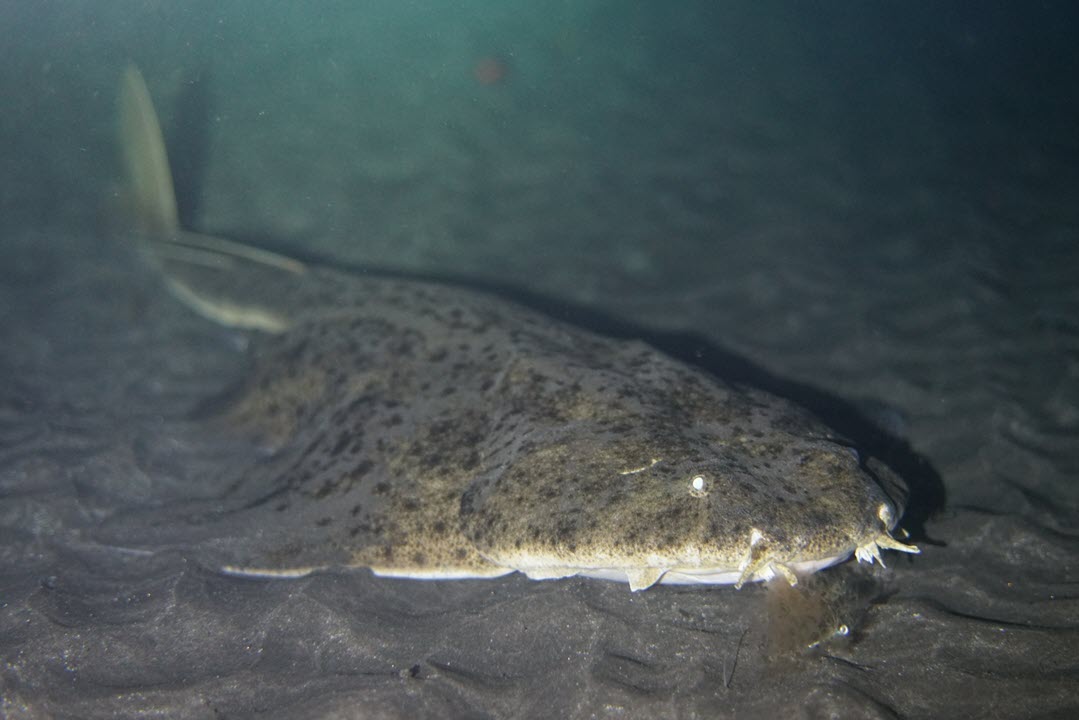
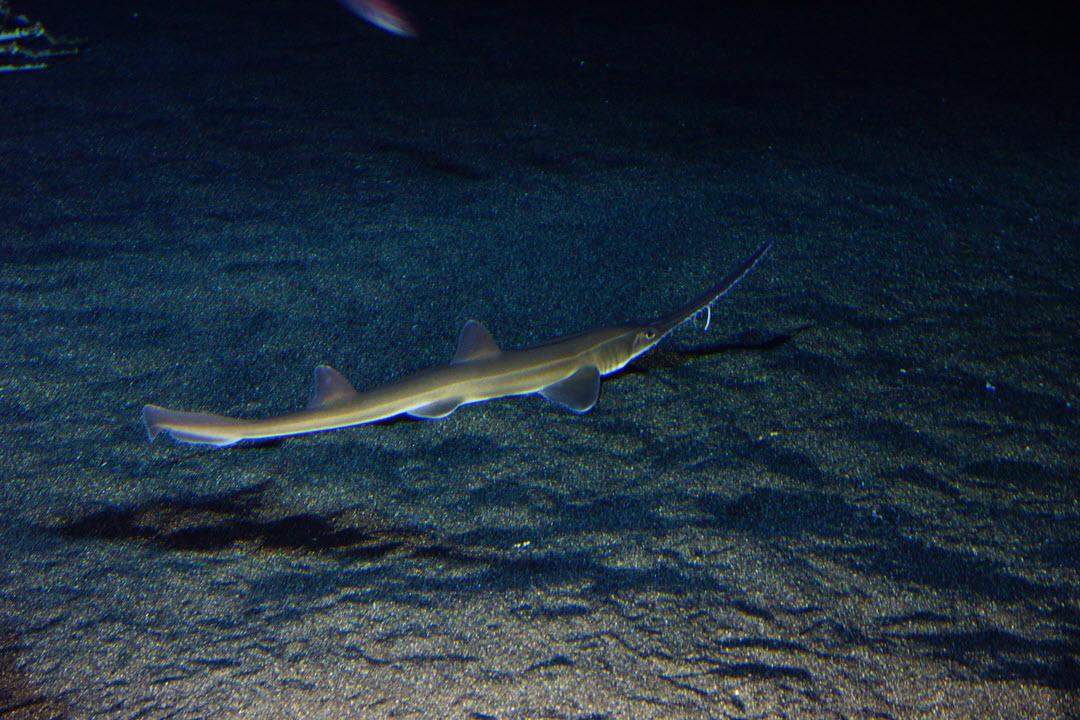
Sawsharks
Sawsharks belong to the order Pristiophoriformes. These distinctive sharks are found mainly in deeper waters of the Indian and Pacific oceans, with some species occurring in the Atlantic.
Their most recognizable feature is a long, flattened snout edged with tooth-like structures, giving it the appearance of a saw. A pair of long barbels extends from the snout and contains sensory structures that help the shark detect animals around the seafloor.
Sawsharks use movements of their elongated snouts to help locate and capture small fishes, crustaceans, and other prey. They are sometimes confused with sawfishes, but the two are different animals: sawsharks are sharks, while sawfishes are rays. Sawsharks also have barbels on their saw-like snouts and gill slits on the sides of the head.
Sharks in this group include: longnose sawshark, shortnose sawshark, Japanese sawshark, Bahamas sawshark, sixgill sawshark, tropical sawshark, African dwarf sawshark, Lana’s sawshark, Philippine sawshark, and Warren’s sixgill sawshark.
Bramble Sharks
Bramble sharks belong to the order Echinorhiniformes, a very small group of unusual sharks found in deep and temperate waters around the world. Only a few living species are known.
These sharks have heavy bodies and rough skin covered with large, thorn-like dermal denticles. Unlike many sharks, they do not have spines in front of their dorsal fins. Their two small dorsal fins are positioned far back on the body, and they lack an anal fin.
Bramble sharks are rarely encountered compared with many other shark groups, and much about their lives remains poorly known. They occur primarily in deeper marine habitats and feed on a variety of fishes and other marine animals.
The order contains far fewer than ten recognized living species, so a list of ten members cannot accurately be provided. Living sharks in this group include: bramble shark and prickly shark.